
Last updated November 17, 2026
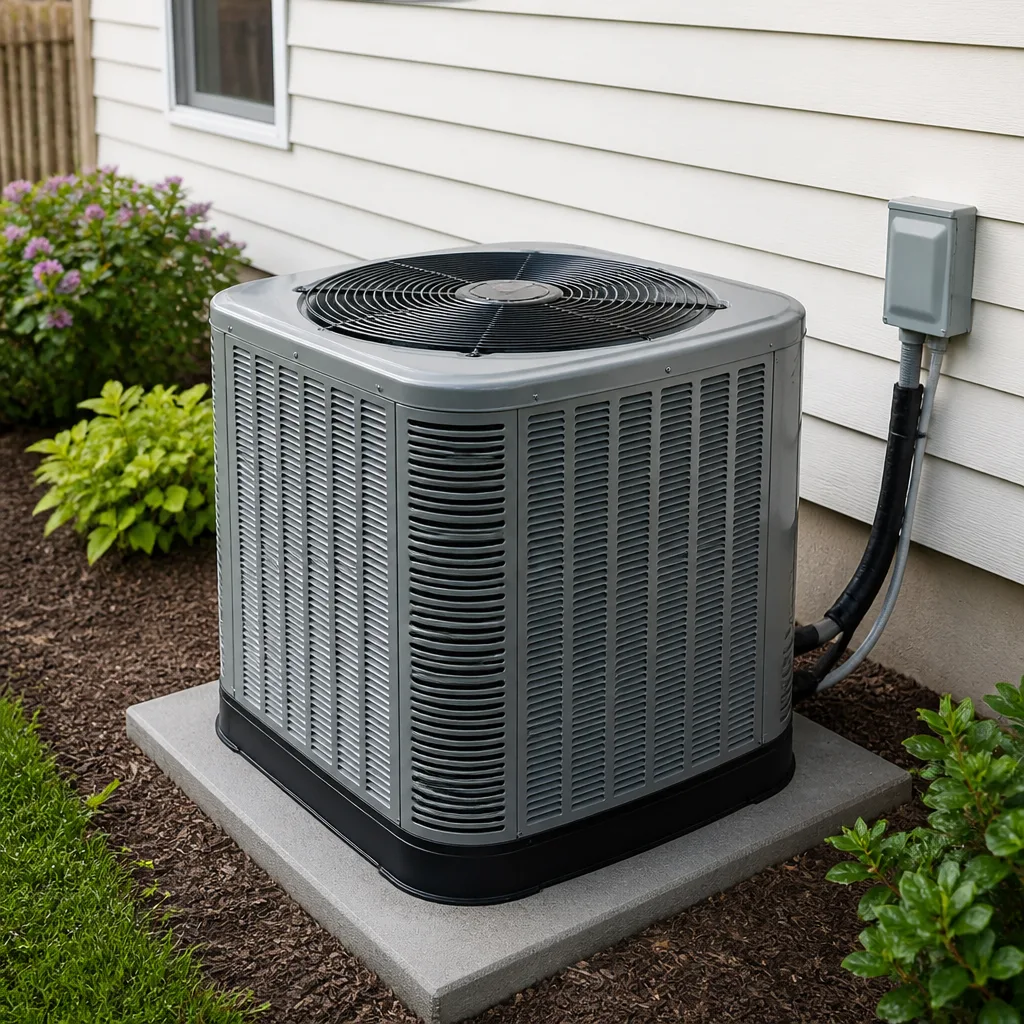 AC repair
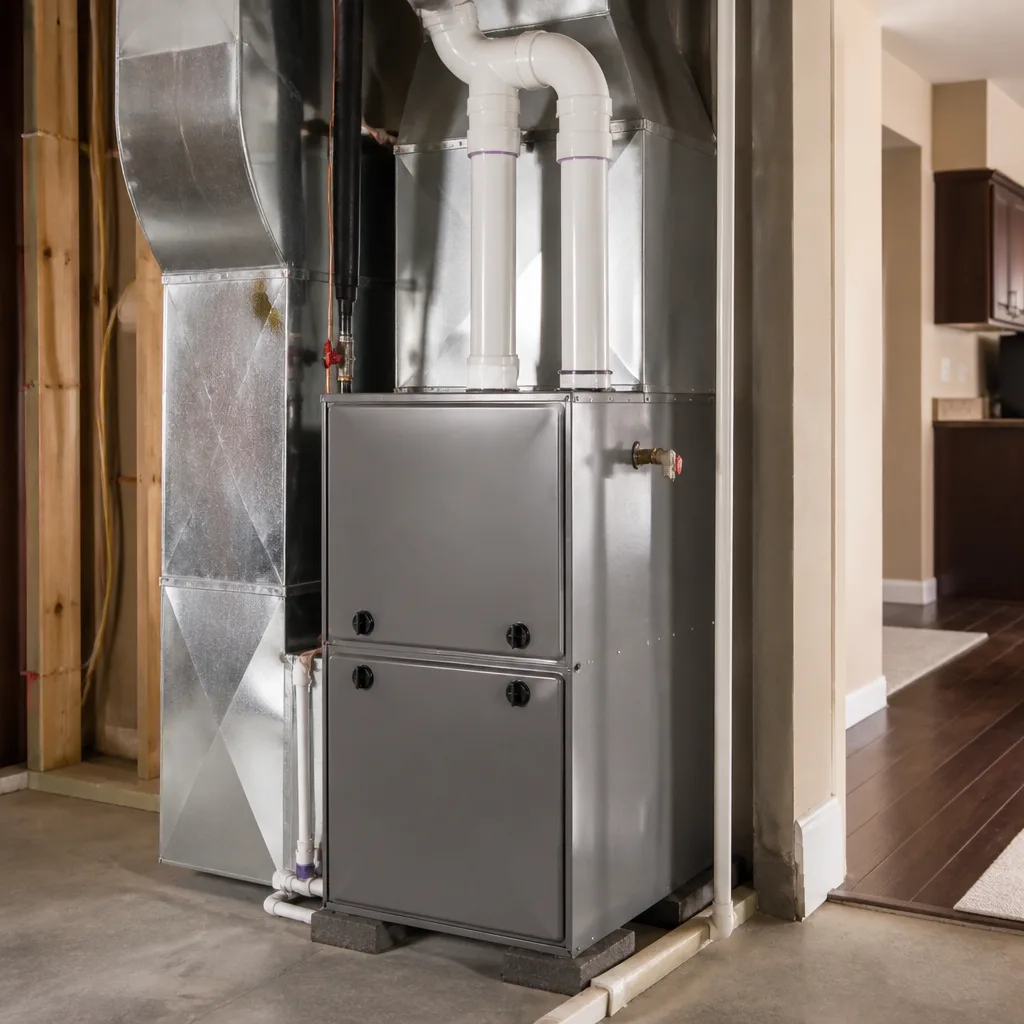 Furnace & heating
 Heat pumps
 Ductless mini splits
 Carrier
 Trane
 Goodman
Seasonal tune-up and full diagnostic on your Carrier, Trane, or Goodman system - readings shown to you before any repair is proposed
Diagnosis first, numbers second - you approve the repair price before a single part goes in.
Get your free estimateHow Long Does Furnace Repair Take? Timelines and What to Expect
The tech was at your house for an hour. You waited two days for heat. That gap is the part nobody explains on the phone, and it’s the number that actually determines whether your family sleeps in a cold house tonight. In our experience across Spring Valley, the wrench time on a furnace is rarely the problem. Dispatch, diagnosis, parts procurement, and the occasional permit are what stretch a 90-minute job into a three-day project. This guide maps the full clock from your first call to restored heat, segment by segment, and shows you how to compress each one.
Quick Answer
Most furnace repairs take 60 to 90 minutes once a technician is on-site and working. Total downtime, from your first call to restored heat, usually runs 2 to 6 hours for same-day calls with common parts, and 1 to 3 days when a part has to be ordered or a permit is required. The variable isn’t the repair itself. It’s everything around it.
Styles & brands we work with
- AC repair
- Furnace & heating
- Heat pumps
- Ductless mini splits
- Carrier
- Trane
- Goodman
Table of Contents
- The Four Clocks Homeowners Conflate
- Response Time: What to Realistically Expect
- Diagnosis Time: Fault Tree vs. Parts Swapping
- Parts Procurement: What’s on the Truck vs. What Isn’t
- Why Time of Call Changes Total Downtime by 12 to 36 Hours
- The Two Scenarios That Turn One Day Into Three
- How to Shorten Both Clocks
- What Furnace Repair Costs Over the Timeline
The Four Clocks Homeowners Conflate
When a homeowner calls and asks how long a furnace repair takes, four separate timelines are usually being blended into one question. Pulling them apart is the fastest way to understand what you’re actually waiting on. Here’s how each one runs in Spring Valley.
- Response time (dispatch to your door). Usually 1 to 4 hours on a same-day call, or the next morning if you call after the on-call cutoff. Spring Valley’s mix of older 1990s subdivisions and newer builds near Rhodes Ranch and Southern Highlands spreads drivers across a wide footprint, so a dispatched tech who is 25 minutes out on paper can take 45 in traffic.
- Diagnosis time. 20 to 45 minutes for a competent tech working a fault tree, longer if the symptoms are intermittent or point to two possible failures at once.
- Parts procurement. Zero minutes if it’s a part any reasonable stocked truck carries (igniter, flame sensor, capacitor, contactor), 12 to 48 hours if it needs a supply-house order, longer if it’s a discontinued board for a 20-year-old unit.
- Repair time. 30 to 90 minutes for most component swaps. Igniters and flame sensors are 15-minute jobs. A blower motor or draft inducer runs 60 to 90. Heat exchangers are 3 to 6 hours and usually trigger a replacement conversation.
The number that lands in your head depends on which clock you’re counting. Diagnosis plus repair is real, and it’s 60 to 90 minutes in most cases. Everything else is what makes the neighbor whose furnace broke the same day as yours get heat back before you do.
Response Time: What to Realistically Expect
In Spring Valley, response time depends more on when you call than who you call, though not always for the reasons you’d guess. Weekday mornings before 10 a.m. are the sweet spot. Dispatch is active, technicians are moving between calls, and a same-day slot is nearly always available. After 3 p.m., the day is usually spoken for and you’re looking at a next-morning window unless it’s a genuine emergency.
Here’s what drives the honest range:
- 7 a.m. to 10 a.m. weekday call: Typically same-day, often within 2 to 4 hours.
- Midday to late afternoon weekday: Usually same-day or a first-thing next-morning slot.
- Evening and weekend: After-hours coverage shifts to on-call techs. Response is still same-day in most cases but the window stretches, often 4 to 8 hours.
- Cold snap in January or February: Every HVAC company in the valley gets slammed at the same time. Spring Valley sits at higher elevation than the Strip and cools faster overnight, so a hard freeze can spike call volume overnight. Response windows stretch on those days even for well-run companies.
A reputable after-hours policy should mean a live person answers the phone, a tech is actually dispatched, and the price is confirmed in writing before anyone touches your furnace. What it should not mean: a voicemail box, a “callback window,” or a premium that appears at the door. We answer the phone live 24/7, and the price on the after-hours call is the same number you agree to before the work starts.
Diagnosis Time: Fault Tree vs. Parts Swapping
Diagnosis is where good technicians and lazy ones part ways, and it directly changes your total downtime. A tech working a fault tree walks through the furnace’s sequence of operations in order: call for heat, inducer motor, pressure switch, igniter, gas valve, flame sensor, blower. Each step either passes or fails, and the first failure tells you where the problem lives. That’s a 20 to 45 minute diagnostic that ends with a specific diagnosis.
The other approach is parts swapping. Tech guesses it’s the igniter, replaces it, still cold, guesses it’s the flame sensor, replaces it, still cold. Now you’ve paid for two parts you didn’t need, waited longer, and the actual failure (say, a failing pressure switch reading correctly at the board but sending bad voltage to the igniter) is still there. In our experience, this pattern shows up most in Spring Valley on units approaching 15 years old, where dust and seasonal temperature swings wear several components at once and symptoms overlap.
You can spot the difference in real time. A fault-tree tech will:
- Ask you specific questions about when the furnace fails and what it sounds like when it tries to start.
- Read the furnace’s error code LED before pulling any panel.
- Test components with a multimeter, not by swapping.
- Explain what he’s ruling out as he goes, not just what he’s replacing.
- Hand you a written diagnosis and price before opening a parts box.
If your tech’s explanation is “she’s just tired, we’ll try this part,” that’s a signal to ask what he’s ruled out. Diagnosis quality is the single biggest lever a technician controls on your behalf. For more on what a well-run diagnostic visit looks like in our market, see Furnace Repair in Spring Valley.
Parts Procurement: What’s on the Truck vs. What Isn’t
This is where most same-day repairs become next-day repairs, and it’s the segment homeowners have the least visibility into. A properly stocked service truck carries a defined set of common furnace parts. Anything outside that list has to come from a supply house, and depending on the time of day, that’s either a two-hour detour or a next-morning trip.
Parts any well-run truck should carry
- Hot surface igniters (the most common failure in gas furnaces, especially in dry climates)
- Flame sensors
- Run and start capacitors
- Contactors and relays
- Pressure switches for common models
- Gas valve basics for Carrier, Trane, and Lennox residential furnaces
Parts that often require a next-day order in Spring Valley
- Control boards for older or less-common brands. York and American Standard boards from certain model years are notoriously back-ordered; we’ve seen three-day waits on a single board in a bad week.
- Inducer motor assemblies. Universal models exist but the exact fit varies, and a mismatched inducer can cost a full afternoon.
- Heat exchangers. These are almost always ordered to the specific model, and shipping alone is 2 to 5 business days.
- Variable-speed blower motors (ECM motors). Common in newer Daikin and Bryant installs, and rarely stocked on a service truck because the correct match depends on the exact model and airflow configuration.
Brands matter here. Dalton services nine major residential brands, including York, Daikin, Bryant, and American Standard. That breadth means we’ve seen which parts fail most often by brand and which ones are typically stocked by the local supply houses in Spring Valley. It doesn’t mean every part is on the truck. No honest company can promise that.
Why Time of Call Changes Total Downtime by 12 to 36 Hours
The clock starts when you call, not when the tech arrives. A 7 a.m. weekday call and a 9 p.m. Friday call can produce wildly different total downtimes for the exact same repair, and it’s almost entirely about parts-house hours and the on-call network.
Walk through two scenarios for a failed inducer motor – a repair that runs 90 minutes of wrench time either way:
- 7 a.m. Wednesday call. Dispatched by 9, diagnosed by 10:30, part confirmed unavailable on the truck, supply house opens at 7:30 and the tech is back with the part by 1 p.m., furnace is running by 2:30. Total downtime: about 7 hours.
- 9 p.m. Friday call. Dispatched by 11 p.m. (on-call), diagnosed by midnight, supply house closed until Monday, part pulled from another warehouse over the weekend if you’re lucky, or ordered Monday. Furnace running Tuesday. Total downtime: 60 to 84 hours.
A weekend call can tack on 12 to 36 hours just because the supply chain is asleep. That’s before we get to the temperature. Spring Valley winters are mild by national standards but the valley cools into the mid-30s on cold nights, and a house that hits 45°F overnight is a genuine health risk for infants, elderly residents, and anyone with respiratory issues. If the furnace dies on a Friday night in January, an after-hours call is worth the pickup fee. If it dies on a Wednesday morning, wait for the standard window and save the after-hours charge.
The other side of time-of-call: a live person actually answering the phone. A call routed to voicemail at 9 p.m. Friday can add six or more hours because you’re now leaving a message and waiting for a callback. We staff live phone coverage around the clock, and the after-hours dispatch is real, not a message-relay service. For the same principal service covered for the cooling side, see AC Repair in Spring Valley.
The Two Scenarios That Turn One Day Into Three
Most repairs land inside a day. Two specific situations stretch them out, and both are worth knowing before they happen to you.
1. Heat exchanger condemnation
A cracked heat exchanger is a carbon monoxide risk, not a repair. The heat exchanger is the metal chamber that separates combustion gases from the air your family breathes; a crack means combustion gases can enter the supply air. When a tech finds a crack, the furnace is unsafe to run, and the conversation shifts from repair to replacement. From that point you’re looking at 3 to 7 days minimum: 1 day to decide, 1 to 2 days to schedule the install, and 4 to 8 hours on install day. If your heat exchanger is under warranty you’re still waiting on the labor estimate and parts; if it isn’t, you’re comparing a $4,500 to $7,500 replacement against a $600 to $1,200 heat exchanger swap that most reasonable people would put toward a new system instead. A licensed technician should be doing the inspection and the conversation, not a homeowner poking at a gas-fired chamber with a flashlight.
2. Permit-required gas line work
Most furnace repairs don’t need a permit. But if the job requires new gas piping, a line relocation, or work that alters combustion air, Clark County permit requirements kick in. The mechanical permit process in Spring Valley typically adds 2 to 5 business days for permit issuance and inspection scheduling on top of the repair itself. A tech who tells you the gas work can just be done without a permit is telling you something about how the rest of the job will go. Permits exist because gas lines are dangerous; this is a place to follow the code, not work around it.
Both scenarios are why we put the price in writing before any work starts. It gives you a clean point to pause, ask questions, and decide – not a surprise invoice on install day. For system replacement timelines and what a heat pump install looks like as an alternative, see Heat Pump Installation in Spring Valley.
How to Shorten Both Clocks
You can’t control parts availability or the supply house hours. You can control the information you give when you call, which cuts diagnosis time, and the timing of the call, which cuts dispatch and procurement. Here’s what actually moves the needle.
- Have your model and serial number ready when you call. On the furnace cabinet, usually a sticker inside the access panel. It lets dispatch match a likely technician skill set and lets the tech pre-check parts availability before arrival. Ten seconds of your time; sometimes an hour saved.
- Describe the symptom precisely. “It’s making a clicking sound and the flames never light” is a five-minute diagnostic lead. “It’s not working” is not. Say what you hear, see, and smell.
- Call before 10 a.m. if you can. Same-day windows are widest in the morning and shrink through the day.
- Ask about stocked parts. When you call, ask whether the tech’s truck carries the most common furnace parts (igniter, flame sensor, capacitor, inducer). Any reputable company will know the answer.
- Clear the access path. A furnace shoved behind boxes and stored holiday decorations adds a few minutes of prep that can eat into a diagnostic window. Pull the clutter before the tech arrives.
- Note the date of your last service. A furnace that was cleaned and inspected in the fall is easier to diagnose than one that hasn’t been looked at in three years. Service history shortens the fault tree.
What Furnace Repair Costs Over the Timeline
Cost and time travel together. A faster repair is usually a cheaper repair, because the extra hours come from second-visit diagnostics, overnight parts runs, or the emergency dispatch premium. Here’s the realistic Spring Valley range:
- Standard diagnostic visit: $79 to $149, often credited toward the repair if you approve the work on the same visit.
- Igniter or flame sensor replacement: $150 to $280, done in 15 to 45 minutes.
- Capacitor or contactor: $180 to $320, 30 to 60 minutes.
- Inducer motor or blower motor: $400 to $750, 60 to 90 minutes of wrench time, plus parts wait.
- Control board: $450 to $700, 30 to 60 minutes, plus the parts wait that drives most of the downtime.
- Heat exchanger replacement: $600 to $1,200 (labor and parts, if the exchanger isn’t under warranty); often reasons toward a full system replacement instead.
- Full system replacement (for comparison): $4,500 to $8,500 installed, scheduled in advance, priced in writing.
Those are ranges, not quotes. The number that matters is the one written on the ticket before the tech opens a part box. On every job, we put the price in writing before any work begins. If the repair doesn’t hold, we come back at no charge under the 365-Day Done Right Promise – that’s a full year of coverage, not a 30-day window. For context on how that guarantee works across our other services, see Dalton Heating & Air Spring Valley home.
Common Mistakes to Avoid
- Calling after 5 p.m. on a Friday when Monday morning would do. A weekend dispatch is often 12 to 36 hours of extra downtime because supply houses are closed. Unless it’s genuinely cold or someone in the house is vulnerable, wait for a weekday slot.
- Approving a repair without a written price. If the number is verbal, it isn’t real. Every legitimate company puts the price in writing before the work starts; if yours won’t, that’s the biggest red flag on the job.
- Assuming “same-day” means “fixed today.” Same-day diagnosis is common. Same-day repair is common only if the part is on the truck. Ask which one your company is actually promising.
- Skipping the tune-up and then paying for a mid-winter emergency. Spring Valley’s dry, dusty air loads igniters and flame sensors faster than most homeowners expect. A fall tune-up catches a failing igniter before the first cold night; a mid-January emergency costs more in time and dollars.
- Ignoring the error code LED on the furnace. A single flashing pattern on the board tells the tech which subsystem is failing. Pulling codes off the furnace door before you call saves 10 to 20 minutes of diagnosis.
- Letting a heat exchanger crack get “looked at again later.” If a licensed tech says the exchanger is compromised, the furnace should be shut off. No second opinion is worth the carbon monoxide risk.
- Hiring the cheapest quote without asking about the guarantee. A $50 lower repair with no written guarantee isn’t a saving; it’s a coin flip on whether you’re paying twice.
See the difference
 Before
 After
 Before
 After
 Before
 After
When to Call a Professional
Some things can wait. A furnace that’s making a light tapping sound but still heating is a call for the next weekday. A furnace that won’t ignite, that smells like gas, that produces any carbon monoxide alarm, or that has a known cracked heat exchanger is a call right now – those are safety issues, not scheduling issues. Igniters, gas valves, heat exchangers, and combustion chambers are not homeowner work; the components are either electrically live, gas-fed, or the only barrier between combustion gas and the air you breathe. A licensed, insured technician should handle all of it.
Dalton Heating & Air Spring Valley offers free estimates in Spring Valley – we’ll diagnose, quote in writing, and give you a real timeline before you commit. Call (888) 268-6106.
Frequently Asked Questions
Same-day furnace repair usually runs 2 to 6 hours total from your call to restored heat when the failing part is common and stocked on the tech’s truck. The wrench time itself is 60 to 90 minutes; dispatch, diagnosis, and a possible parts-house run make up the rest. Call (888) 268-6106 for a same-day window and an exact quote – estimates are free.
Two reasons dominate: a part that has to be ordered (control boards, ECM blower motors, and inducer assemblies are the usual culprits, and specialty-brand parts like a York or American Standard board can take 2 to 5 business days), or a repair that triggers a permit (gas line work in Spring Valley adds 2 to 5 business days for Clark County permitting and inspection). Occasionally both happen at once. A written diagnosis should tell you which category you’re in.
Yes, weekend repair is available, but expect a longer response window (4 to 8 hours on average) and possibly an after-hours dispatch charge. Supply house closures over the weekend mean a weekend-discovered parts need becomes a Monday repair. If the house is warm enough and no one is at risk, a weekday call usually gets you heat back faster.
If the furnace is under 15 years old and the repair is under $700, repair is usually the right call. If it’s over 15 years, the repair is a heat exchanger or control board over $1,000, or you’ve had two or more failures in a year, replacement is usually cheaper over the next five years. Spring Valley’s seasonal temperature swings put real wear on older units. Call (888) 268-6106 for a written comparison of both paths.
Most repairs don’t. Gas line alterations, gas line relocations, and work that changes the combustion air setup require a mechanical permit through Clark County. A licensed company will tell you up front when a permit is required. A company that doesn’t mention it is a company you want to ask about directly before any gas-side work begins.
Igniters, flame sensors, capacitors, contactors, common pressure switches, and standard gas valve parts are typically stocked. Control boards, blower motors, inducer assemblies, and heat exchangers are usually ordered. That single distinction is the clearest indicator of whether your repair is a one-visit job or a two- or three-day job. Call (888) 268-6106 to confirm parts availability for your specific model before a tech is dispatched.
The Bottom Line
The 90 minutes you watch a tech spend at your furnace is real, but it’s the smallest number on the clock. Response time, diagnosis, parts procurement, and the occasional permit are what actually decide whether you get heat back tonight or on Thursday. Call before 10 a.m. on a weekday, have your model number ready, describe the symptom precisely, and insist on the price in writing before any work starts. Those four habits compress the timeline more than anything else you can do. A written guarantee – the full-year kind, not a 30-day window – is the other half of the deal, because a fast repair that fails next month is a slower repair in hindsight.
Dalton Heating & Air Spring Valley answers the phone live 24/7, prices every job in writing before we start, and stands behind every repair for a full year. Our technicians have up to 23 years of experience servicing Carrier, Trane, Lennox, Goodman, Rheem, York, Daikin, Bryant, and American Standard furnaces. Call (888) 268-6106 for a free estimate and a clear timeline on your repair.
Written by the team at Dalton Heating & Air Spring Valley.