
Last updated November 17, 2026
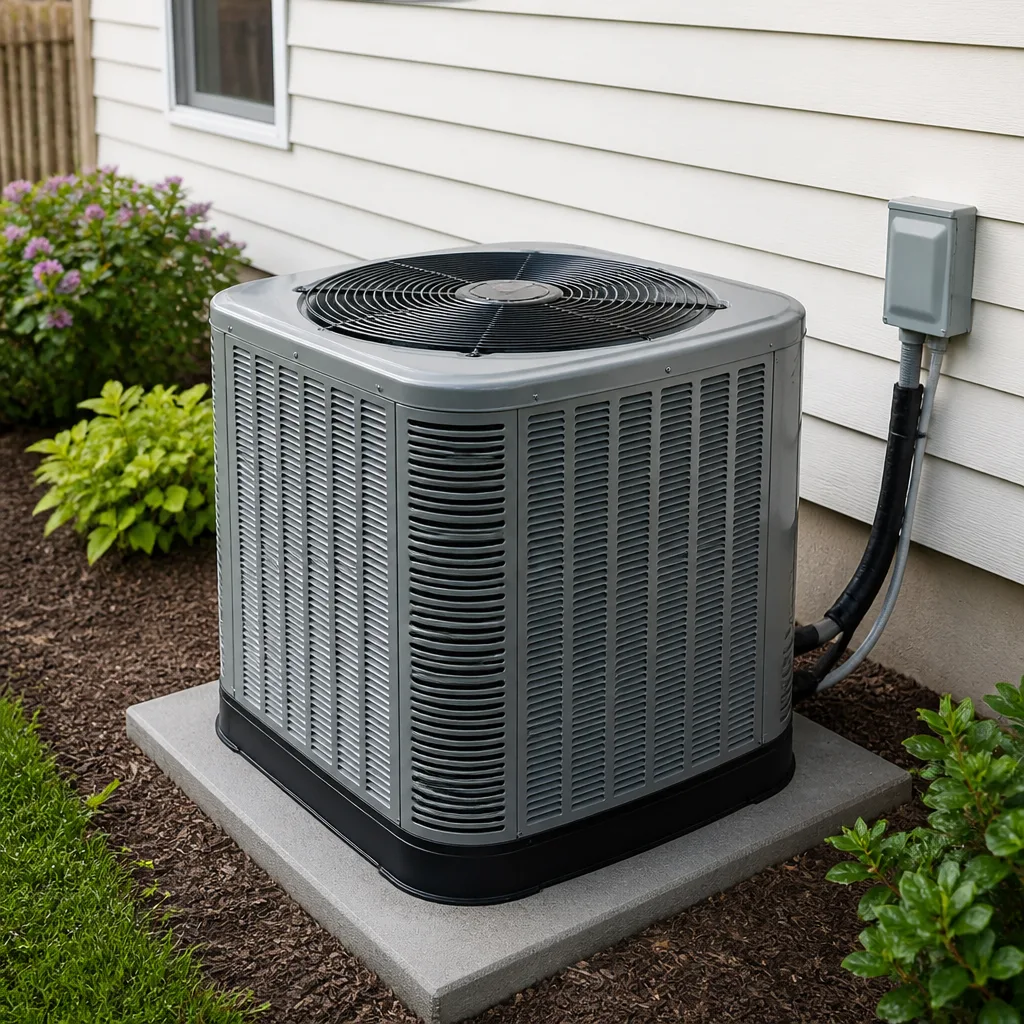 AC repair
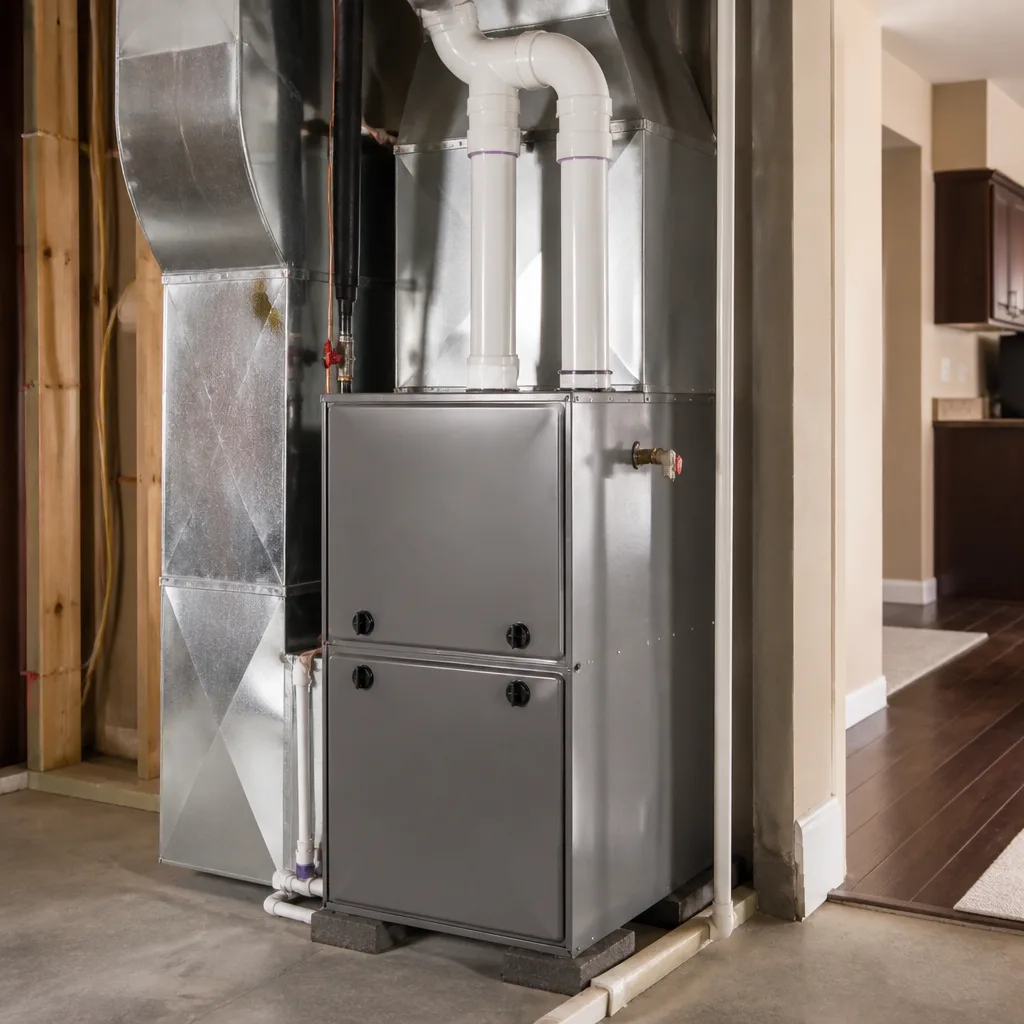 Furnace & heating
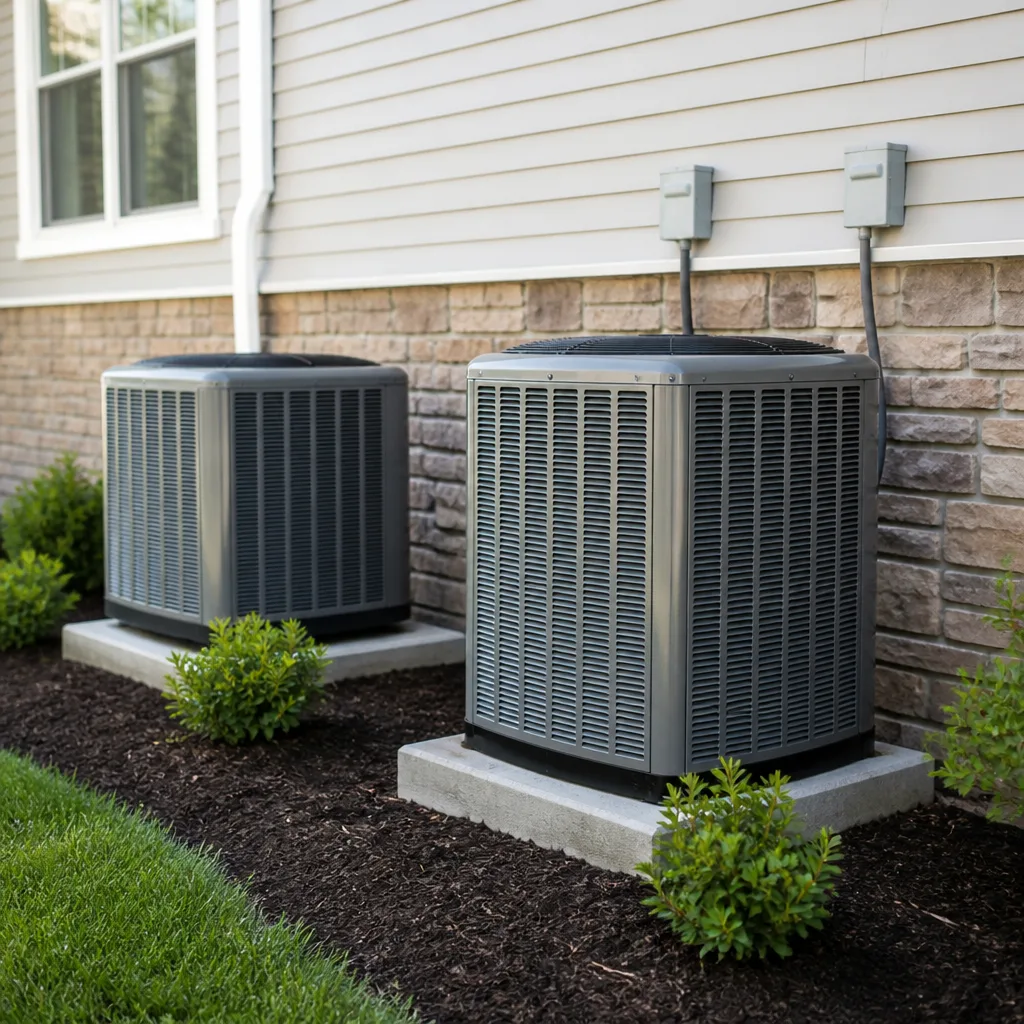 Heat pumps
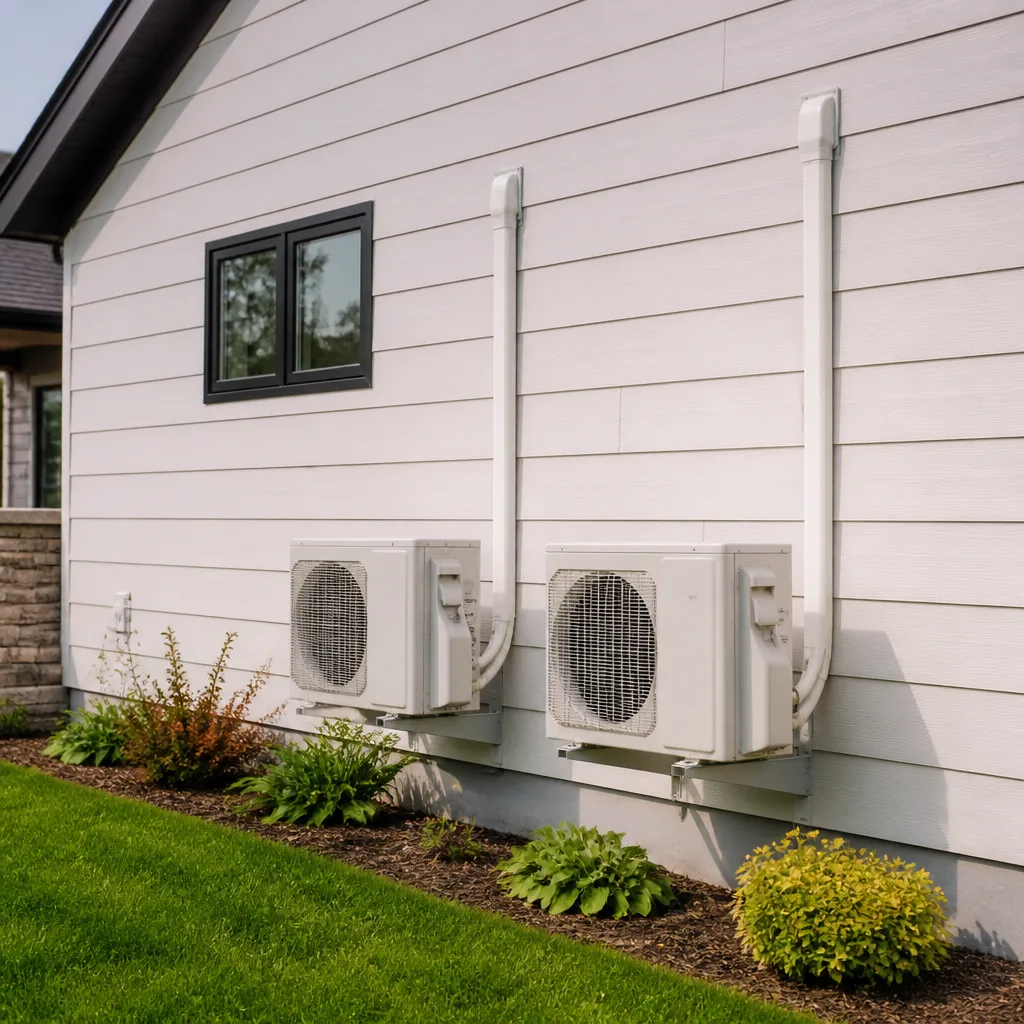 Ductless mini splits
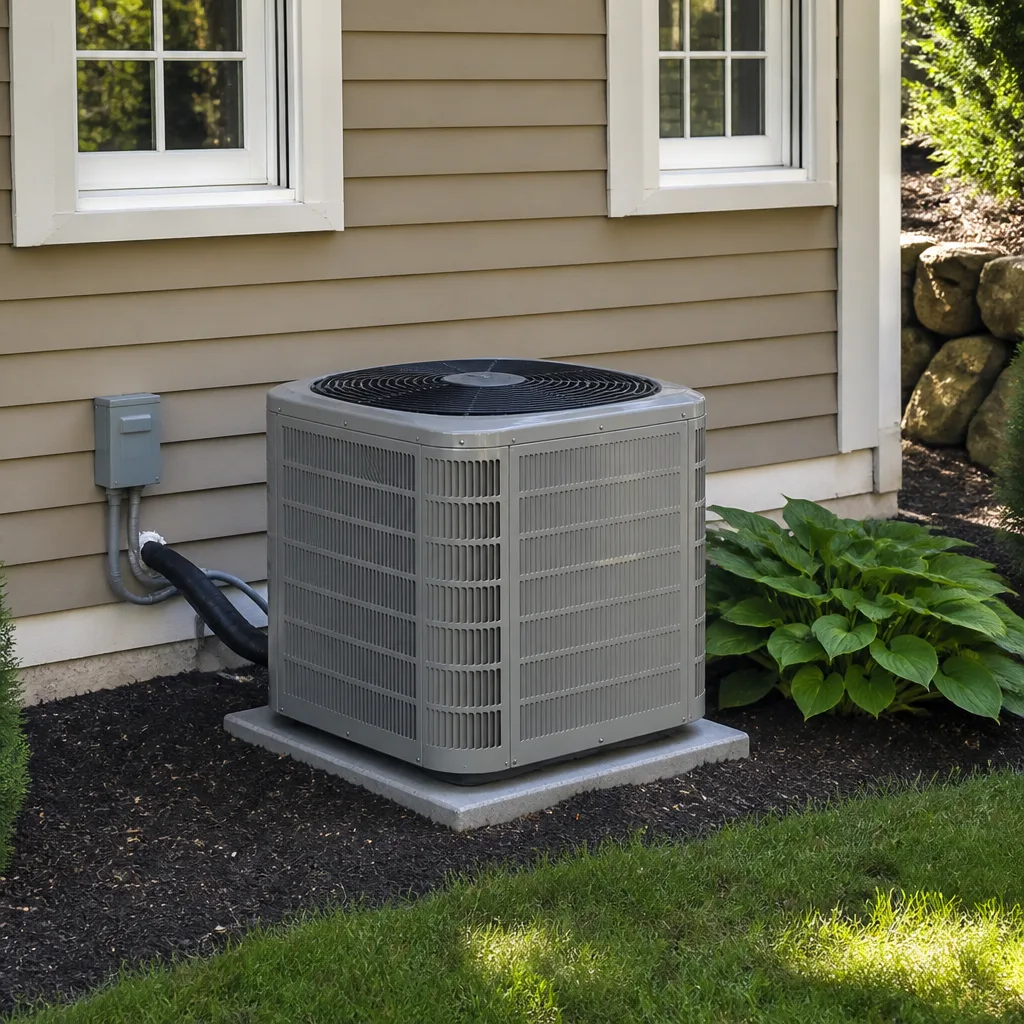 Carrier
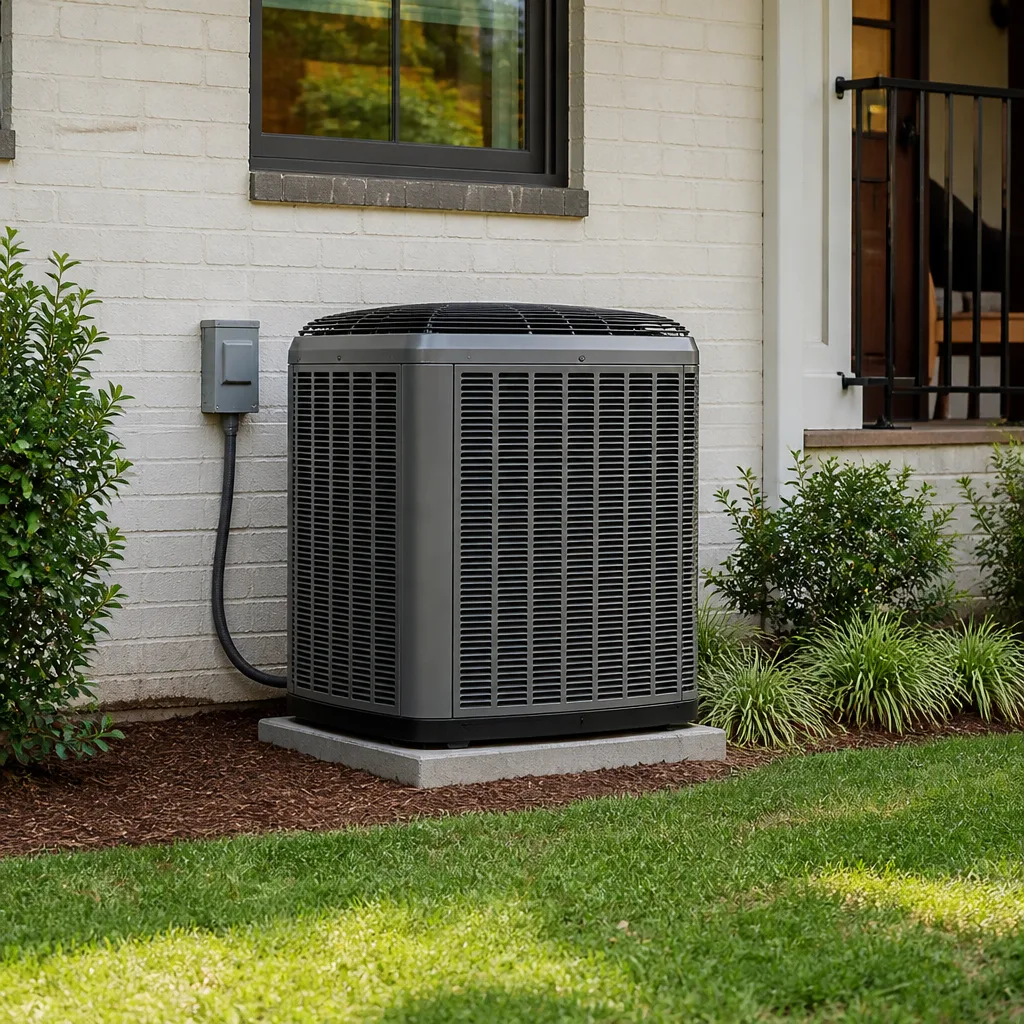 Trane
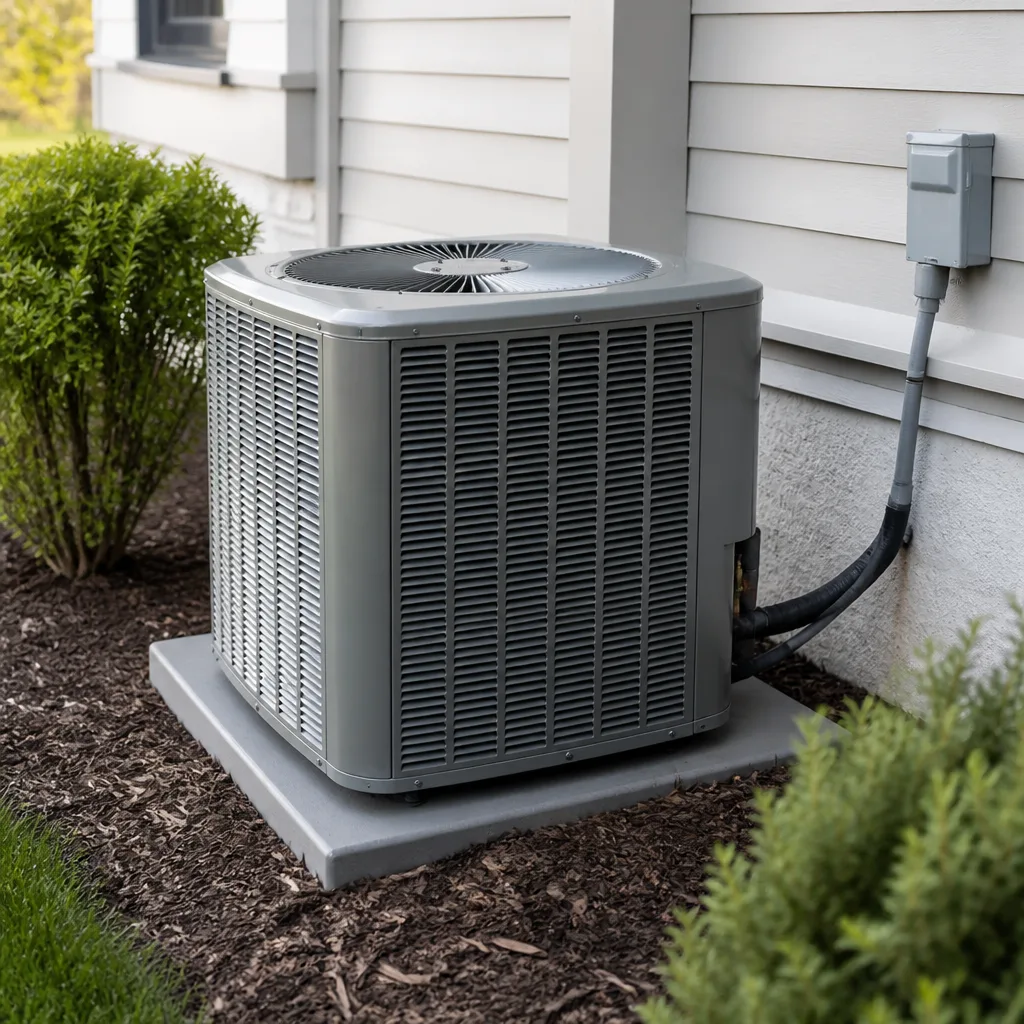 Goodman
Seasonal tune-up and full diagnostic on your Carrier, Trane, or Goodman system - readings shown to you before any repair is proposed
Diagnosis first, numbers second - you approve the repair price before a single part goes in.
Get your free estimateHVAC Cost Breakdown: The Spring Valley Homeowner’s Reference for 2026
Most national guides put a central AC replacement at $5,000-$7,000. In Spring Valley, the same job routinely lands between $8,500 and $14,000. That gap isn’t gouging. Most of it is real: desert cooling loads, a tight valley labor market, and equipment trucked in from regional distribution hubs. But without knowing what drives the number, you can’t tell a fair bid from an inflated one. This guide gives you actual 2026 price ranges for the most common Spring Valley HVAC jobs, broken down line by line – specific enough to spot an outlier before you sign anything.
Quick Answer
A standard 3-ton AC replacement in Spring Valley runs $8,500-$14,000 in 2026, with the median landing near $10,500. Furnace repairs typically cost $150-$450, and AC repairs $180-$600 depending on the part. The biggest swing factors are whether a proper Manual J load calculation is included, whether the bid carries a permit line, and which equipment tier you choose.
Styles & brands we work with
- AC repair
- Furnace & heating
- Heat pumps
- Ductless mini splits
- Carrier
- Trane
- Goodman
Table of Contents
- Line-Item Breakdown: What a 3-Ton Replacement Actually Costs
- Why Spring Valley Commands a Labor Premium
- Straight Swap vs. Right-Sized System: The Manual J Question
- Repair Costs by Job Type
- Red Flags in a Quote
- What a Written Price Guarantee Actually Means
- Maintenance and Tune-Up Pricing
- Common Mistakes to Avoid
Line-Item Breakdown: What a 3-Ton Replacement Actually Costs
Here’s where most quotes get vague. A real replacement bid should show five distinct line items. If yours shows one lump sum, ask for the breakdown before you sign.
| Line Item | 2026 Spring Valley Range | What It Covers |
|---|---|---|
| Equipment (3-ton condenser + air handler/coil) | $4,200-$7,800 | Depends on tier: Goodman or Rheem at the low end, Lennox or Trane at the high end |
| Refrigerant charge and recovery | $350-$650 | Recovering old refrigerant legally + charging the new system to spec |
| Permit (Clark County) | $180-$420 | Required for any changeout; fee scales with tonnage and scope |
| Labor (removal, install, commissioning) | $2,400-$3,800 | Two-technician crew, one to two days, plus startup and refrigerant verification |
| Disposal and haul-away | $120-$280 | Old equipment removal and refrigerant-safe disposal |
Add it up and you land between $7,250 and $12,950 for the base scope. The $8,500-$14,000 band accounts for ductwork mods, line-set replacement, or electrical upgrades that many Spring Valley homes need once the old unit comes out. In our experience, roughly a third of replacements uncover at least one hidden line item once the disconnect is pulled.
The equipment line is where the biggest spread lives. A builder-grade Goodman or Rheem condenser can price $1,500-$2,500 below a comparable Lennox or Trane unit. That doesn’t mean the cheaper one is a bad choice for a Spring Valley home. It means you should know which tier you’re being quoted, because a mid-tier bid at premium pricing is the most common inflation tactic we see.
Why Spring Valley Commands a Labor Premium
Las Vegas valley labor rates run roughly 15-25% above national HVAC averages in 2026. That’s not anecdotal – it’s the cost of doing business in a metro that never stops building. Three forces push the number up:
- Volume demand. Spring Valley sits inside one of the hottest cooling markets in the country. Every tech in the valley is booked through June and July, and qualified installers can name their rate.
- Retention costs. Summer attic temperatures in Spring Valley regularly hit 140°F. Companies pay a premium to keep experienced crews who won’t quit mid-season, and that premium shows up in the labor line.
- Commute and logistics. Traffic across the 215 beltway eats an hour of a crew’s day on a multi-job schedule. That hour isn’t free.
What does it realistically add to any quoted job? On a $10,000 replacement, expect roughly $400-$700 of the labor line to be pure market premium versus what the same job would cost in a low-demand metro. That’s the honest number. If a Spring Valley bid comes in $3,000 above a comparable neighbor’s, the premium isn’t the reason – something else is.
We’ve also seen the premium widen during heat waves. When a system fails during a 115°F stretch in Spring Valley, emergency calls stack up and companies that don’t hold their pricing will quietly add a trip charge. Our policy is the price goes in writing before any work starts, whatever the day, but not every company operates that way. Ask up front.
Straight Swap vs. Right-Sized System: The Manual J Question
A Manual J calculation is the industry-standard load calculation that determines how many tons of cooling a house actually needs, based on square footage, window area, insulation, ceiling height, orientation, and local climate data. Most Spring Valley builders over-sized units by a half-ton or full ton because it was cheap and safe. That over-sizing costs you in efficiency and humidity control, but a straight swap of the same size is also perfectly legal and often perfectly appropriate.
Here’s when each makes sense:
- Straight swap is fine when: the existing system is less than 15 years old, has performed well, and the house hasn’t had major changes (added room, converted garage, new windows, added sunroom). Expect $8,500-$11,500 for a standard Spring Valley replacement.
- A Manual J is worth the cost when: the house is over 20 years old, you’ve had persistent hot rooms, you’ve added square footage, or you’re switching to a heat pump and want to size for both heating and cooling. Expect $250-$450 for the calculation itself, and another $500-$1,500 if ductwork needs rebalanced or resized.
- Wall-to-wall windows and west-facing rooms in Spring Valley (common in homes built from the 1990s onward) are a specific candidate for right-sizing. West-facing afternoon sun here is brutal, and a slightly larger or better-distributed system usually pays back in the first three summers.
An honest contractor will tell you which side of that line your house falls on. A dishonest one will always recommend the bigger system, because the equipment line gets bigger. Our technicians walk through the math with you before quoting, and if a straight swap is the right call, we’ll say so.
Repair Costs by Job Type
Repairs are the bulk of what Spring Valley homeowners actually call about, and the ranges are tighter than most people expect. Here’s a working reference for 2026:
- Capacitor or contactor replacement: $180-$320
- Blower motor replacement: $380-$700
- Condenser fan motor: $350-$650
- Refrigerant recharge (R-410A or R-454B): $280-$700, depending on how much is lost and whether a leak needs locating
- Compressor replacement: $1,100-$2,200
- Evaporator coil replacement: $900-$1,800
- Furnace ignitor: $150-$280
- Furnace inducer motor: $350-$650
- Furnace heat exchanger: $1,200-$2,400 (and at that price, replacement often wins)
These ranges assume a service call inside our service area and a straightforward diagnosis. If you’re weighing repair versus replacement, the rule we use is honest math: if the repair costs more than 40% of a replacement and the system is over 12 years old, the repair is usually the more expensive choice over the next five years. For more on the repair side, see our page on AC Repair in Spring Valley.
Every repair we do carries a written guarantee for a full year. If the repair fails within that window, we return at no charge – no second-service-call fee, no diagnostic charge. That matters more in Spring Valley than people realize, because a failing capacitor in June gets tested harder than the same part in a milder climate.
Red Flags in a Quote
You can spot most bad bids by looking for missing lines, not for high numbers. Here’s what to scan for.
- No permit line. Clark County requires a permit for any HVAC changeout. A quote that omits the permit is either planning to skip it or was built by someone who doesn’t pull permits. Both are red flags. Ask directly: “Is the permit included and who is pulling it?”
- No refrigerant recovery line. Federal law requires recovery of the old refrigerant before disposal. If there’s no line item for it, the company is cutting a corner you can’t see.
- One lump-sum price with no breakdown. You can’t verify what you’re paying for. Ask for the five line items this guide lists and see how they respond.
- Verbal pricing with “plus incidentals.” That phrase is how a $9,000 quote becomes a $12,000 invoice. The price must be locked in writing before work starts.
- No mention of tonnage or model number. A real quote names the equipment – Goodman GSX160361, Lennox ML14XC1-036, or whatever the actual model is – not just “a 3-ton unit.”
- No written guarantee. If the company can’t put the warranty in the paperwork, assume there isn’t one.
In Spring Valley, we regularly see quotes with all six of these issues bundled together, usually from out-of-area crews chasing summer work. The tell is often a price that’s 20-30% below the local market – not because they’re efficient, but because half the scope isn’t priced in. That gap comes out of your wallet later.
What a Written Price Guarantee Actually Means
A written price guarantee is a fixed number on a signed document that cannot legally change after work starts unless you approve a scope change in writing. That’s different from a “quote,” which is often the contractor’s best estimate with an implied “subject to what we find.” In practice, the difference is several thousand dollars on a Spring Valley replacement.
Here’s how a locked price should work:
- Before work starts, you receive a written price covering the full scope: equipment, labor, refrigerant, permit, disposal, and any line items you specifically approved.
- If the technician discovers something unexpected (a cracked plenum, a bad disconnect), they stop and quote the additional work separately. You decide whether to approve it. That new number goes in writing too.
- When the job ends, the invoice matches the signed price. If it doesn’t, that’s a contract issue, not a billing dispute – and the homeowner wins.
Verbal quotes shift at the door because there’s nothing binding in writing. We’ve heard every version of this story from Spring Valley homeowners: “$800 on the phone, $1,400 at the door.” The fix is simple. Ask for the written price before anyone touches a screwdriver, and don’t accept “we’ll work it out on the invoice.”
Our approach is that the price is in writing before any work starts, on every job, without exception. It’s part of The Garrison Standard, and it applies to a $180 capacitor swap the same as a $12,000 replacement. If the number changes because of what we find, you’ll see it in writing before we do the extra work.
Maintenance and Tune-Up Pricing
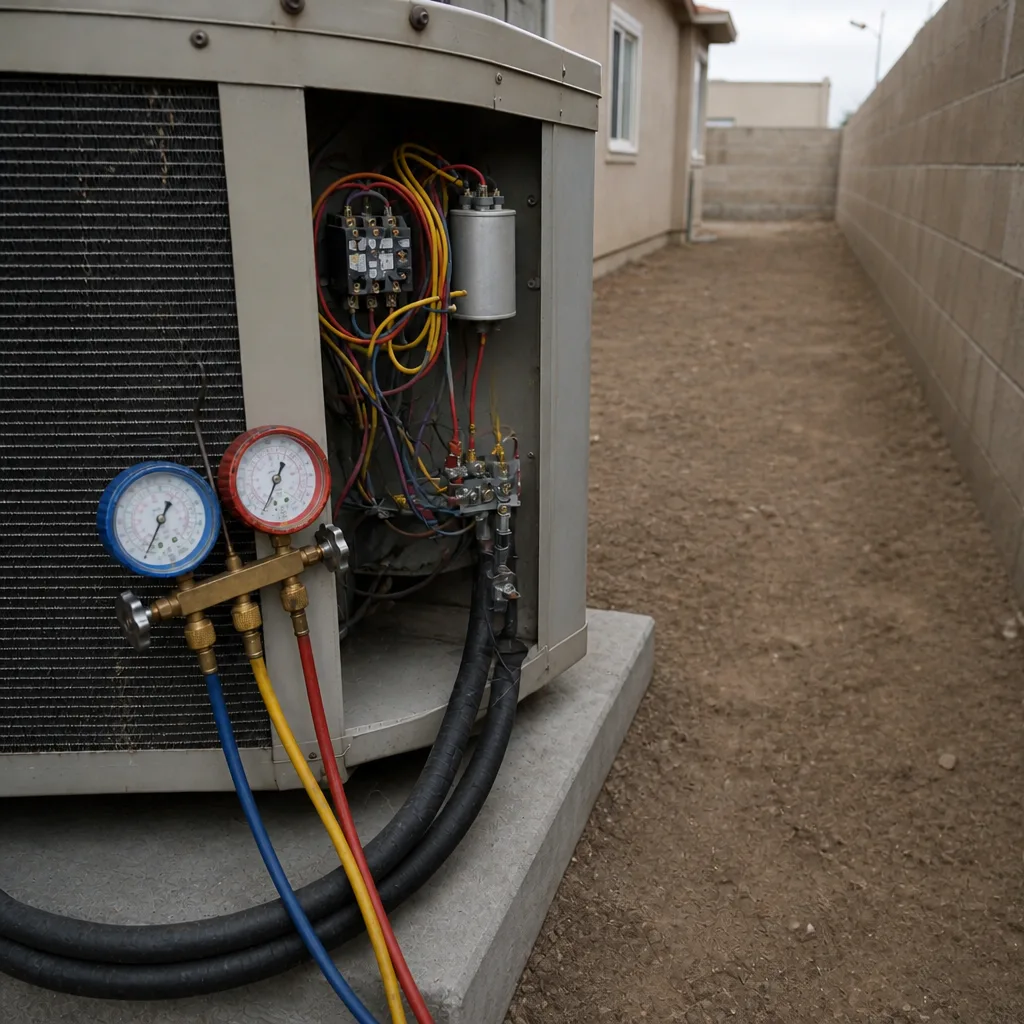
Maintenance is the cheapest line on this page and the one that saves the most. A proper spring tune-up in Spring Valley runs $90-$180 and covers a specific checklist: refrigerant pressure check, coil cleaning, condenser fan amp draw, capacitor test, drain line flush, and a filter change if you supply the filter.
Two things matter more than the price:
- A written report of what was actually found. If the tune-up ends with “all good,” you paid for a filter change. A real report lists measured pressures, amp draws, and any part trending toward failure.
- A company whose technicians aren’t paid on what they sell. That’s the simplest safeguard against the “your compressor is about to fail, sign here” pitch. Ours aren’t, and we’ll say that plainly every time.
Spring Valley homes that skip spring maintenance tend to find out the hard way in July, when a failed capacitor turns into a two-week wait for a scheduled repair. The $120 tune-up in April is a hedge against the $700 emergency in July. For a furnace side tune-up, our Furnace Repair in Spring Valley page covers what a proper heating check includes.
Common Mistakes to Avoid
- Accepting the first quote. Get three, in writing, and compare line items – not bottom lines. A $9,000 quote with all five items priced is safer than an $8,200 lump sum with two missing.
- Assuming a bigger system is a better system. An over-sized unit short-cycles, doesn’t dehumidify, and costs more to run. In Spring Valley’s dry climate that matters less for humidity, but the efficiency loss is real.
- Skipping the permit to save $300. It voids most manufacturer warranties and creates a headache at resale. The permit protects you, not the contractor.
- Paying a deposit before the price is written down. A deposit on a verbal quote is money you may not get back if the scope changes.
- Ignoring the warranty terms. Some “10-year” warranties are parts only, labor excluded. That distinction can cost $800 when a compressor fails.
- Letting a quote exclude refrigerant. A “charge ready” system is not a functioning system. Make sure the quote includes a starting charge in the price.
- Booking a replacement in June. Spring Valley install schedules fill in April and May. Booking in March or October typically saves $400-$800 in demand pricing.
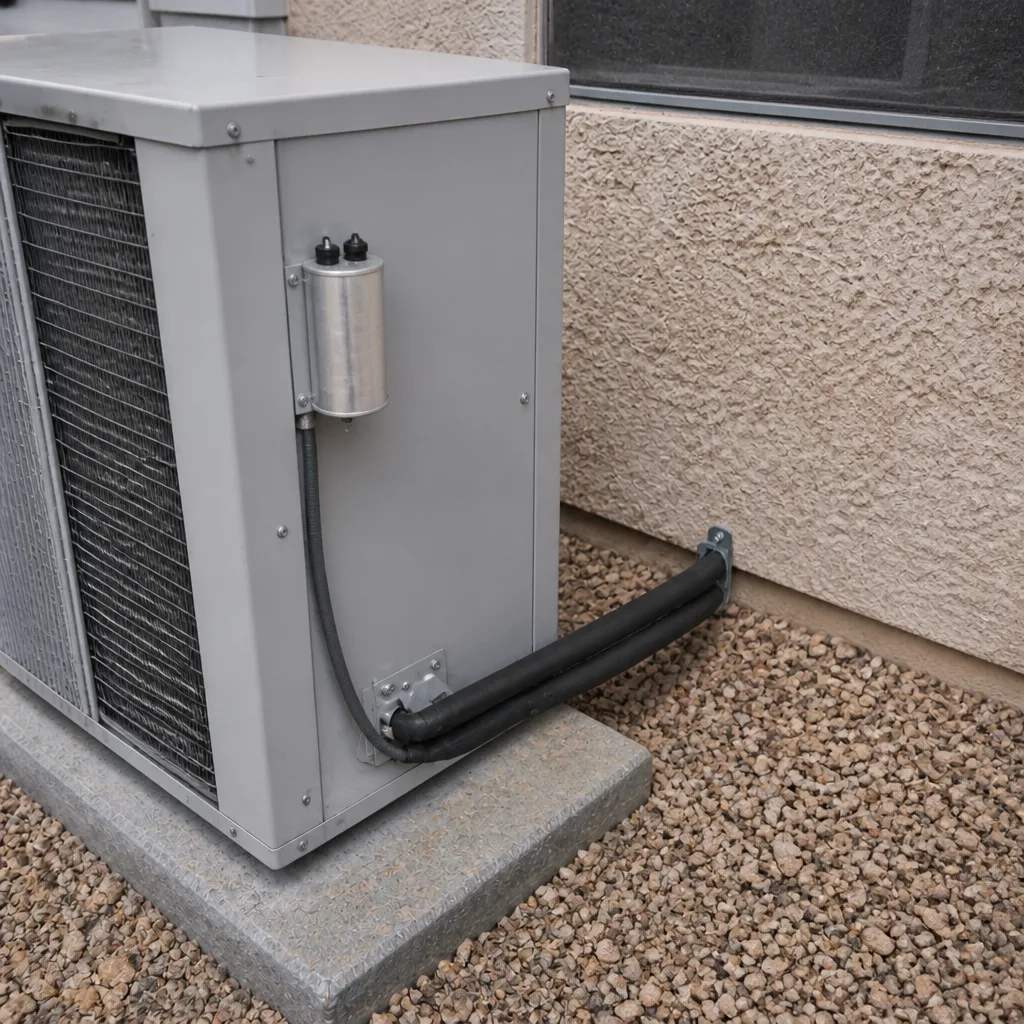
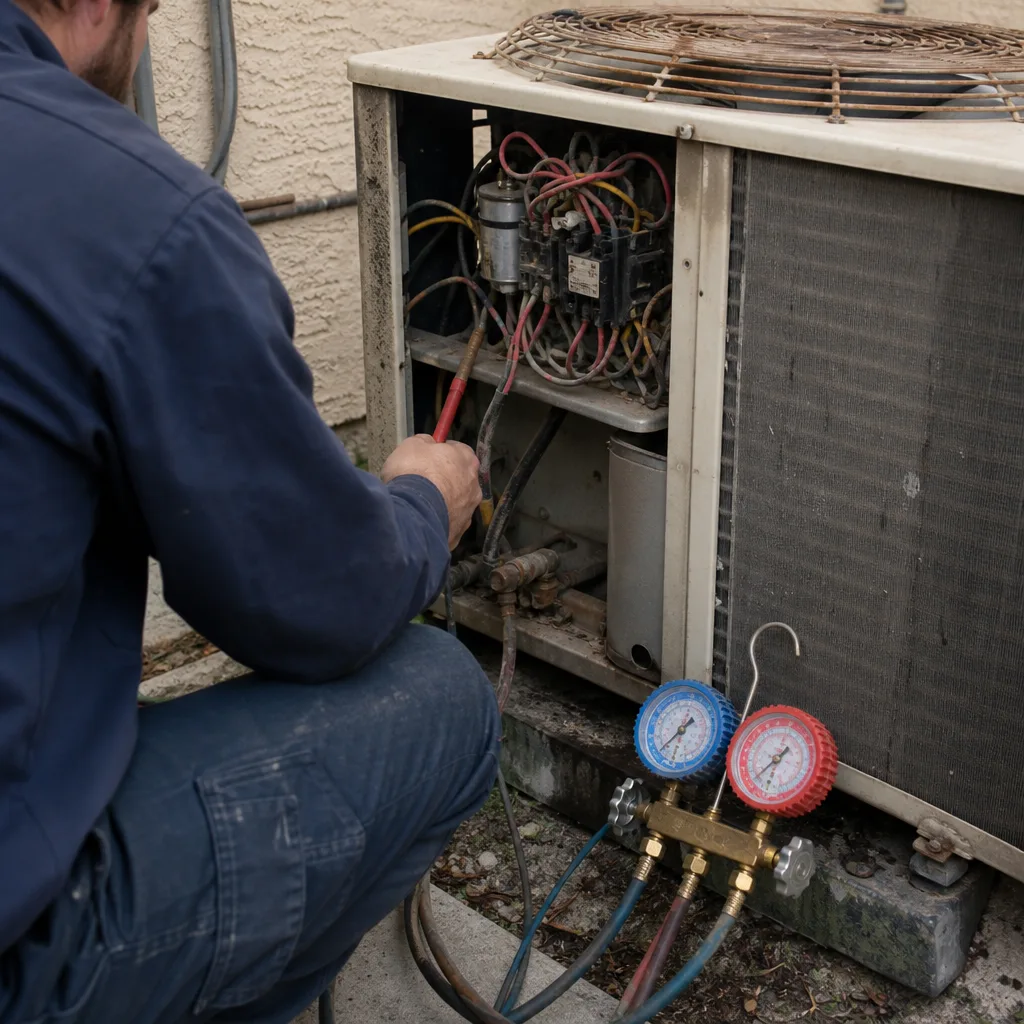
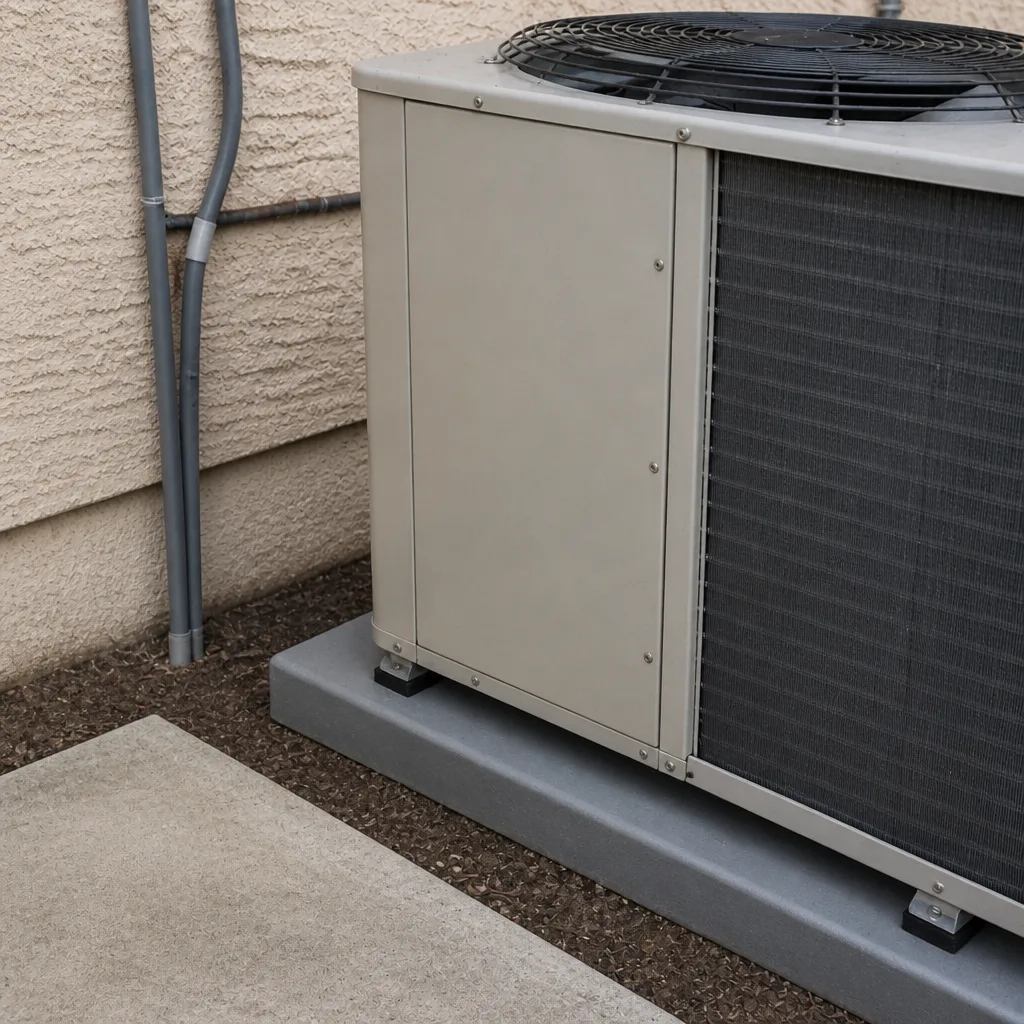
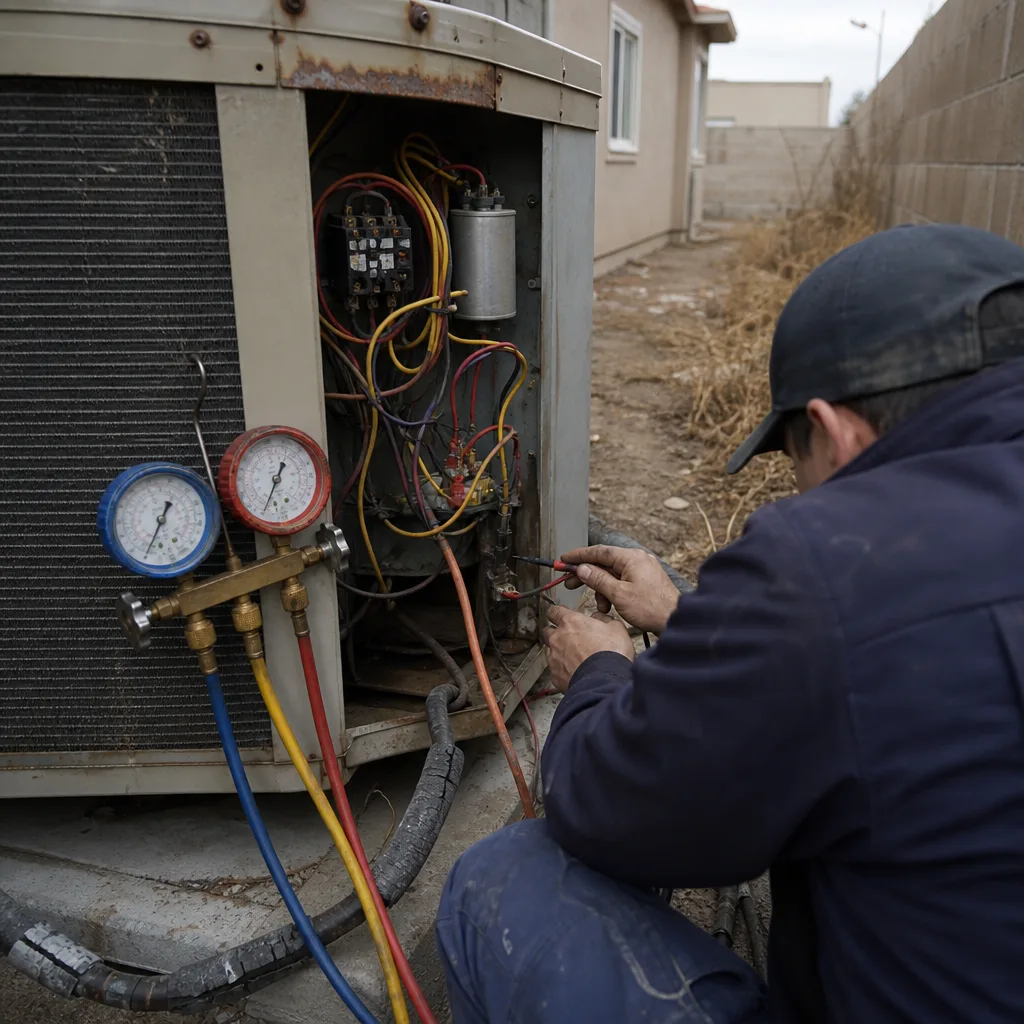
See the difference
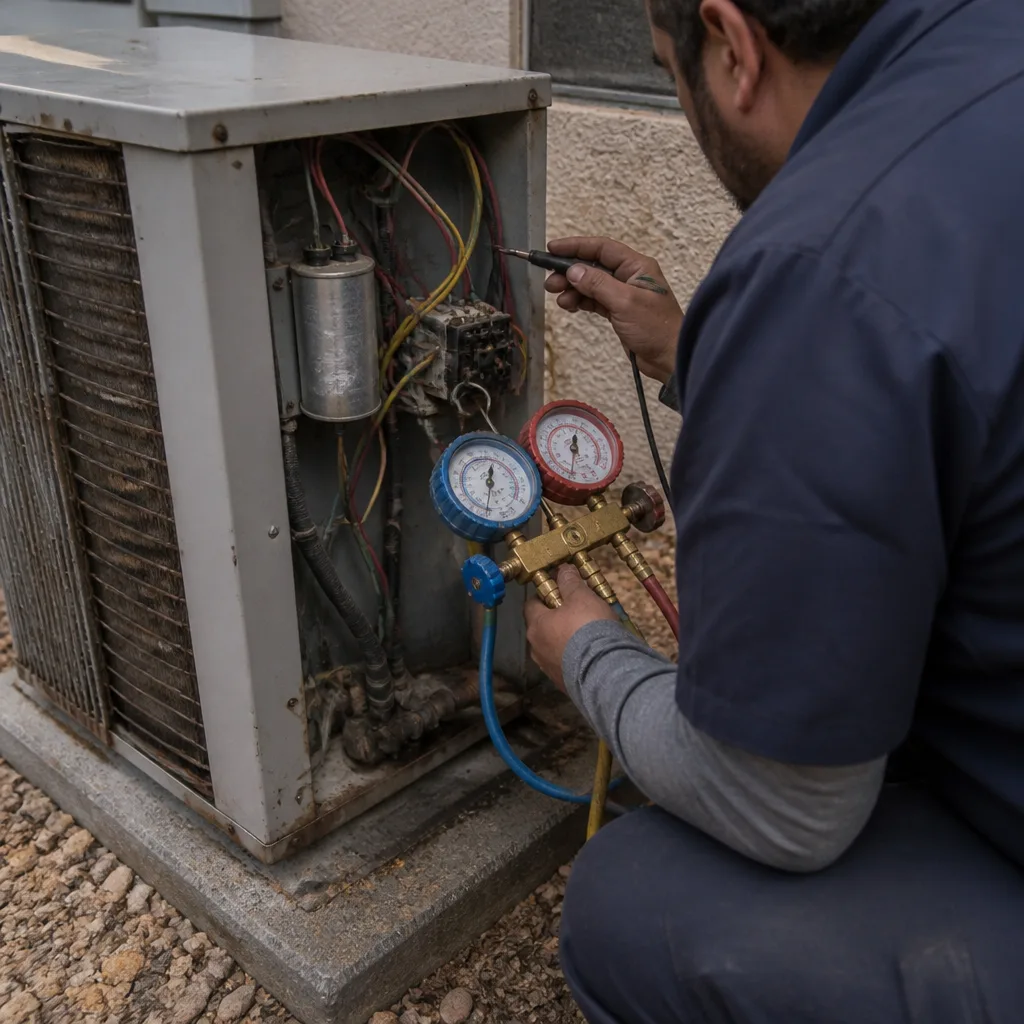 Before
 After
 Before
 After
 Before
 After
When to Call a Professional
Some jobs are homeowner-friendly: filter changes, exterior coil rinsing, thermostat batteries. Others are not. Call in a pro if you’re dealing with refrigerant (federally regulated, and dangerous to handle), a burner that won’t light or smells of gas (stop and call the gas utility first, then us), a compressor that trips the breaker (electrical fault), or any noise that started suddenly and hasn’t stopped. High-voltage components inside the air handler and condenser hold a lethal charge long after the disconnect is pulled – that’s not a homeowner job, in Spring Valley or anywhere else.
If your system is over 12 years old and the repair bill exceeds $900, get a second opinion before approving. Dalton Heating & Air Spring Valley offers free estimates in Spring Valley – call (888) 268-6106 and we’ll put the price in writing. If you’re curious about a heat pump as a replacement path, our Heat Pump Installation in Spring Valley guide covers the rebate math and the real installed cost.
Frequently Asked Questions
Most Spring Valley replacements land between $8,500 and $14,000, with the median around $10,500. Straight swaps on a well-performing existing system typically run the lower end; systems that need a Manual J load calc, ductwork rebalancing, or a new line set trend higher. Call (888) 268-6106 for an exact quote on your home – estimates are free.
Three drivers: high cooling demand across the Las Vegas valley, labor rates 15-25% above national averages because of the metro’s construction volume, and equipment costs inflated by regional distribution. On a $10,000 replacement, expect roughly $400-$700 of that to be pure market premium – the rest is real scope. Get a written breakdown and you’ll see exactly where it goes.
If the repair costs more than 40% of a replacement and the system is over 12 years old, replacement is usually the cheaper five-year path. If the system is younger and the part is a capacitor or blower motor, repair is nearly always the right call. Call (888) 268-6106 and we’ll tell you honestly which side of that line your system is on – our technicians aren’t paid on what they sell.
Five line items at minimum: equipment (with model number), refrigerant charge and recovery, permit, labor, and disposal. A quote missing the permit or recovery line is cutting corners you can’t see. Every bid should also carry a written guarantee with a stated term and a starting refrigerant charge included in the price.
It depends. A straight same-size swap is fine on a home under 15 years old with no major changes and no persistent hot rooms. On older homes or ones with additions, converted garages, or new windows, the $250-$450 Manual J is worth doing – it typically saves 5-15% on operating cost and prevents over-sizing. Call for a quote on both options; the comparison is worth seeing in writing.
Yes – federal, state, and utility rebates are available for qualifying heat pumps in 2026, and the total can be several thousand dollars on a full install. Rebate paperwork is part of every heat pump install we schedule, handled before the job is booked. Call (888) 268-6106 for a free estimate and a rebate breakdown specific to your address.
The Bottom Line
Spring Valley HVAC pricing sits above national averages because of real market forces, not because every contractor is inflating the bid. Your job as a homeowner is to demand the line-item breakdown, insist on the Manual J question being answered honestly, and refuse a verbal price. A 3-ton replacement should run $8,500-$14,000 with the median near $10,500, and any bid missing a permit line, a refrigerant recovery line, or a written guarantee is one to walk away from. The price goes in writing, the guarantee goes in writing, and the invoice matches at the end. That’s how a fair bid looks – and if you can’t get that from a company, you’ve learned more in ten minutes than you would in an evening of Googling.
Dalton Heating & Air Spring Valley services Carrier, Trane, Lennox, Goodman, Rheem, York, Daikin, Bryant, and American Standard equipment, with technicians who have up to 23 years of experience. Every repair carries a written guarantee for a full year, backed by the 365-Day Done Right Promise and a free return visit if the repair fails. Visit Dalton Heating & Air Spring Valley home to see what we cover, or call (888) 268-6106 for a free estimate. Calls are answered by a live person 24/7, and if you’re curious about full system replacement with financing, our Heat Pump Installation in Spring Valley page covers the details. Related guides: AC repair in Spring Valley and furnace repair in Spring Valley.
Written by the team at Dalton Heating & Air Spring Valley.