
Last updated November 17, 2026
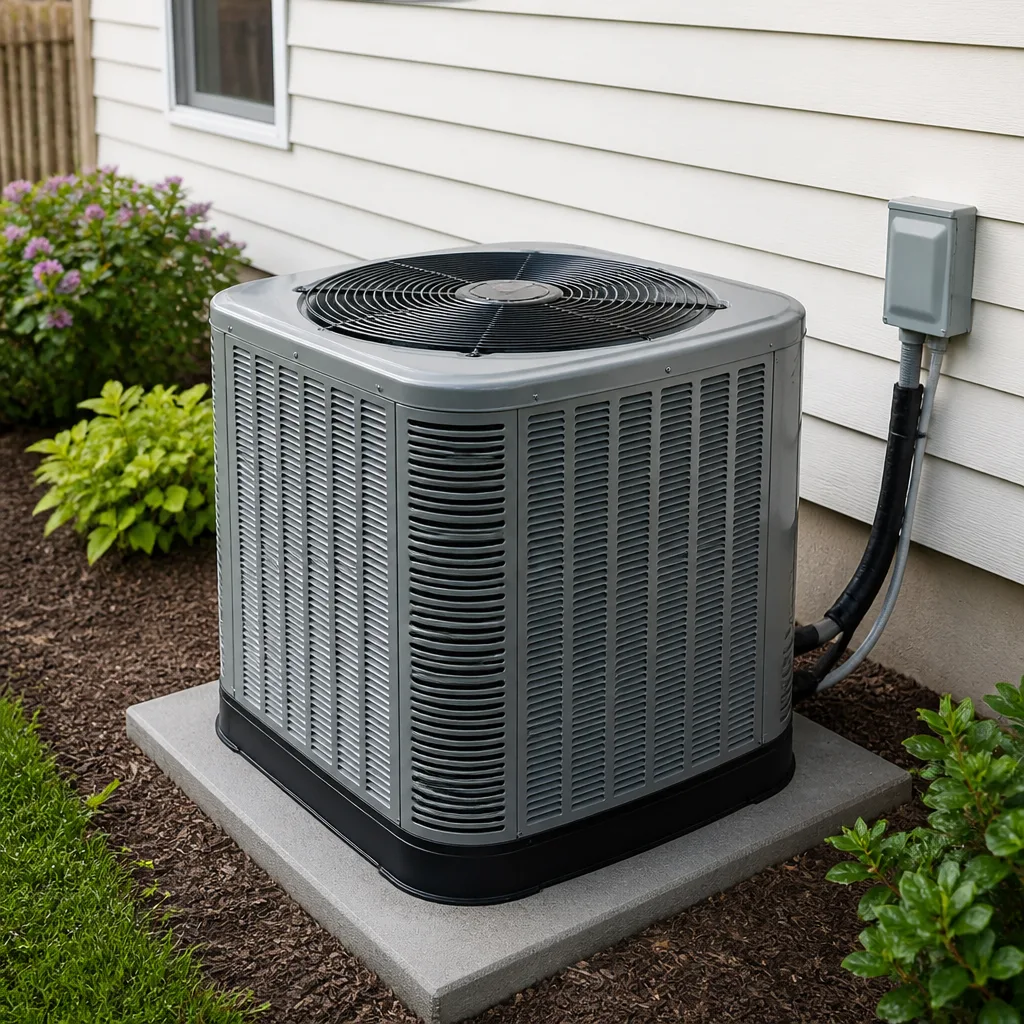 AC repair
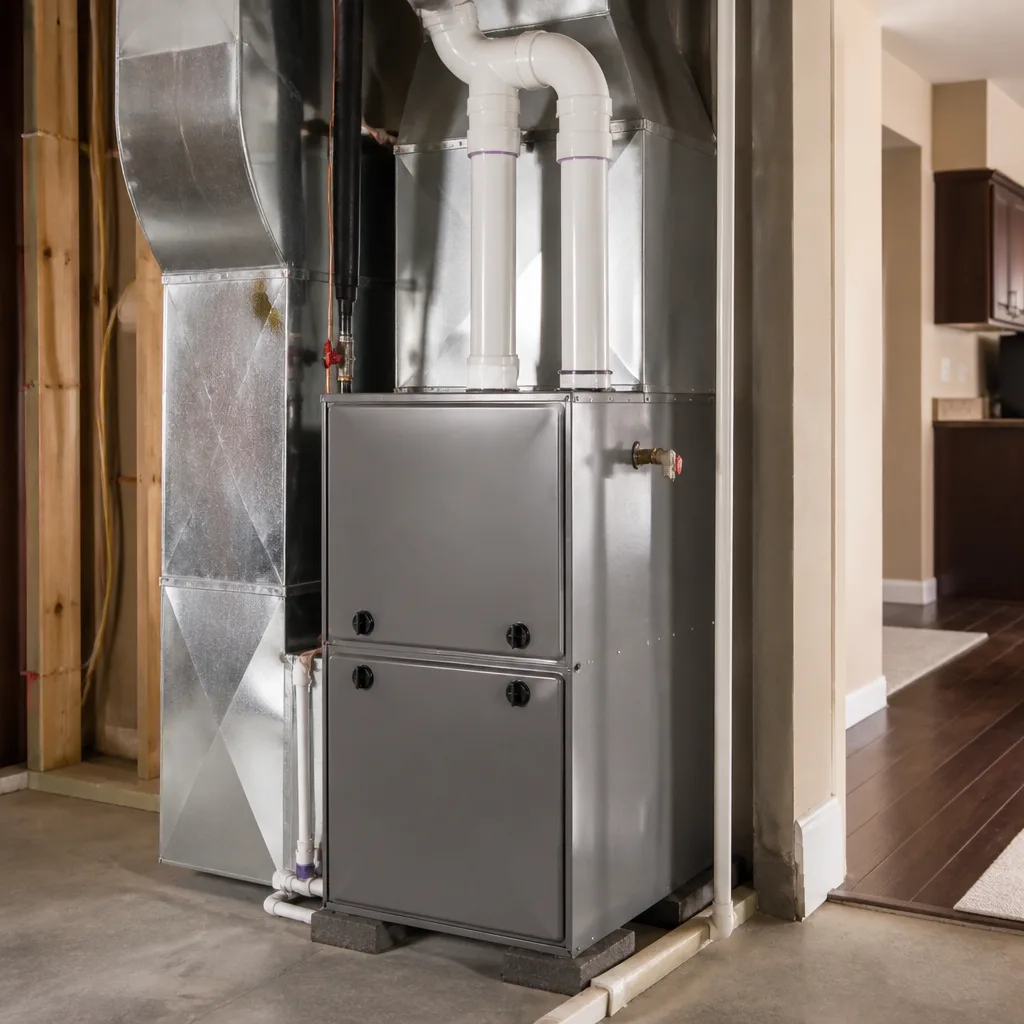 Furnace & heating
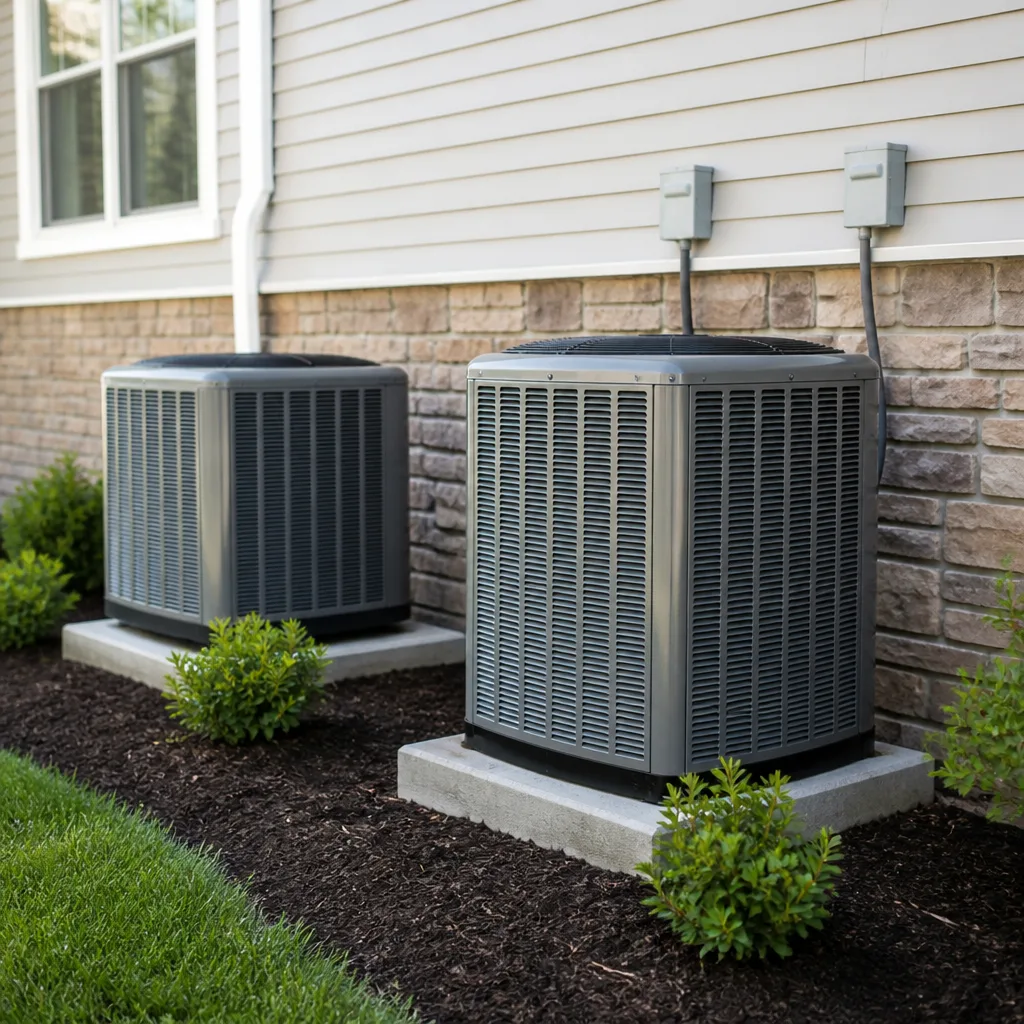 Heat pumps
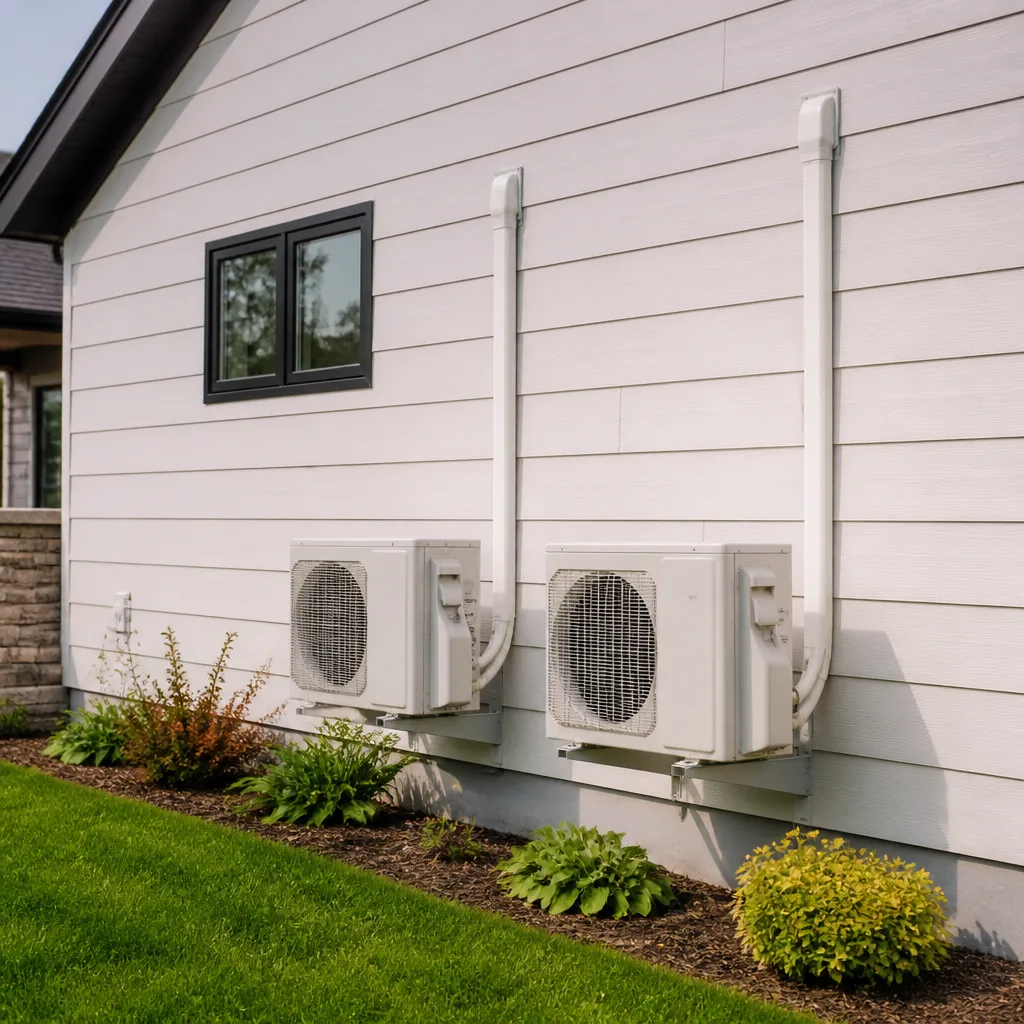 Ductless mini splits
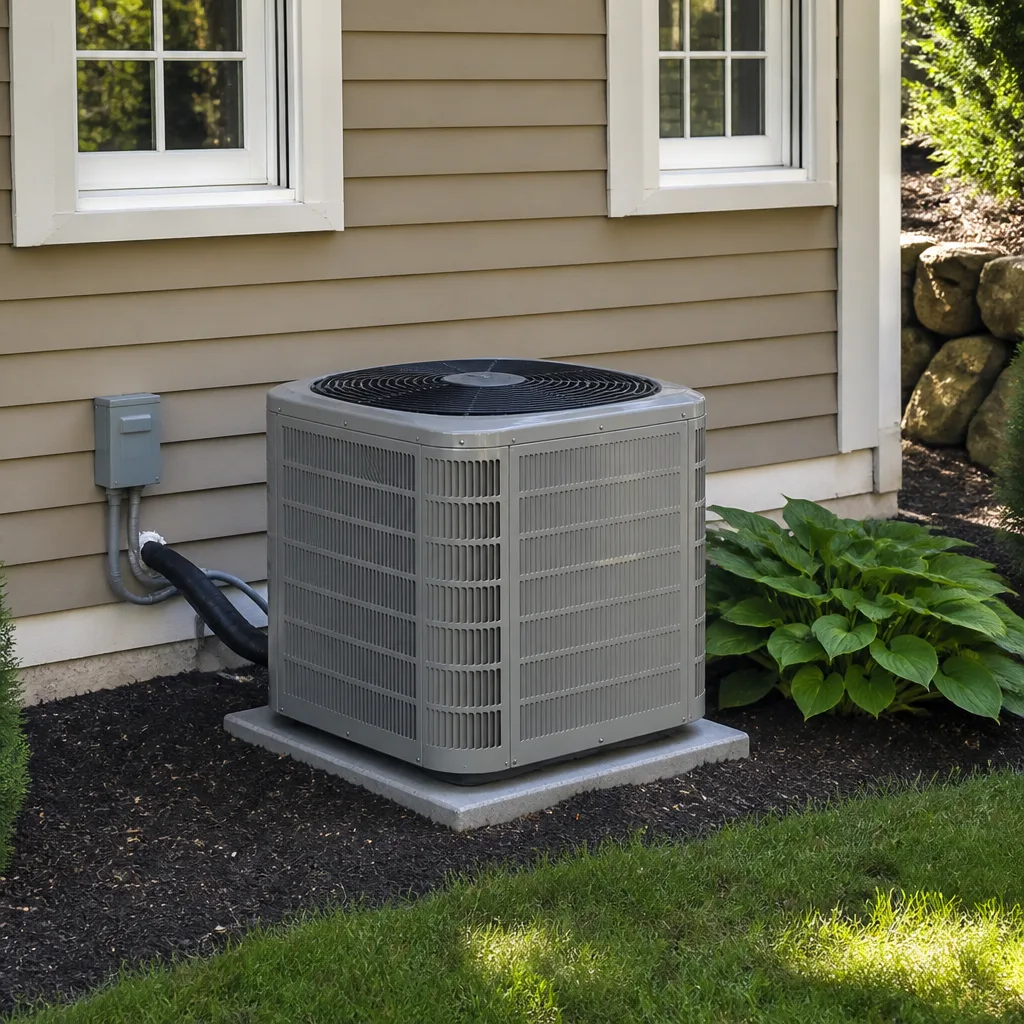 Carrier
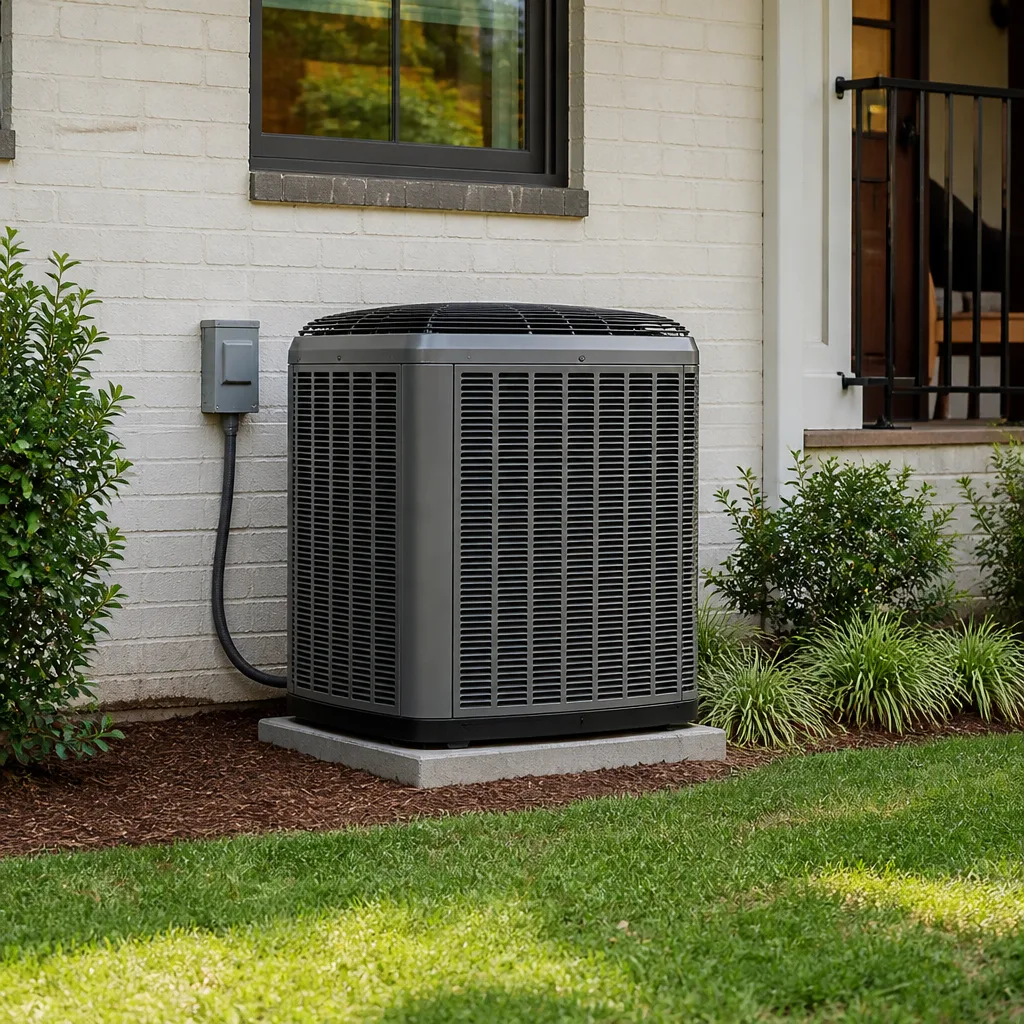 Trane
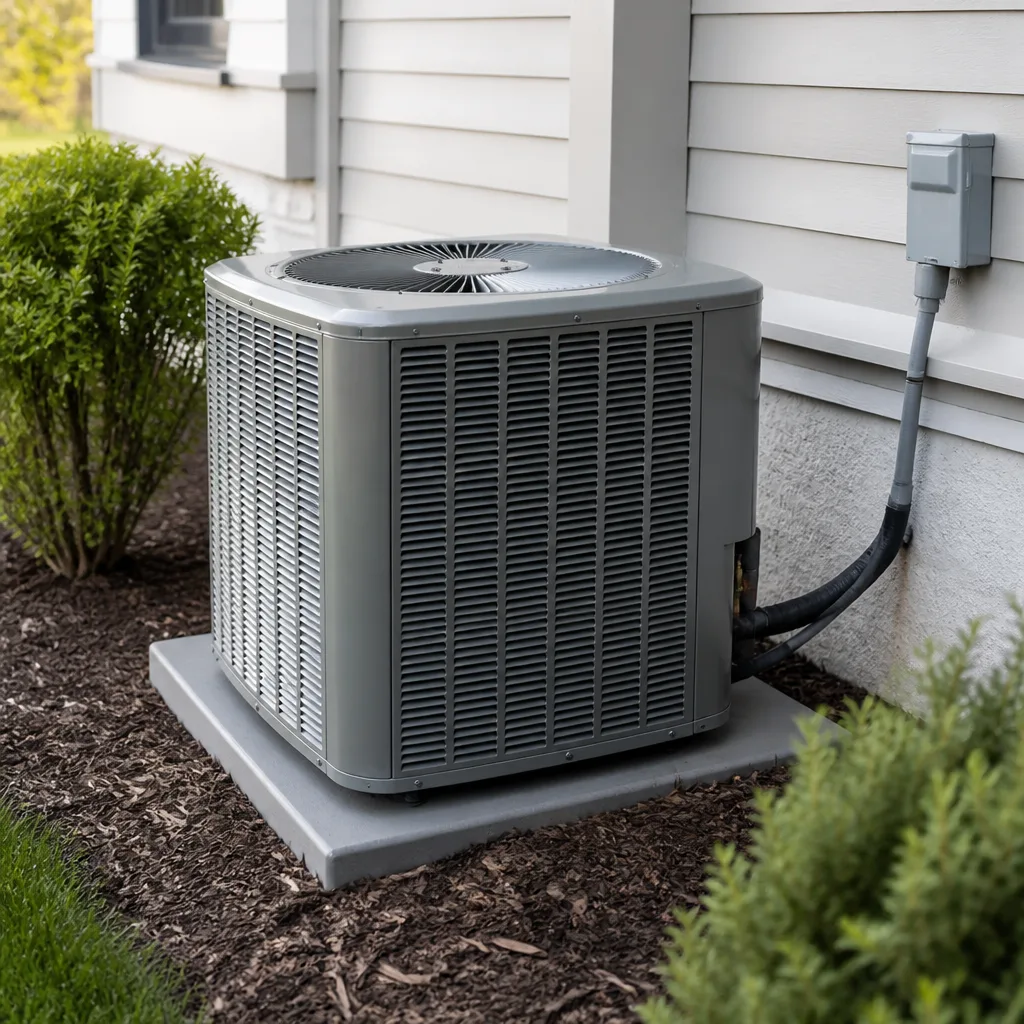 Goodman
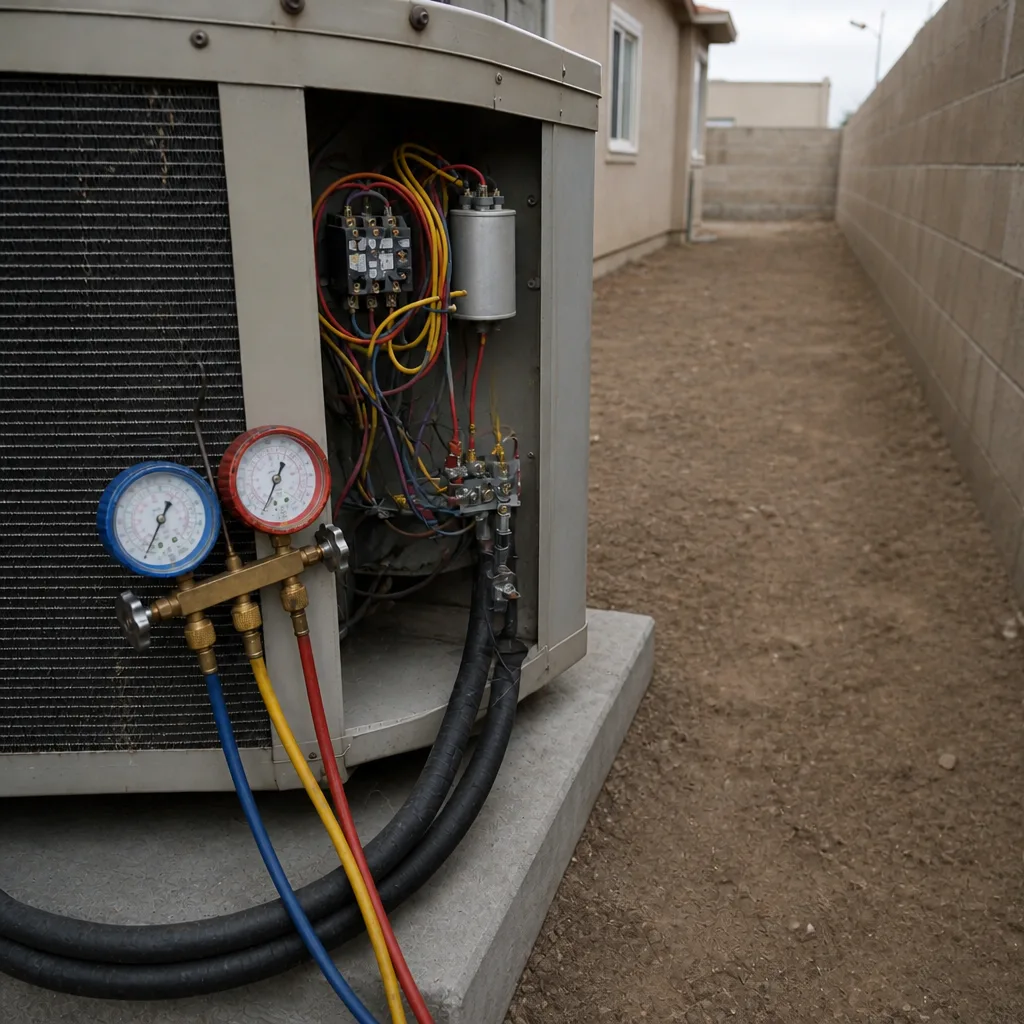
Seasonal tune-up and full diagnostic on your Carrier, Trane, or Goodman system - readings shown to you before any repair is proposed
Diagnosis first, numbers second - you approve the repair price before a single part goes in.
Get your free estimateHVAC Warning Signs: A Spring Valley Homeowner’s Reference Guide
A system running 2,800 hours a year doesn’t usually fail without warning. It almost always sends a signal first – a slight temperature swing at 3 p.m., a sound that wasn’t there last month, a utility bill that jumped $40 for no apparent reason. The homeowners who catch it early pay $150. The ones who ignore it pay $1,800. In Spring Valley, where summer afternoons push past 105°F and the cooling season runs from April into October, the gap between a cheap fix and an emergency replacement comes down to reading those signals in the two to six weeks before they turn into a breakdown.
Quick Answer
The earliest HVAC warning signs in a Spring Valley home are afternoon temperature drift (the house cools fine in the morning but loses ground after 2 p.m.), a utility bill that climbs 15% or more against the same billing period last year, and new sounds at startup – hums, clicks, or delayed compressor engagement. These point to refrigerant charge loss, failing capacitors, or duct leakage, and each is usually a repair rather than a replacement if you act inside that window.
Styles & brands we work with
- AC repair
- Furnace & heating
- Heat pumps
- Ductless mini splits
- Carrier
- Trane
- Goodman
Table of Contents
- The Afternoon Drift: The Symptom Most Homeowners Miss
- Electrical Warning Signs in High-Ambient Systems
- Reading Your Utility Bill as a Diagnostic Tool
- Indoor Air Quality Signs That Point to Ducts, Not Filters
- What the Numbers Should Look Like in a Healthy Spring Valley System
- Call Now vs. Schedule a Visit: A Decision Framework
- The Spring Valley Seasonal Warning Calendar
- Common Mistakes to Avoid
- When to Call a Professional
- Frequently Asked Questions
The Afternoon Drift: The Symptom Most Homeowners Miss
Here’s the pattern we hear most often in Spring Valley: the house sits at 74°F all morning, then slowly climbs to 78°F or 79°F by 3 p.m., and the thermostat just never catches up. Homeowners assume the thermostat is bad or the system is “getting old.” A thermostat is almost never the cause.
Afternoon drift is a capacity problem. Your system has a fixed amount of cooling to give, and when outdoor temperatures peak, so does the load on the house. Two mechanical failures create the drift:
- Low refrigerant charge. A system that’s lost refrigerant – the cooling fluid that carries heat out of your home – has less cooling capacity than its rating suggests. In the morning, when the load is smaller, it keeps up. By midafternoon, it can’t. A system that’s 10 – 15% low on charge typically loses 8 – 12°F of cooling ability at peak load.
- Oversized equipment. An air conditioner that’s too large for the home cycles on and off too fast. It reaches setpoint quickly, then lets humidity and temperature creep back up. Oversizing is common in older Spring Valley subdivisions where additions were built onto original floor plans without a load calculation.
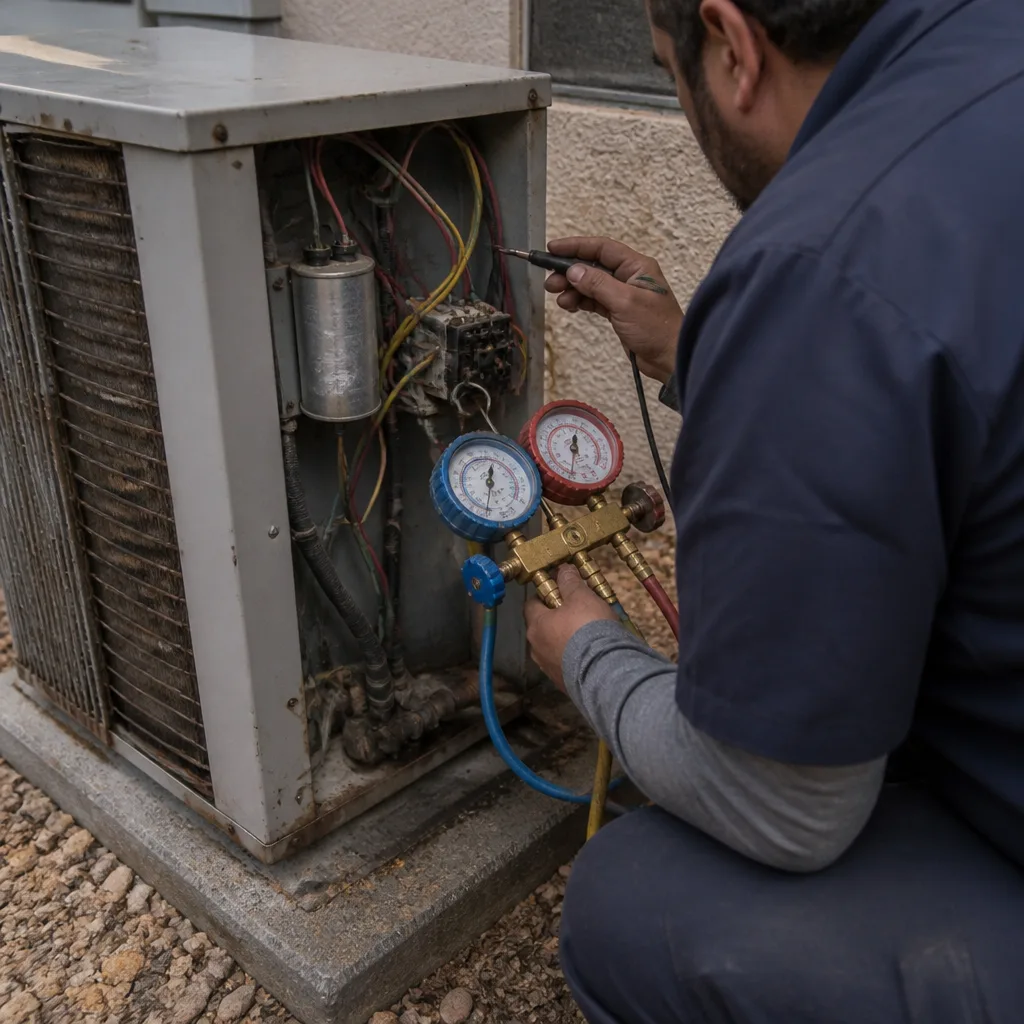
Both problems present identically on the thermostat, and both require a technician with gauges to tell apart. Refrigerant recharge – topping off the cooling fluid your system needs to reach set temperature – runs $180 – $450 depending on the amount needed and whether a leak needs sealing first. A proper diagnosis costs far less than running an undersized system into a July compressor failure, and it should be done before the cooling season peaks in Spring Valley.
Electrical Warning Signs in High-Ambient Systems
Every component in a Spring Valley air conditioner runs hotter than the same part in a milder climate. Ambient temperatures above 105°F stress capacitors, contactors, and compressor windings in ways that show up as sound before they show up as failure. Three specific signals are worth knowing:
- The capacitor hum. A start or run capacitor stores energy to kick the compressor and fan motor into motion. When it weakens, the system struggles to start and you hear a low, straining hum from the outdoor unit for 3 – 8 seconds before it catches. Ignored, a failing capacitor will burn out the compressor motor. Replacement runs $150 – $275.
- Delayed compressor start. The thermostat clicks, the indoor blower starts, but the outdoor unit doesn’t engage for 10 – 30 seconds. That lag points to a worn contactor or a weak capacitor. Contactor replacement runs $140 – $225. Left alone, the contactor can weld shut and the compressor runs continuously until it fails.
- Contactor chatter. A rapid clicking or buzzing from the electrical panel inside the outdoor unit. That’s the contactor cycling on and off rapidly – usually a control voltage problem or a failing contactor. This one is a call-now symptom; continuous cycling damages the compressor.
All three of these are cheap fixes if caught early. A compressor replacement runs $1,000 – $1,800, and that’s the part these small electrical failures destroy. Electrical work inside a condenser at 110°F is not a homeowner job – the capacitor holds a lethal charge even after power is shut off at the disconnect. Call a licensed technician.
Reading Your Utility Bill as a Diagnostic Tool
Your utility bill is one of the most useful diagnostic tools you have, and almost nobody reads it that way. Here’s how to use it.
Pull the same billing period from last year and this year. Compare the dollar amount, then compare the kilowatt-hours used – the line item that shows actual consumption, not just cost. Rate increases skew the dollar figure, so consumption is the honest number. A 15% or more jump in kilowatt-hours, for the same weather and the same habits, points to a mechanical cause in one of these directions:
- Lost refrigerant or a dirty condenser coil makes the system run longer to reach the same temperature. Expect a 10 – 20% consumption increase.
- Duct leakage – estimated to account for 20 – 30% of air loss in many homes – means you’re cooling the attic and the garage. Summer bills climb steadily.
- A failing compressor or failing blower motor draws more amperage as it wears. A 25% or greater spike for no other reason is a strong signal, and worth a service call the same week.
A 15% spike in June, in our experience, is most often the compressor working with less charge or a coil that’s half-blocked with dust. Both are in the $180 – $400 repair range at that point. Wait until a failure in August, and the same problem surfaces as a $1,600 emergency decision made under pressure. According to the U.S. Department of Energy, regular servicing cuts cooling costs by 5 – 15% – but the savings only come if you act on the first sign.
Indoor Air Quality Signs That Point to Ducts, Not Filters
Homeowners tend to reach for a better air filter when dust or odors appear. Filters do a job, but they’re not the answer to most air quality complaints in Spring Valley homes. Three symptoms belong to different mechanical problems:
- Dust settling on horizontal surfaces a day after you clean points to duct leakage – supply or return ducts pulling attic or wall-cavity air into the conditioned space. Sealing and rebalancing runs $400 – $900.
- A musty or “wet basement” smell when the system runs points to coil contamination. The evaporator coil condenses water all summer; when it isn’t cleaned, mold and bacteria grow in the drain pan and get blown through the home. Coil cleaning runs $250 – $600.
- Hot and cold rooms that vary by 5°F or more points to duct design or balancing – the system is delivering air unevenly. Baffles and balancing runs $150 – $350.
Spring Valley’s dry air and heavy summer cooling load make coil moisture a real problem – the coil is wetter, more of the year, than in most climates. If you’re running a premium filter and still seeing dust and odor, the filter was never the issue.
What the Numbers Should Look Like in a Healthy Spring Valley System
You don’t need equipment to spot the top warning signs. A healthy system, working properly in Spring Valley’s summer, behaves in measurable ways. Here’s a shortlist you can check yourself, monthly, in under two minutes:
- Supply air temperature: 15 – 20°F colder than the return air at the register. If you have a thermometer in the vent, that’s a real diagnostic. A supply temperature more than 25°F colder than return can signal low airflow, and less than 12°F can signal high airflow or charge loss.
- Run time: on a 105°F day, a properly sized system may run 60 – 90% of the time. On an 85°F morning, it should run 25 – 40%. If your system runs continuously on mild days, that’s a warning.
- Temperature differential between rooms: under 3°F. If a bedroom is consistently 5°F warmer than the kitchen, that’s an airflow or balancing problem.
- Cycle count: a system cycling more than 3 – 4 times per hour in mild weather is short-cycling – a sign of oversizing, a failing thermostat, or charge problems.
These are the readable signals. The constant across all four is “the system should do in winter and shoulder season what it does at peak.” When it doesn’t, something has changed, and it’s usually a mechanical change.
Call Now vs. Schedule a Visit: A Decision Framework
Most HVAC guides tell you to call a professional for everything. That’s not useful. Here’s the framework we use: which symptoms are a call-now, and which can wait for a scheduled, non-emergency visit.
- Call now (same day or emergency): burning smell, smoke, sparks, or the outdoor unit tripping the breaker. Any of these means electrical failure or a seized compressor – running it damages more than it fixes. Also: no cooling on a day forecast above 95°F with an infant, elderly, or medically fragile person in the home.
- Call today (daytime only): compressor hum with no start, contactor chatter, refrigerant coil ice visible on the indoor or outdoor unit, or a utility bill spike of 25% or more with no other explanation.
- Schedule this week (routine): afternoon drift, temperature differential over 5°F, musty odor during cooling, or a bill spike of 15 – 24%. These are cheaper to fix than schedule, and the equipment is in stock.
- Schedule this month: a room that’s consistently warmer, a filter that needs replacing more often than expected, or new sounds during a startup sequence that don’t match the previous months.
The line between “schedule this week” and “call now” usually comes down to one fact: is the system making electrical or mechanical noise that could damage itself? If yes, call now. If no, schedule. In a Spring Valley June, “call now” answers are the same person on the phone as they are in February – Dalton Heating & Air Spring Valley home answers live, 24/7, so a call today at 8 p.m. is the same as a call tomorrow morning. That matters in a desert summer when a failing capacitor can’t wait for business hours.
The Spring Valley Seasonal Warning Calendar
Spring Valley’s cooling season has distinct phases, and the warning signs you’ll see depend on the month. Here’s the calendar we watch:
- March – April: Pre-season checks. The system runs briefly and may be fine on the first cool days, then start struggling as the first 95°F afternoons arrive. Watch for a delayed compressor start and an afternoon drift in the first week of May.
- May – June: Belt and electrical failures show up now. Capacitors and contactors fail as the system runs its first sustained loads. Utility bill comparison against last year is most useful here.
- July – August: Refrigerant charge issues, frozen coils, and duct leakage become visible. This is the highest-cost window – emergency repairs, with parts availability and scheduling pressure at their worst.
- September – October: Heat pump and heating season begins. Heat Pump Installation in Spring Valley and heating checks happen here, and the first cool nights will reveal a reversing valve or defrost problem on a heat pump.
- November – February: Heating season. Filter changes, carbon monoxide checks, and furnace failures appear. During this window, Furnace Repair in Spring Valley is the priority call.
The value of reading this calendar is leverage. A repair caught in May is a scheduled repair, with parts in stock and no rush charge. The same repair caught in August is an emergency, with the same result and a different bill.
Common Mistakes to Avoid
- Blaming the thermostat first. A thermostat fails rarely, and the symptom is usually “no signal at all.” If the thermostat clicks and the system runs – just not well – the problem is mechanical, and a new thermostat won’t fix it.
- Using a higher-MERV filter as the answer to dust. A premium filter on a duct-leakage problem doesn’t fix the dust; it may worsen airflow. In Spring Valley, most dust complaints are duct leakage, not filtration.
- Ignoring an early-season symptom because “it’s still cooling.” A system 10% low on charge still cools in the morning. Waiting six weeks means a chance of compressor damage and a repair that costs four times as much.
- Running the system with a known capacitor hum. A failing capacitor will take out the compressor motor eventually. The repair is $150 – $275; the replacement is $1,000 – $1,800.
- Comparing utility bills by total dollar amount. Rates rise every year. Compare kilowatt-hours, not the total.
- Skipping the pre-season check in March. In a climate where the system runs 2,800 hours a year, an annual check is the cheapest maintenance you’ll ever buy – and it catches the $150 failures before they become $1,800 ones.
- Letting a “still-cooling, just noisy” system go through August. The sounds are the cheapest early warning sign you’ll get. Ignore them and they change into a breakdown.
When to Call a Professional
Call a professional when any of the following applies: burning or electrical smell, breaker tripping, capacitor hum with no compressor start, contactor chatter, visible ice on a coil, a utility bill spike of 25% or more, or no cooling on a 95°F day. For routine symptoms – afternoon drift, room temperature differential, musty odor, a 15% bill increase – book a scheduled visit inside the week; the system is still working and the fix is cheaper now.
Dalton Heating & Air Spring Valley offers free estimates in Spring Valley – call (888) 268-6106. We answer live, 24/7, and the price is in writing before any work starts. Factory-trained on nine major brands, including Carrier, Trane, Lennox, and Goodman, with a written guarantee on every repair and a full-year 365-Day Done Right Promise. If a repair fails inside that year, we come back at no charge. For AC repair specifically, AC Repair in Spring Valley is the right call, and the technician who diagnoses your problem is background-checked and on the same schedule you were given when you called.
Frequently Asked Questions
The earliest signs are afternoon temperature drift, a utility bill that’s climbed 15% or more versus last year’s same billing period, delayed compressor start, and new sounds at startup – a low hum or rapid clicking from the outdoor unit. Catching any one of these in a Spring Valley system typically means a repair under $400 rather than a replacement. Call (888) 268-6106 for a free estimate before the sign turns into a breakdown.
Afternoon drift almost always points to a refrigerant charge issue or oversized equipment, not a bad thermostat. The system has less capacity than the afternoon load requires; something has changed in the charge or the equipment has always been oversized. A technician with gauges tells you which in about 30 minutes. Call (888) 268-6106 to schedule a visit this week – this is a “schedule” symptom, not an emergency, unless it’s a day above 105°F with vulnerable people in the home.
Most early-stage repairs in Spring Valley run $150 – $450 depending on the part: capacitor replacement $150 – $275, contactor $140 – $225, refrigerant recharge $180 – $450, coil cleaning $250 – $600. A compressor replacement, which is what an ignored electrical fault leads to, runs $1,000 – $1,800. Estimates are free – call (888) 268-6106 for an exact quote on your system.
Compare the same billing period year-over-year in kilowatt-hours, not dollars. A 15% or greater jump for the same weather and habits points to lost refrigerant, a dirty condenser coil, duct leakage, or a failing compressor drawing more amperage. Below 15% can be weather variance; 25% or more is a call-today signal. Call (888) 268-6106 and we’ll diagnose the cause, not just the symptom.
A low, straining hum of 3 – 8 seconds before the compressor catches points to a weakening capacitor. A 10 – 30 second delay between the thermostat click and the outdoor unit starting points to a worn contactor or capacitor. A rapid clicking or buzzing is contactor chatter and is a call-now symptom – it can damage the compressor within days. All three are inexpensive repairs if caught early. Call (888) 268-6106 the same day you hear them.
Call now for burning smell, smoke, sparks, a tripping breaker, compressor hum with no start, contactor chatter, or no cooling above 95°F with an infant, elderly, or medically fragile person at home. Schedule a visit this week for afternoon drift, temperature differential over 5°F, musty odor during cooling, or a 15 – 24% utility bill increase. Anything that sounds mechanical or electrical is a call-now. Call (888) 268-6106 for either.
The Bottom Line
Most HVAC failures in Spring Valley don’t happen without warning. They announce themselves two to six weeks early with an afternoon drift, a $40 jump on the utility bill, a hum at startup, or dust settling a day after you clean. Read those signals and the fix is a scheduled repair – usually $150 – $450. Ignore them and the same problem surfaces in August as a $1,000 – $1,800 compressor or system replacement, decided under pressure. Use the decision framework in this guide, watch the numbers, and call the moment the system changes its behavior. If you’re not sure, that’s an answer too – a free estimate settles it.
Call Dalton Heating & Air Spring Valley at (888) 268-6106 for a free estimate. We answer live 24/7, put the price in writing before any work starts, and stand behind every repair with a full-year written guarantee. That’s The Garrison Standard.
Written by the team at Dalton Heating & Air Spring Valley.
See the difference
 Before
 After
 Before
 After
 Before
 After