
Last updated November 17, 2026
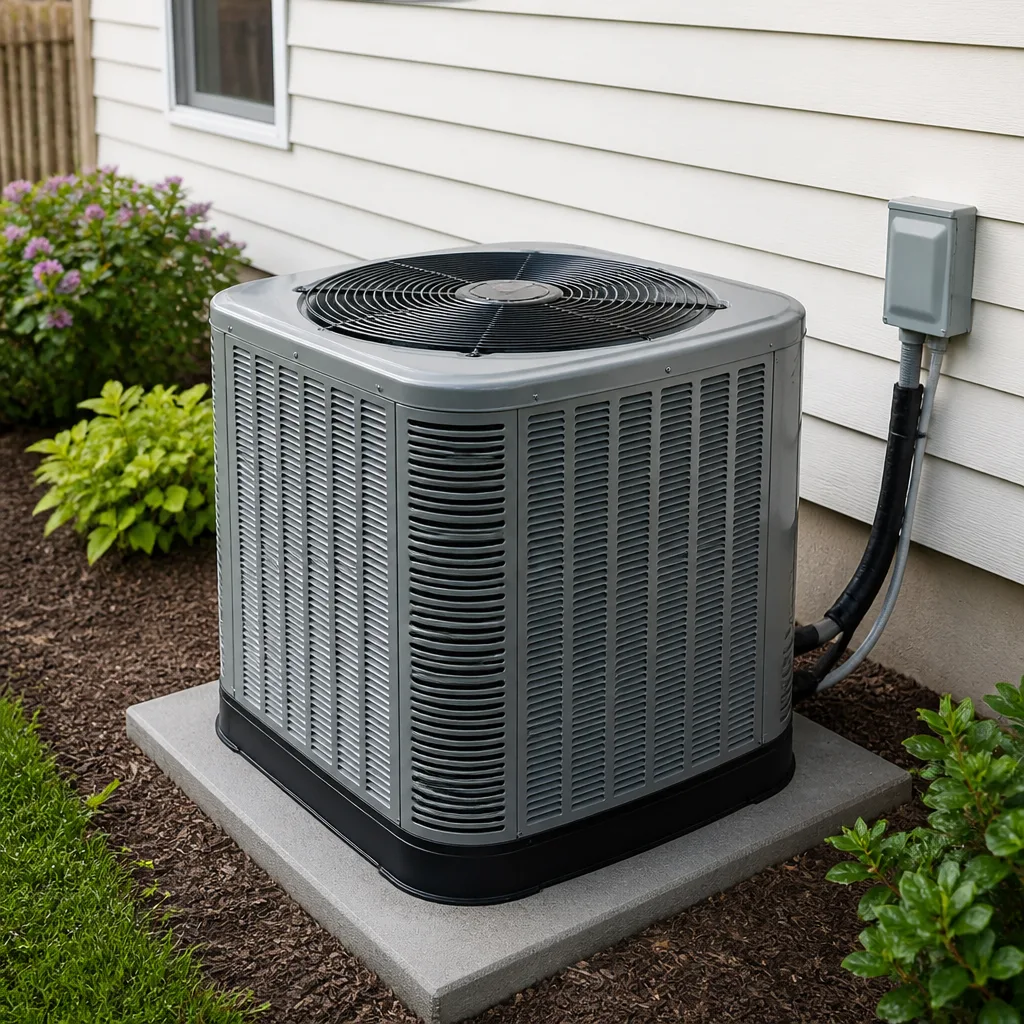 AC repair
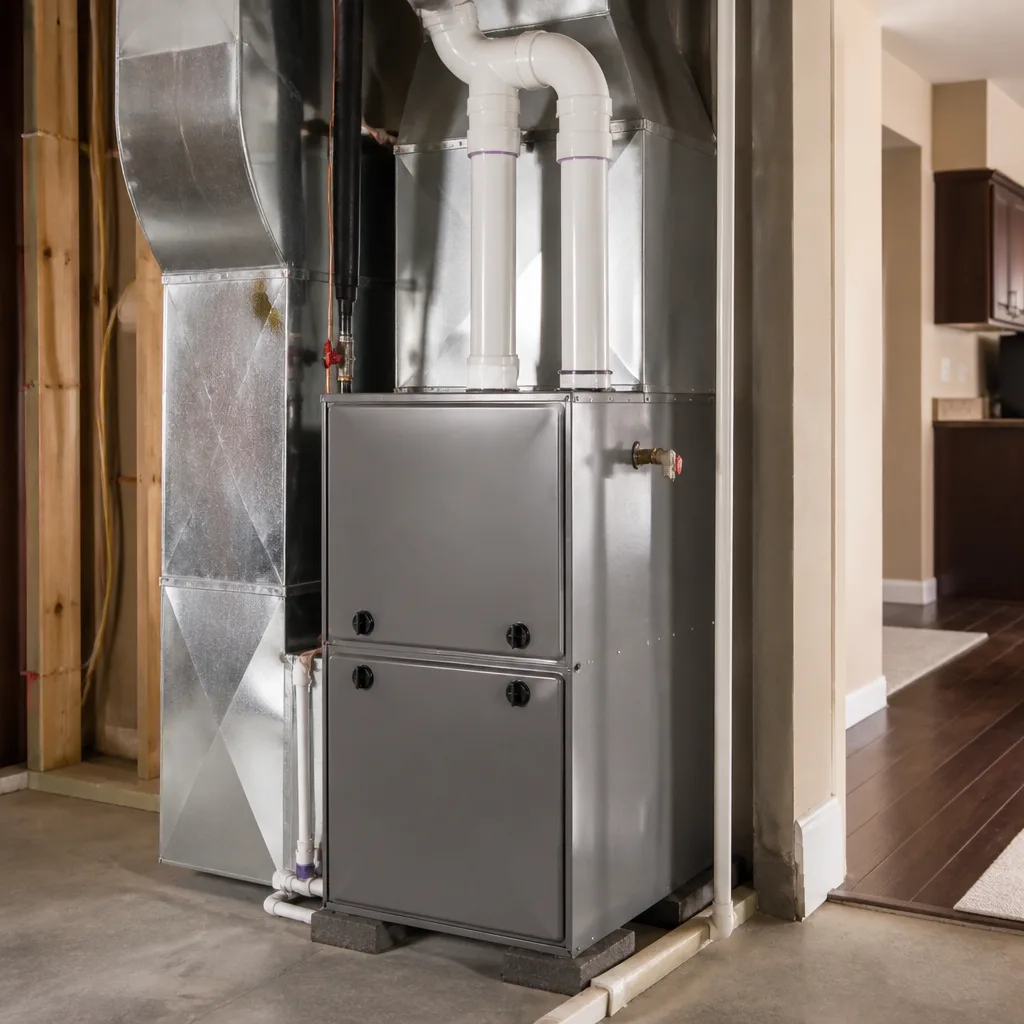 Furnace & heating
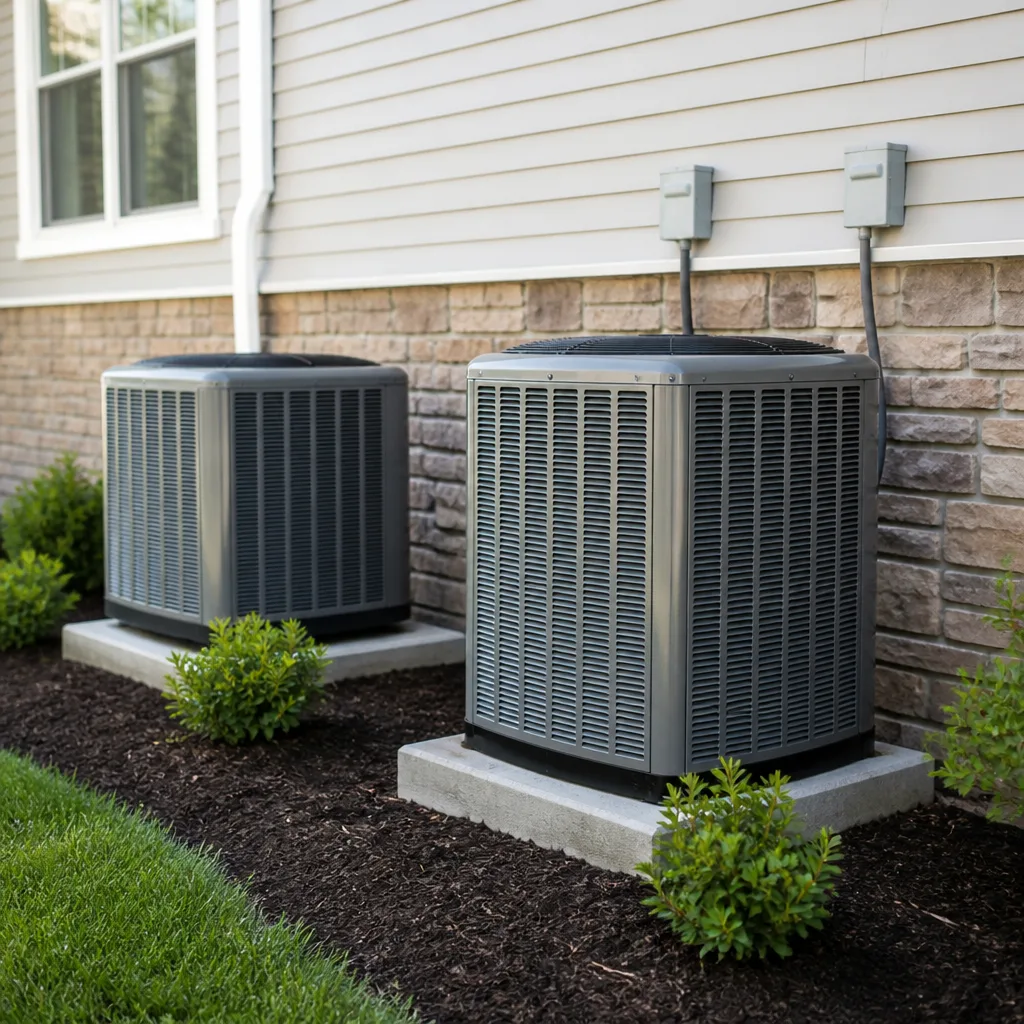 Heat pumps
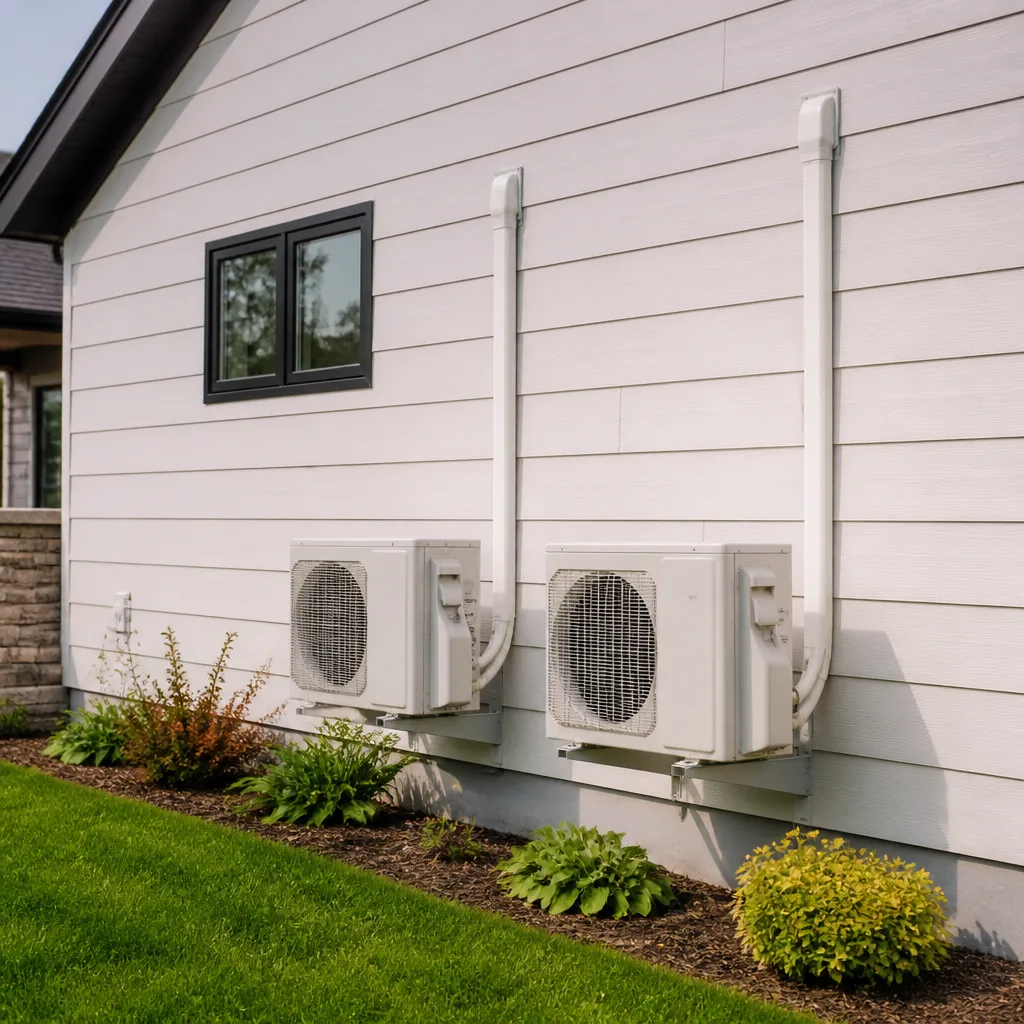 Ductless mini splits
 Carrier
 Trane
 Goodman
Seasonal tune-up and full diagnostic on your Carrier, Trane, or Goodman system - readings shown to you before any repair is proposed
Diagnosis first, numbers second - you approve the repair price before a single part goes in.
Get your free estimateAC Repair Warning Signs Every Homeowner Should Know
Most warning-sign guides tell you what to notice. Almost none tell you how long you have. A refrigerant hiss you hear once and never again is usually a loose Schrader valve cap – a $3 part. A refrigerant hiss that repeats is an active leak, and in a sustained 105°F week in Spring Valley it can starve the compressor of lubrication within 48 to 72 hours of full charge loss. Same sound, wildly different clock. This guide ties every common AC warning sign to a realistic time-to-failure window so you know whether you can wait a week or need to call today. We’ll also cover which smells are urgent, which banging is normal, and how to spot three of the five most common pre-failure indicators without touching a tool.
Quick Answer
The warning signs that most often mean “call today” are a burning electrical smell, repeated refrigerant hissing, banging from the outdoor unit, and short-cycling under five minutes. Signs you can usually schedule within a week include a dirty-sock smell, weak airflow from one vent, and a unit running longer than it used to. Any sign paired with ice on the refrigerant lines or warm air from the vents moves to the urgent list, because those two symptoms tend to accelerate the damage every hour they run.
Styles & brands we work with
- AC repair
- Furnace & heating
- Heat pumps
- Ductless mini splits
- Carrier
- Trane
- Goodman
Table of Contents
- Sign 1: Weak or Warm Airflow (3-14 Days)
- Sign 2: Short-Cycling Under Five Minutes (1-10 Days)
- Sign 3: Strange Smells – Normal vs. Emergency
- Sign 4: Sounds – Dawn Cracks vs. Bent Blower Banging
- Sign 5: Ice on the Lines (Hours, Not Days)
- Sign 6: High Bills and Long Run Times
- The Ground-Level Visual Inspection
- Days-to-Failure Summary Table
The Five Warning Signs Most Homeowners Miss
Before we break down each sign in depth, here’s the short version. These are the five signals that, in our experience running Spring Valley service calls, show up on the work order right before a system fails completely:
- Longer run times. The AC used to cycle every 15 minutes in July; now it runs 40 minutes straight and never quite hits the set temperature.
- Weak airflow from one register only. The rest of the house feels fine, so homeowners assume it’s a vent issue when it’s usually a partially closed damper or a duct leak.
- A slight hum at the outdoor unit you didn’t notice last year. Humming that changes pitch is a contactor or capacitor starting to fail.
- Condensation where there was never condensation. Water pooling near the indoor air handler points to a clogged drain line – a fault that can flood the closet floor before you notice anything else is wrong.
- The breaker that tripped once and never again. One trip after a monsoon-age heat spike is a nuisance; two trips in a month is a failing compressor winding.
All five of these are easier to catch in the shoulder season, which in Spring Valley means April and October. Systems that limp through the summer are the ones we get called about in August, when the part we need is a week out.
Sign 1: Weak or Warm Airflow – 3 to 14 Days to Failure
Weak airflow is the most common warning sign and the one with the widest range. When you set the thermostat to 72°F in Spring Valley in mid-July and the house sits at 80°F, the system is telling you something is restricting either air movement, refrigerant flow, or both. The time-to-failure depends entirely on which of those it is.
Here’s the breakdown by cause and how long you have:
- Clogged air filter: 7 to 14 days before the evaporator coil starts icing up. Change the filter first – this resolves about a third of weak-airflow calls we see. A MERV 8 filter should be swapped every 60 days during summer in Spring Valley; every 90 days is plenty the rest of the year.
- Low refrigerant charge: 3 to 7 days, because the compressor is running hotter and harder every cycle. A slow leak from a Schrader valve can hold for months; a leak on the evaporator coil usually accelerates in the summer heat.
- Failing blower motor: 2 to 10 days. You’ll hear a hum from the indoor unit and the airflow will drop in stages rather than all at once.
- Duct leak or disconnected flex duct in the attic: 14 days or more, but easy to miss because the house cools fine near the air handler and stays warm in the far bedrooms.
If warm air (not just weak) is coming from the vents, stop running the system and call. Warm air plus a running compressor is the classic profile of a refrigerant problem that will destroy the compressor if left alone. Our AC Repair in Spring Valley page covers what a diagnostic visit looks like and what it costs.
Sign 2: Short-Cycling Under Five Minutes – 1 to 10 Days to Failure
Short-cycling is when your AC turns on and off in less than five minutes, again and again. Homeowners describe it as “the unit that never settles down.” It has four common root causes, and each one has a different observable clue. Getting this wrong is expensive – the wrong repair fixes nothing and the real problem gets worse.
Here’s how to tell them apart from inside the house:
- Oversized system. The AC cools the house fast, hits thermostat setpoint, and shuts off before it removes enough humidity. Clue: the house feels clammy even at the right temperature, and this has happened since install day.
- Frozen evaporator coil. Clue: the outdoor unit runs but you’re getting warm air, and if you peek at the copper lines going into the indoor unit you’ll see frost. This is the urgent one – running the system while frozen will damage the compressor.
- Failing capacitor or contactor. Clue: the outdoor unit tries to start, hums, clicks, and stops. The indoor blower still runs. This is a $150 to $300 repair done today, or a $1,800 to $2,800 compressor replacement done next week if you ignore it.
- Thermostat placement or calibration issue. Clue: the short-cycling happens at the same time every day, and stops when you bump the thermostat up two degrees. A thermostat in direct sun or near a supply register reads the wrong temperature.
In Spring Valley, cause #2 is the most common by far in July and August, because a system that’s a half-pound low on charge will freeze the coil on the hottest, most humid days of the year and nowhere else. A technician diagnoses which of the four is happening with gauges and amp readings in about 20 minutes.
Sign 3: Strange Smells – Normal vs. Emergency
Smells are where homeowners overreact to the cheesy ones and underreact to the dangerous ones. Here’s the distinction that matters:
The dirty-sock smell
This smell is microbial growth on the evaporator coil, usually from a system that stays damp between cycles. It’s not urgent. It’s a maintenance item. In Spring Valley, we see it most often in homes with oversized systems that short-cycle and never run long enough to dry the coil. Cleaning typically runs $250 to $450 as part of a tune-up. Schedule it, don’t panic.
The burning electrical smell
This is a hard stop. Turn the system off at the thermostat, then at the breaker, and call us. A burning smell from the indoor unit is usually a failing blower motor, a scorched wire, or a capacitor getting ready to blow. It is not a service you schedule for next Tuesday. From the moment a capacitor starts to arc, you have hours before it damages the motor it’s driving, and the motor replacement is four times the capacitor repair.
The rotten-egg smell
If you smell gas – rotten eggs, sulfur – leave the house and call your gas utility from outside before you call anyone else. It’s rarely an HVAC problem but it’s always a safety one. See our furnace repair in Spring Valley page for what we do once the utility has cleared the house.
The musty-closet smell near the air handler
This one is easy to ignore and should not be. A musty smell near the indoor unit usually means the drain pan is holding standing water – often because the condensate line is partially clogged. Give it 3 to 7 days before it overflows and stains your ceiling or flooring.
Sign 4: Sounds – Dawn Cracks vs. Bent Blower Banging
Air conditioning systems make noise. The trick is knowing which noises are the system warming up and which are the system failing.
The normal dawn crack
In Spring Valley, early-morning temps in the shoulder seasons can drop 30 degrees overnight. When the thermostat kicks the system on after a cool night, ductwork that expanded in yesterday’s heat contracts and you’ll hear a single, sharp crack or tick from the ceiling or a wall vent. One crack, once, at startup – that’s normal thermal expansion. Ductwork does this every year and it’s the HVAC equivalent of a house settling.
The abnormal banging
A bent or unbalanced blower wheel produces a rhythmic bang or thump – think of a washing machine with an off-balance load but coming from the air handler closet. It happens on every cycle, not just the first one of the day, and it gets worse over time. A bent blower wheel puts stress on the blower motor bearing and the motor mount, and if you let it run you’ll usually replace the motor inside 2 to 3 weeks. In our experience, this is one of the fastest-turning faults from “noticeable” to “expensive” on a Spring Valley service call.
Other sounds worth noting
- Hissing: refrigerant leak. Urgency depends on whether it repeats – see the intro footnote. A single hiss from a check valve or Schrader cap is minor; a repeating hiss is a leak.
- Buzzing at the outdoor unit: contactor or capacitor. Days, not hours, but don’t wait a week.
- Screeching at startup: blower motor bearing or compressor starting to seize. This is a same-day call because the compressor repair is the most expensive single item in HVAC short of full replacement.
Sign 5: Ice on the Refrigerant Lines – Hours, Not Days
This is the warning sign we wish every homeowner understood. If you see ice on the refrigerant lines – the two copper pipes going into the indoor unit – or you see ice on the outdoor unit itself, the system has already crossed a line. The proper response is not “wait for it to thaw.”
Ice on the lines means one of two things:
- Restricted airflow across the evaporator coil. Usually a filter, blower, or duct fault. The coil gets too cold, then freezes, then can’t absorb heat at all.
- Low refrigerant charge from a leak. As charge drops, the coil runs colder than it should and freezes on the humid days.
Here’s the step-by-step response:
- Turn the system off at the thermostat, not just at the fan switch.
- Check the air filter. Replace if visibly loaded – a $15 filter can be your entire repair.
- Let the system sit off for 4 to 6 hours until the ice thaws.
- Turn it back on and watch. If it freezes again within 2 hours, stop and call for a technician.
- Do not add refrigerant from a can. Topping off a leaking system without finding the leak wastes money and leaves the real problem in place.
Frozen systems are the fastest-moving sign on this list in peak Spring Valley summer. Running a system on a frozen coil spins the compressor with no cooling load and shortens its life by months in a single afternoon.
Sign 6: High Bills and Long Run Times – 2 to 4 Weeks
The slowest-moving warning sign is the utility bill. If your summer bill jumped 30% versus last July with the same amount of use, your system is spending more energy to do the same work. Sometimes that’s a $150 repair, sometimes it’s early-stage failure. Use this checklist to see where the money is going:
- Dirty condenser coil (outdoor unit): The outdoor coil absorbs heat from your house into the air, and when it’s coated in Spring Valley dust and cottonwood, the compressor runs 20% to 40% hotter to do the same job. This is the most common cause and the most fixable – a professional coil cleaning runs $150 to $300.
- Refrigerant charge drifting low: A marginal undercharge can run for weeks before it freezes the coil, but it costs 10% to 15% on the bill the whole time.
- Declining compressor efficiency: A compressor on its way out starts drawing more current to move the same refrigerant. A technician with an amp clamp catches this in 10 minutes.
- Duct leaks in attic or crawlspace runs: Spring Valley homes with attic flex duct on unshaded runs lose 15% to 25% of their cooling to the attic in August.
We’ve pulled bills and found the compressor was the culprit twice in a row; more often it’s the coil or the ducts. Either way, an amp reading at the outdoor unit tells you in 10 minutes whether you’re looking at maintenance or a repair.
The Ground-Level Visual Inspection – 5 Minutes, No Tools
You can catch three of the five most common pre-failure indicators without climbing a ladder, opening a panel, or touching anything live. Do this every 30 days in summer:
- Look at the outdoor unit from 10 feet away. Is there debris – grass clippings, cottonwood fluff, palm fronds – within 24 inches of the coil? Clear it. Is the top grille bent or pushed in? That can indicate a fan blade out of balance.
- Look at the copper lines entering the indoor unit or at the outdoor disconnect. No ice anywhere? Good. Ice on either line? Stop and call – see sign 5.
- Look for oil stains on or around the outdoor unit. Refrigerant oil residue is dark, greasy, and it always means an active leak because the oil travels with the refrigerant. That’s a leak you don’t need a gauge to find.
- Listen for 60 seconds. Normal is a steady fan hum and compressor drone. Not normal is the rhythmic bang of a blower wheel, the screech of a bearing, or the repeated hiss of gas escaping.
- Look at the drain line outlet (usually PVC near the outdoor unit or in the garage). Water running continuously is fine. Water running in trickles from a clogged line, or nothing running when the system has been on all day, is not.
Three of the five – oil stains, ice, and drain-line behavior – are the same three indicators a technician checks first on a Spring Valley diagnostic. Catching any of them early is the difference between a $180 repair and a $1,900 compressor.
Days-to-Failure Summary Table
Here’s the practical reference. These windows assume peak summer weather in Spring Valley – sustained 100°F-plus afternoons – because that’s when the fault accelerates.
- Burning electrical smell: Hours. Shut down and call.
- Ice on refrigerant lines: Hours to 1 day. Shut down, thaw, retry once, call if it returns.
- Repeating refrigerant hiss: 48 to 72 hours from full charge loss. Call within 24 hours.
- Screeching or grinding at startup: Same day. Motor or compressor failure accelerating.
- Banging from indoor unit (bent blower wheel): 2 to 3 weeks before motor failure.
- Short-cycling under five minutes: 1 to 10 days depending on cause.
- Weak airflow from one register: 3 to 14 days depending on cause.
- Musty smell near air handler: 3 to 7 days before water damage.
- Dirty-sock smell: Weeks. Schedule at next tune-up.
- High utility bill with no other symptom: 2 to 4 weeks.
Most furnace and AC repairs fall in the $150 to $450 range depending on the part, and the call for a no-cooling system is a good place to use our Dalton Heating & Air Spring Valley home page to find the right service. If you’re weighing repair against replacement for an older system, our heat pump installation in Spring Valley page walks through when a swap makes more sense than a second major repair.
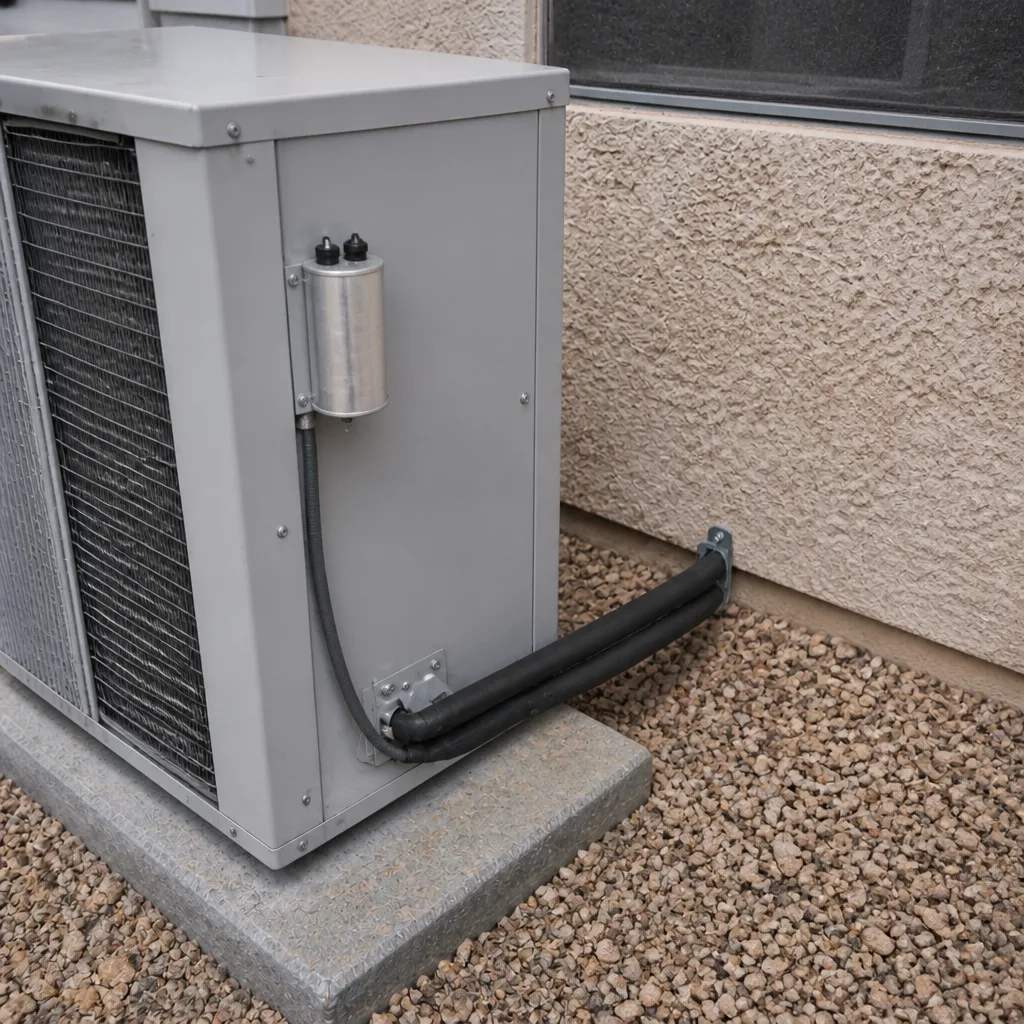
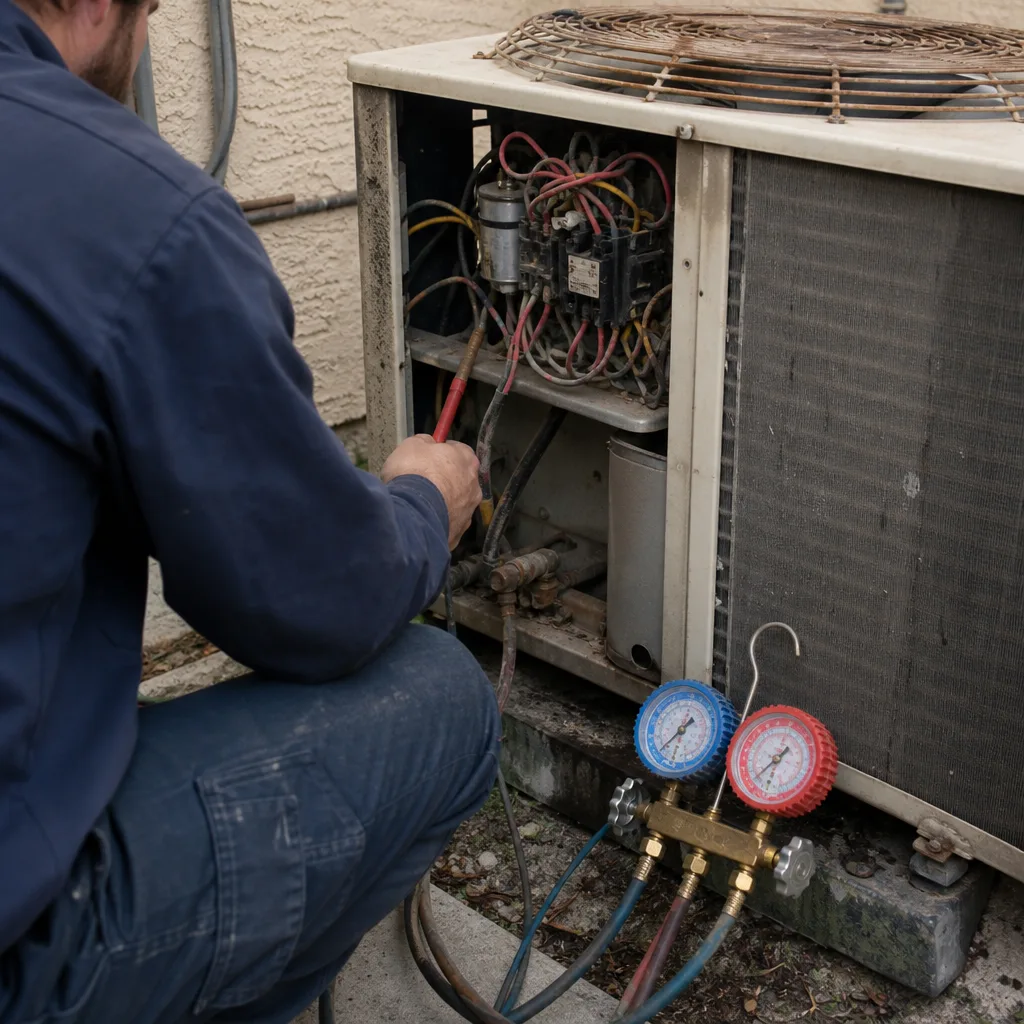
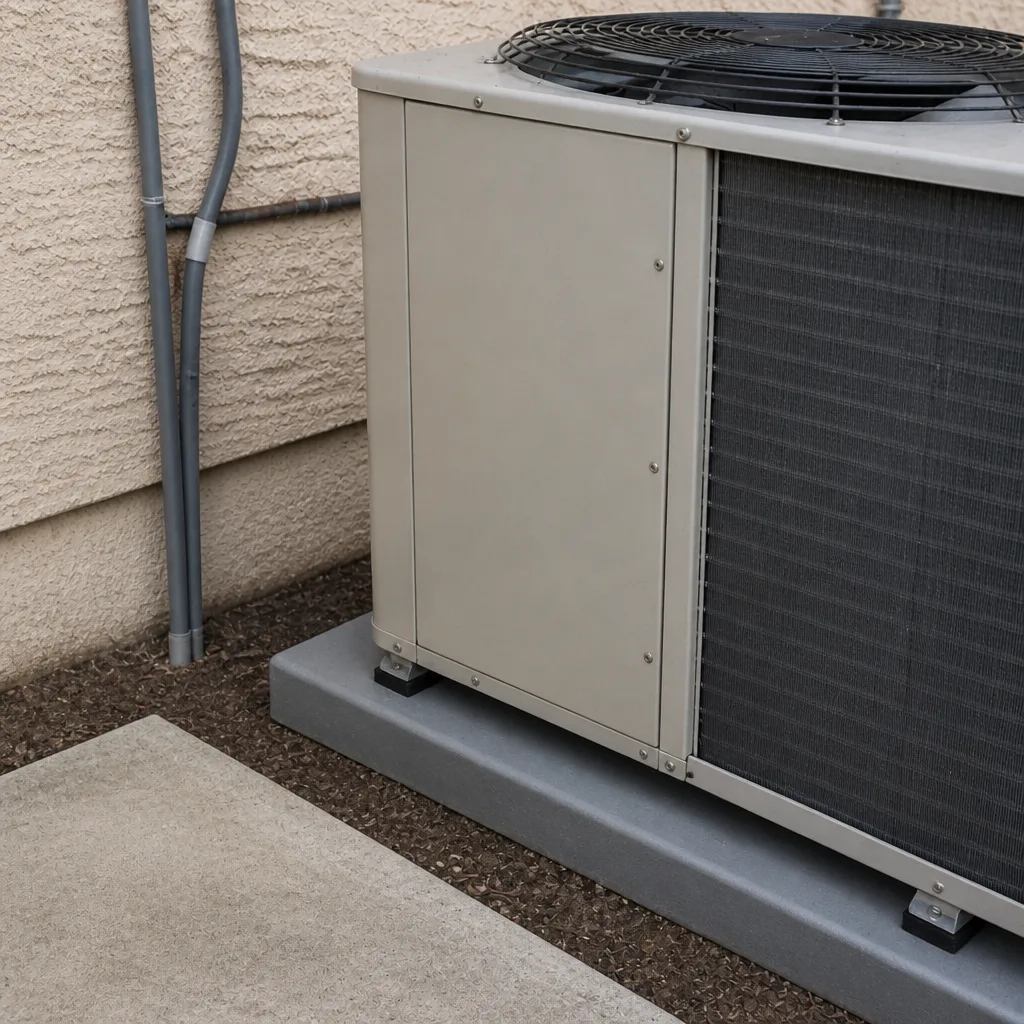
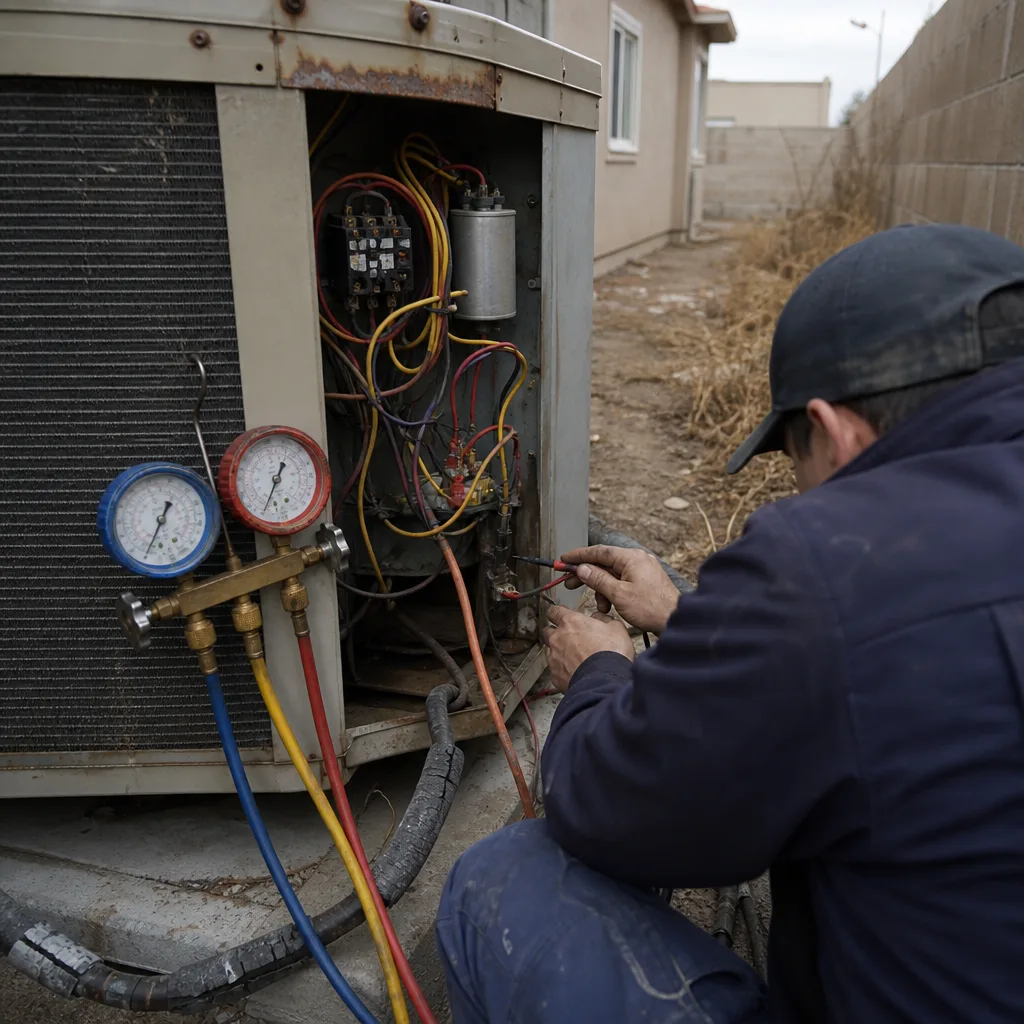
See the difference
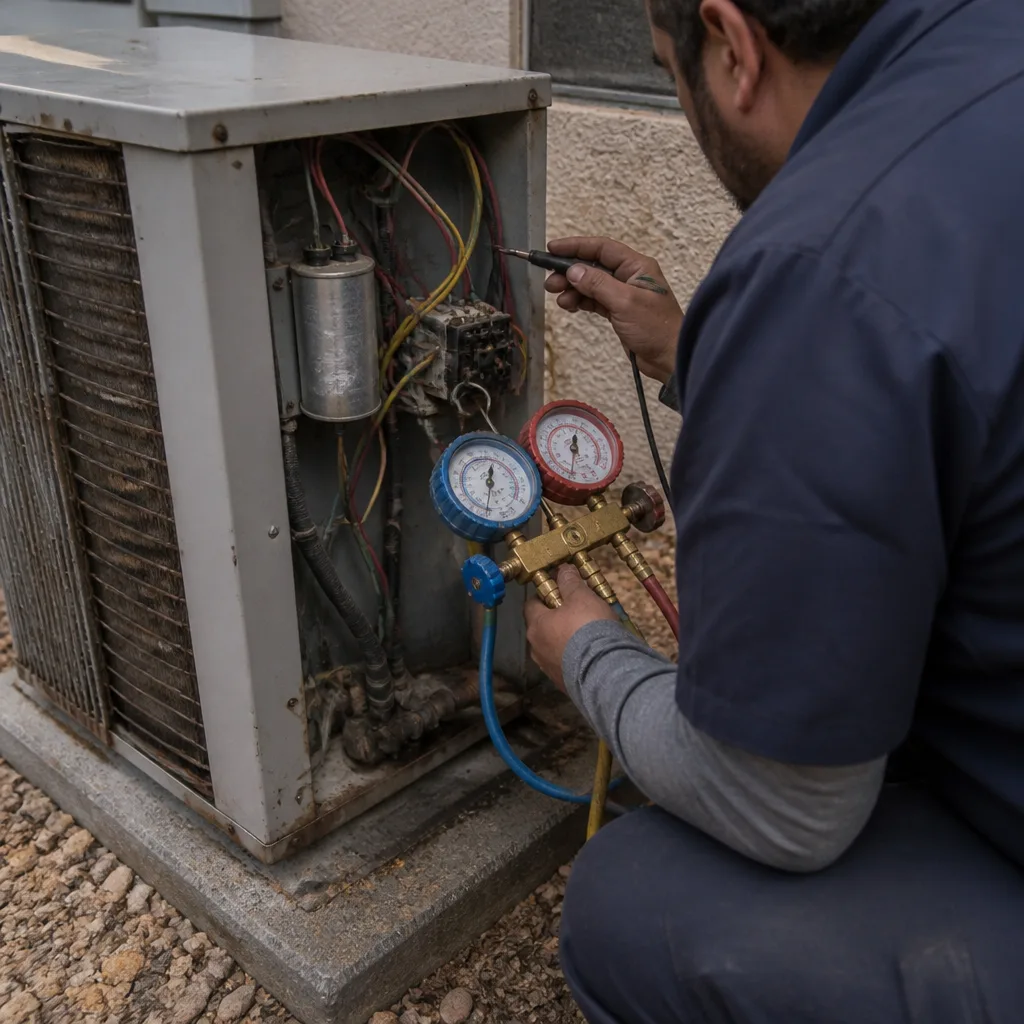 Before
 After
 Before
 After
 Before
 After
Common Mistakes to Avoid
- Assuming a single hiss means a leak. It usually doesn’t. A Schrader valve cap costs a few dollars and stops the sound. A repeating hiss is the leak, and confusing the two either triggers unnecessary anxiety or delays a real repair by a week.
- Running the system on a frozen coil “until it thaws.” It won’t thaw while it’s running, and the compressor is running dry of cooling load the entire time. Turn it off.
- Calling a dirty-sock smell an emergency and a burning smell a maintenance item. We see the reverse about once a month. Burning smell is the emergency. Musty smell is the maintenance item.
- Pressure-washing the outdoor unit. A garden hose on low pressure is fine; a pressure washer will bend the coil fins and reduce heat transfer permanently. This costs $400 to $600 to fix and gains you nothing.
- Adding refrigerant from a parts-store can. Topping off a leaking system without finding the leak doesn’t fix it, and in Spring Valley we see three or four systems each summer where a self-added can of R-410A mixed with the wrong refrigerant. The recovery and recharge is $800 to $1,400 when it should’ve been a $250 leak repair.
- Ignoring the breaker trip because “it only did it once.” Twice in a month is a failing compressor winding. The compressor repair is one of the most expensive single repairs in residential HVAC, and the warning is free if you catch it.
- Waiting for the first 105°F day to test the system. Run your AC for 20 minutes on a mild afternoon in April or May, in Spring Valley. Every pre-failure indicator on this list shows up in a shoulder-season test if you just turn the system on and listen. Technicians call this a “pre-season cool run” – it costs nothing and it surfaces most of the list.
When to Call a Professional
Call a technician today if any of these are true: burning smell anywhere in the system, ice on the refrigerant lines that returns after a thaw, repeating refrigerant hissing, screeching or banging from the indoor unit, short-cycling that didn’t happen last summer, or a breaker that has tripped more than once in a month. Do not open the electrical panel, the outdoor compressor compartment, or the capacitor cover – those hold a lethal charge for minutes after power is off, and a capacitor that looks harmless will knock you across the driveway. The same goes for refrigerant: venting it is illegal, and topping it off yourself almost always costs more than the leak repair. Call us at (888) 268-6106 for a free estimate in Spring Valley. We answer live, 24 hours a day, and our technicians arrive inside the window with a written price before any work begins.
Frequently Asked Questions
Urgent problems are the ones that get worse every hour you run the system: burning smell, ice on the lines, repeated refrigerant hissing, banging, and screeching. Schedule-for-the-week problems are the ones that have a stable cause and a slow timeline: dirty-sock smell, one weak register, and a high bill with no other symptom. When in doubt, shut the system off at the thermostat and call us at (888) 268-6106 – the phone consultation is free.
You can’t run it usefully at all – a frozen coil provides no cooling, and every minute the compressor runs on a frozen coil adds wear. Turn the system off, change the air filter, and let it thaw for 4 to 6 hours. If it freezes again within 2 hours of restart, stop and call for a diagnostic. In Spring Valley, we see frozen coils most often in July and August and usually trace them to low refrigerant charge or a failing blower.
A single, sharp crack from the walls or ceiling at first morning startup is normal ductwork expansion and doesn’t need a service call. Repeated banging, thumping, or a rhythmic noise consistent with a washing machine off-balance is not normal – it usually points to a bent blower wheel, and it needs to be repaired within 2 to 3 weeks before the blower motor fails.
A burning smell is almost always an electrical fault – a failing blower motor, a scorched wire, or a capacitor about to fail – and it needs to be treated as an emergency. Turn the system off at the thermostat, then at the breaker, and call us at (888) 268-6106. Do not run the system and do not open the air handler panel; the capacitor can hold a dangerous charge after power is off.
Short-cycling under five minutes is serious because it has four possible root causes and three of them get worse fast. The causes are an oversized system, a frozen evaporator coil, a failing capacitor or contactor, and a thermostat calibration issue. Of the four, the frozen coil and the electrical fault are the urgent ones. A diagnostic visit pins down which one you’re dealing with in about 20 minutes with gauges and an amp clamp.
You can and should handle a few of them: change the air filter, clear debris from around the outdoor unit, check that the outdoor disconnect is on, and look for oil stains and ice at ground level. Anything that involves opening a panel, adding refrigerant, handling electrical components, or working on the gas side is a licensed professional’s job, both because of the injury risk and because refrigerant handling is regulated. Our technicians have up to 23 years of experience on nine major brands including Carrier, Daikin, and American Standard, and every repair is priced in writing before any work starts.
The Bottom Line
The most useful thing about warning signs is the clock attached to them. A dirty-sock smell gives you weeks; a burning electrical smell gives you hours. A repeating refrigerant hiss is a refrigerant leak that can starve the compressor in a 105°F Spring Valley week; a single hiss is probably a $3 valve cap. Learn the difference, do the five-minute ground-level check once a month, and call when the clock is short. The 365-Day Done Right Promise on every Dalton repair means that if the fix doesn’t hold, we come back at no charge – within the guarantee period, not just 30 days.
Written by the team at Dalton Heating & Air Spring Valley.