
Last updated November 17, 2026
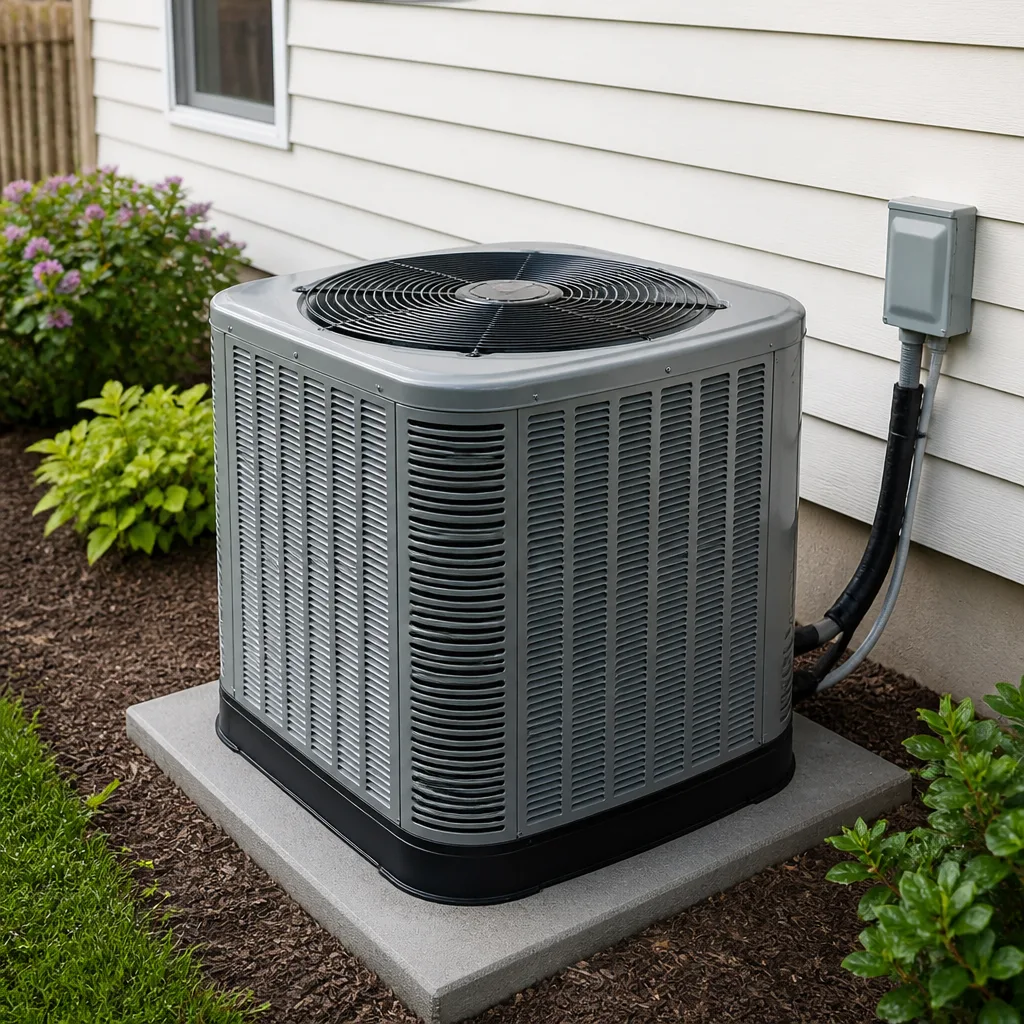 AC repair
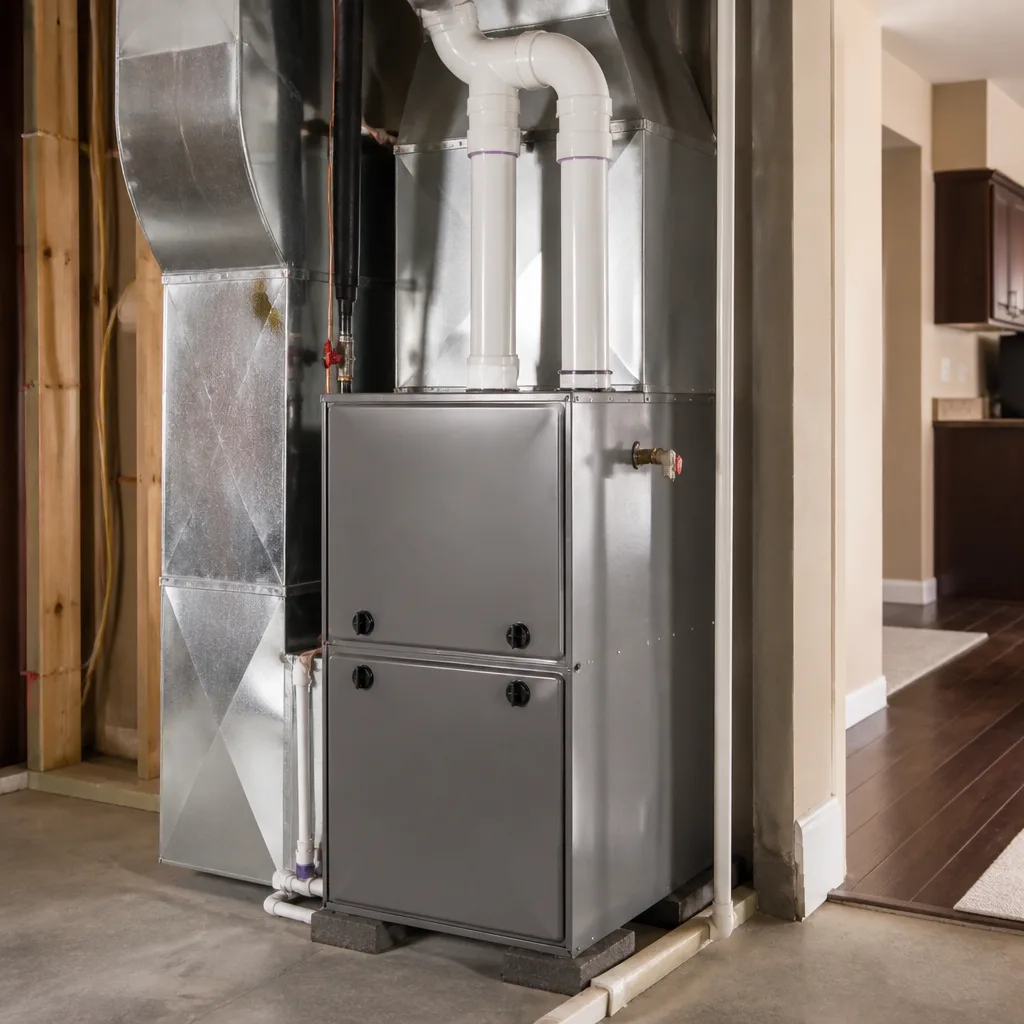 Furnace & heating
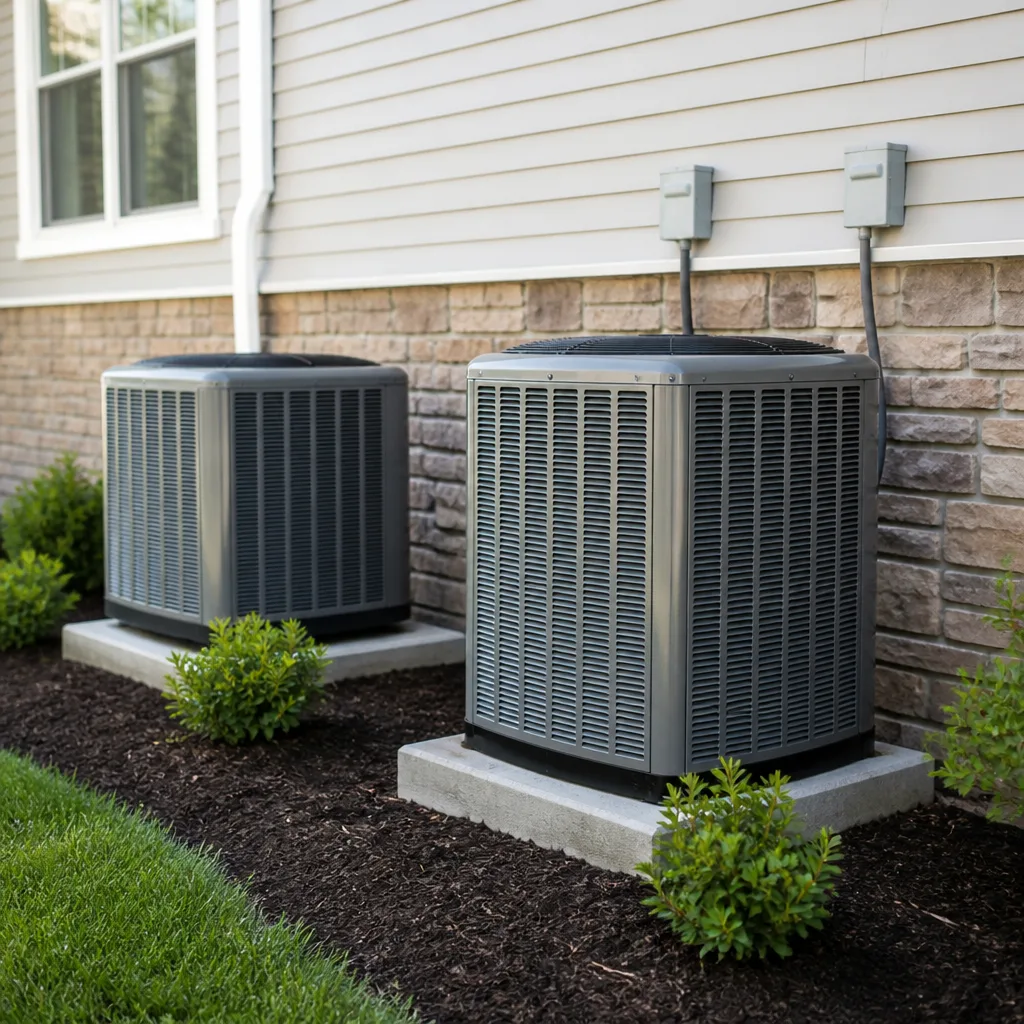 Heat pumps
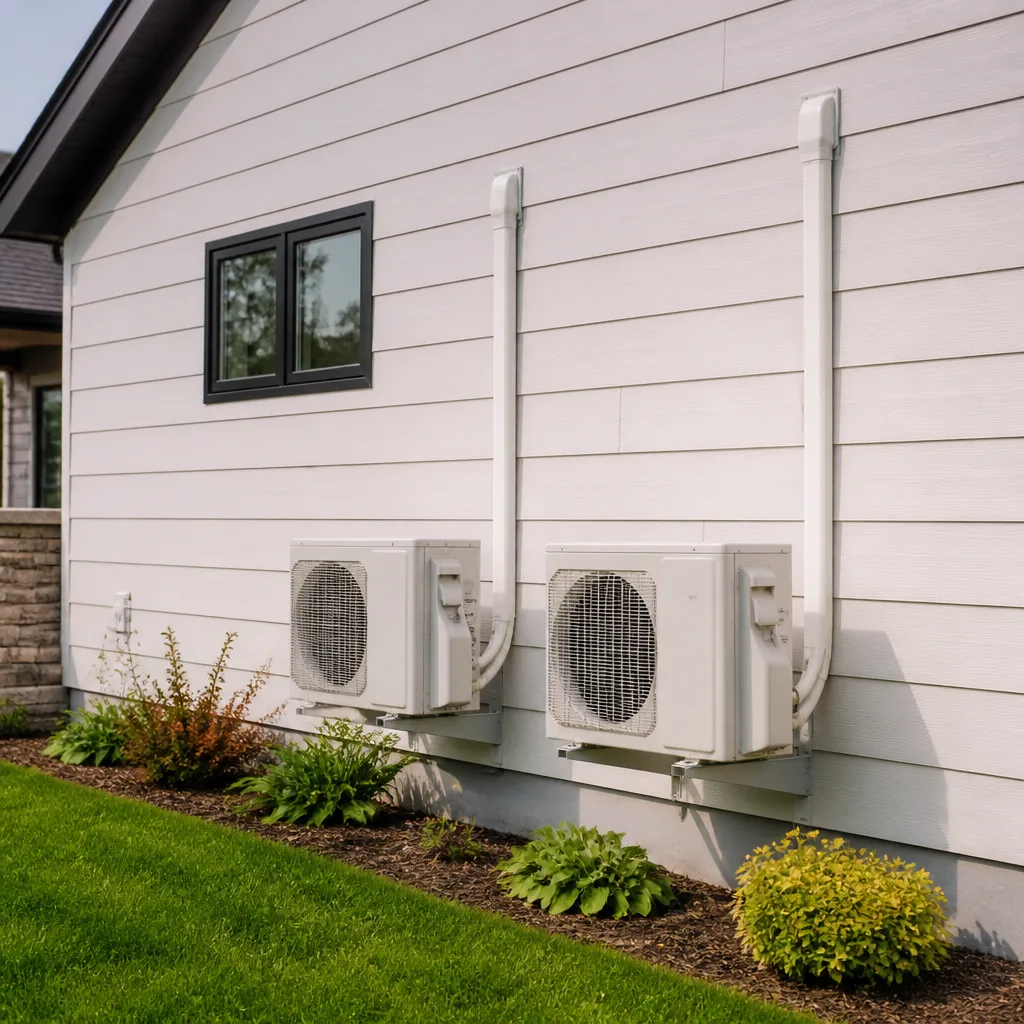 Ductless mini splits
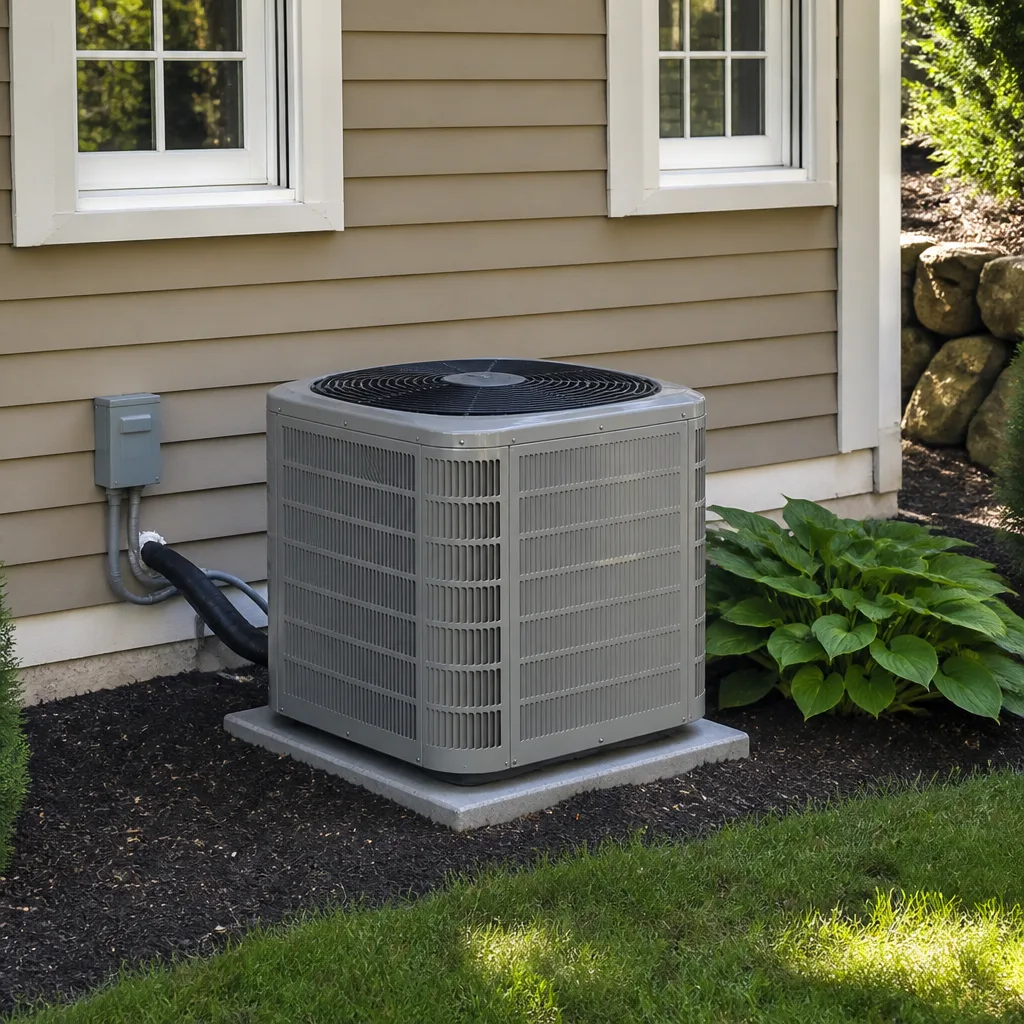 Carrier
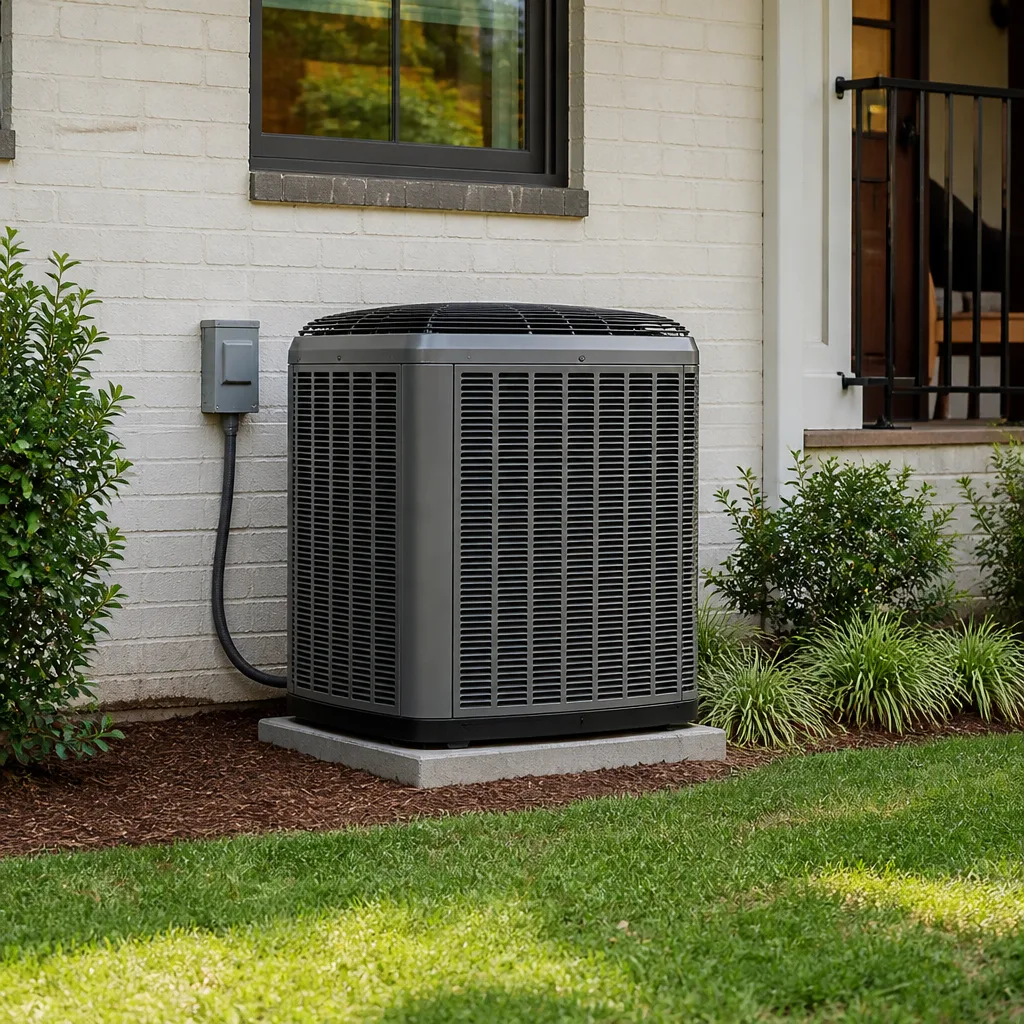 Trane
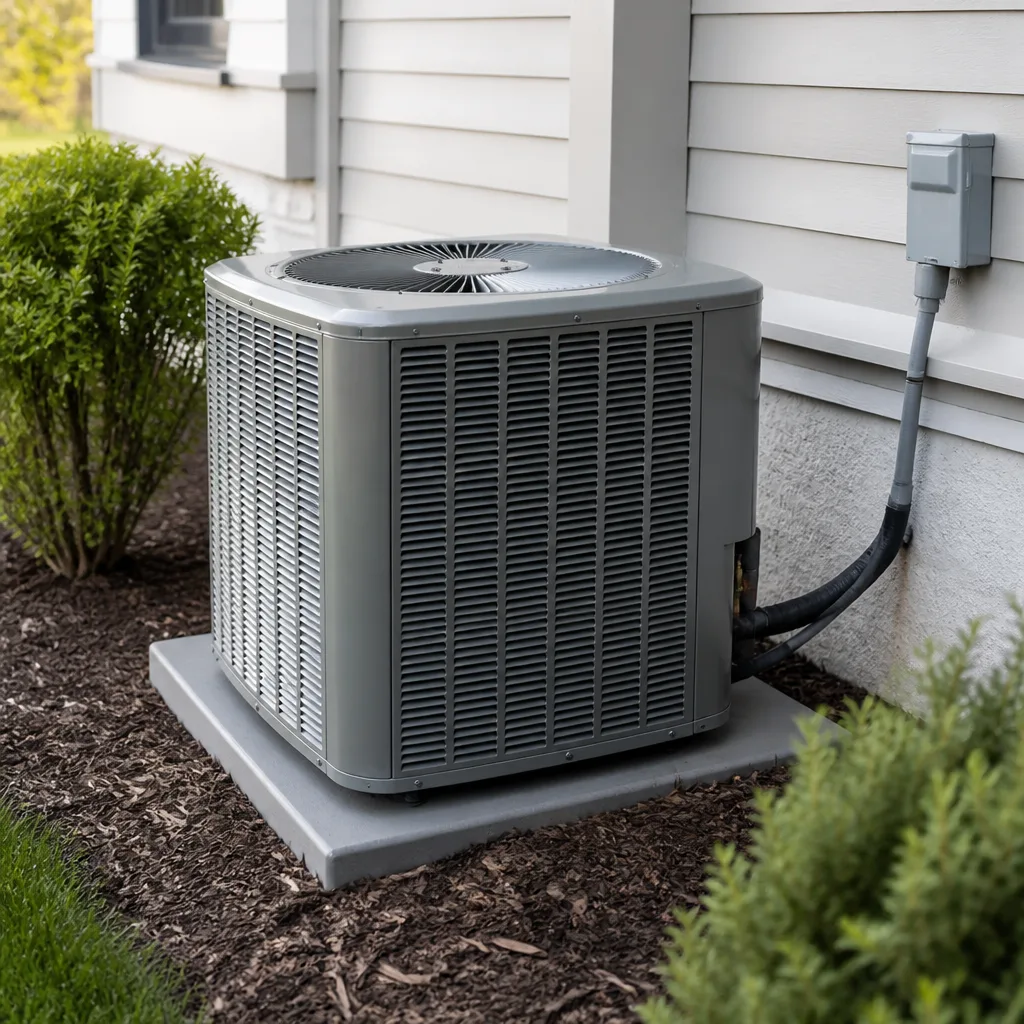 Goodman
Seasonal tune-up and full diagnostic on your Carrier, Trane, or Goodman system - readings shown to you before any repair is proposed
Diagnosis first, numbers second - you approve the repair price before a single part goes in.
Get your free estimateChoosing the Right HVAC Brand: A Buyer’s Guide for Spring Valley
Most HVAC brand comparison guides rank manufacturers by survey scores and national warranty brochures. What they don’t tell you is that several popular brands void compressor coverage when outdoor ambient temperature climbs past 115°F, a threshold Spring Valley crosses routinely through July and August. That detail isn’t on the showroom floor, and it isn’t in the glossy spec sheet summary either. In this guide we’ll walk through the exact field to look for on a product data sheet, what a high ambient kit actually does, why regional distributor stock in the Las Vegas valley matters more than a national reputation when a capacitor fails at 4 p.m. in July, and how to compare SEER2 lab ratings against real desert performance. If you live in Spring Valley and you’re choosing equipment for the next 15 years, this is the criteria that actually holds up.
Quick Answer
The right HVAC brand for a Spring Valley home is the one whose outdoor unit is rated for high ambient operation (ideally to 125°F), has a compressor rated for the runtime a desert climate demands, and has parts stocked at a regional distributor in the Las Vegas valley. Brand reputation matters far less than those three spec-sheet facts. A mid-tier unit rated for 125°F will outperform a premium-name unit rated only to 95°F on every August afternoon in Spring Valley.
Styles & brands we work with
- AC repair
- Furnace & heating
- Heat pumps
- Ductless mini splits
- Carrier
- Trane
- Goodman
Table of Contents
- What “High Ambient Rating” Means and Why It Matters Here
- How to Read an HVAC Spec Sheet for Desert Heat
- SEER2 Lab Ratings vs. Real Efficiency in Spring Valley
- Parts Availability in the Las Vegas Valley
- Warranty Terms That Actually Matter in a High-Use Climate
- How Carrier, Trane, Bryant, and American Standard Compare on Specs
- Common Mistakes to Avoid
- When to Call a Professional
- Frequently Asked Questions
What “High Ambient Rating” Means and Why It Matters Here
“High ambient rating” is the outdoor temperature above which an air conditioner’s compressor is no longer certified to run continuously without protection. Every outdoor condenser has a certified operating range, and above that ceiling the compressor starts tripping on internal thermal overload, refrigerant pressures spike beyond design limits, and the unit either shuts down or runs at reduced capacity. In most of the country, that ceiling never gets tested. In Spring Valley it gets tested every summer afternoon.
Some manufacturers build a high ambient kit into the outdoor unit as standard equipment – typically a crankcase heater, a low-pressure switch, and sometimes a fan-cycling control that keeps airflow matched to load. Others sell it as an add-on. The practical difference matters: a factory-installed kit is covered under the base warranty, while a field-installed kit may fall under an accessory warranty with different terms. When you’re comparing brands, the question to ask isn’t “which brand is best,” it’s “does this specific model number come from the factory rated for above 110°F outdoor ambient, or is it a 95°F unit that needs aftermarket protection?”
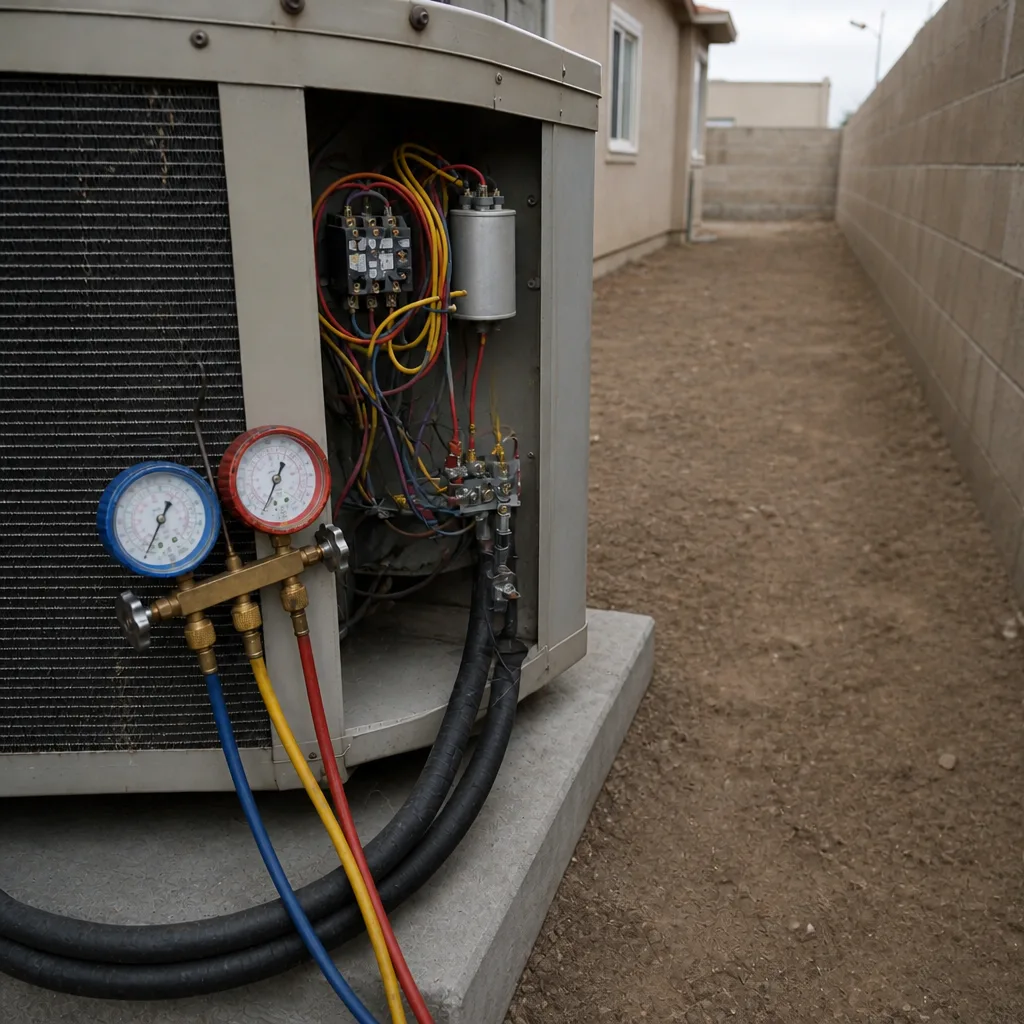
We’ve seen this firsthand across Spring Valley. Homes in Rhodes Ranch and The Lakes with premium-brand condensers rated to 95°F short-cycle through August afternoons while a mid-tier unit rated to 125°F on the same street runs steady. Brand plate doesn’t fix a spec-sheet ceiling. The building’s orientation, attic insulation, and window load matter, but the equipment has to survive the ambient temperature it’s installed into. If the outdoor unit is on a west-facing wall with no shade, that 95°F ceiling gets hit by 11 a.m. Instead of guessing, start with AC Repair in Spring Valley diagnostics to see what your current system is actually doing at peak ambient.
How to Read an HVAC Spec Sheet for Desert Heat
The single field to find before you agree to any installation is labeled Maximum Operating Ambient Temperature on the manufacturer’s product data sheet. It’s sometimes called “Maximum Outdoor Ambient” or “Operating Range – Cooling.” It’s usually on page 2 or 3 of the PDF, in a table called “Electrical Data” or “Unit Specifications.” It is almost never listed on the marketing page for the unit, and it is almost never volunteered by a sales rep.
Here is the exact process we walk Spring Valley homeowners through:
- Get the model number of the specific outdoor unit being quoted. Not the series name – the full model number that includes the tonnage, the voltage, and the revision letter.
- Search “[model number] product data sheet PDF” and pull the manufacturer’s document, not a dealer page. Dealer pages frequently drop the ambient rating because it makes the unit look worse than a competitor’s.
- Find “Maximum Operating Ambient Temperature” or a “Cooling Range” field. If it reads 115°F or 125°F, the unit is built for this market. If it reads 95°F or 105°F, ask what high ambient protection is included and what it costs.
- Check whether the high ambient kit is factory installed or field installed. Factory-installed is covered by the standard warranty. Field-installed is sometimes treated as an accessory.
- Confirm the compressor’s rated duty cycle if the spec sheet shows it. It’s usually in a note at the bottom of the compressor data table.
A 125°F ceiling in Spring Valley gives you roughly a 10-degree buffer over the worst afternoon the valley sees. A 95°F ceiling gives you nothing. When a new system is going in, either through a Heat Pump Installation in Spring Valley project or a straight AC replacement, the spec sheet is the document that determines whether the equipment survives its warranty period in this climate.
SEER2 Lab Ratings vs. Real Efficiency in Spring Valley
SEER2 ratings are tested at a fixed set of lab conditions defined by the Department of Energy, and the outdoor test temperature is well below what Spring Valley sees in July. That doesn’t make SEER2 meaningless – a higher SEER2 unit is generally more efficient than a lower SEER2 unit at the same test conditions – but it does mean a 15 SEER2 unit that hits its rating at 82°F outdoor ambient may run at 12 or 13 effective SEER in a Spring Valley attic at 140°F ambient. The gap between lab and field gets wider as the outdoor temperature climbs.
What actually predicts real-world efficiency in a desert climate:
- Condenser coil surface area. A larger coil rejects heat more efficiently at high ambient. Two 3-ton units with the same SEER2 can have materially different coil sizes.
- ECM or variable-speed condenser fan. Variable fan speed lets the condenser modulate airflow to match ambient temperature instead of running flat-out and tripping on high head pressure.
- Two-stage or variable-capacity compressor. A single-stage compressor runs full-tilt until the thermostat is satisfied. A two-stage or inverter compressor runs longer at lower capacity, which is a much better match to a Spring Valley cooling load that stays high for 8-10 hours a day for four months.
- Matched indoor coil and air handler. A mismatched coil assembly drops effective SEER substantially. Always compare the AHRI-matched system rating, not just the outdoor unit’s stated SEER2.
If your Spring Valley home has a west-facing condenser pad with no shade, the effective SEER2 penalty on a single-stage 14.3 SEER2 unit can be 15-20% versus the lab number. That’s real money on a July bill, and it’s the number the equipment brochure doesn’t give you.
Parts Availability in the Las Vegas Valley
When a capacitor, contactor, or condenser fan motor fails in July, the deciding factor in how fast your home gets cool again is whether a regional distributor in the Las Vegas valley already stocks that part. That has almost nothing to do with how well-known the brand is nationally. A nationally top-ranked brand whose nearest stocked distributor is in Phoenix means a two-to-three day wait. A mid-tier brand with active distribution across Clark County means the part is on a technician’s van the same day.
What to check before committing to a brand in Spring Valley:
- Does the brand have an active regional distributor with a Las Vegas warehouse? Most do, but the coverage varies by product line.
- Are common wear parts – capacitors, contactors, igniters, flame sensors, inducer motors – stocked locally, or does the distributor special-order them?
- Does the brand support online parts lookup with a real-time stock indicator? Brands that do make it far easier for a technician to know what’s on the shelf before driving across town.
- Are the refrigerant types used by that brand still widely stocked at the local level? R-410A is universal now, but R-22 service and the transition to A2L refrigerants are both live issues depending on what you’re installing.
This is one place where our factory training across nine brands earns its keep – we can tell you what’s actually in stock at the Spring Valley-area distributors this month instead of guessing from a national parts catalog. For furnace component issues specifically, the same principle applies, and you can ask about it when you call for furnace repair in Spring Valley.
Warranty Terms That Actually Matter in a High-Use Climate
Warranty documents are written to be skimmed, and the language that matters is almost always in a footnote. In a high-use climate like Spring Valley, three terms deserve your full attention before you sign:
- Compressor coverage in years. Most manufacturers now offer 10 years on the compressor to the original registered owner, but some tiers offer only 5. Confirm the years in writing and confirm you’re the original owner, because most compressor warranties don’t transfer.
- Refrigerant leak coverage. This is the term most homeowners don’t know to ask about. Some warranties cover refrigerant leaks outright, some cover parts but not the refrigerant itself, and some cover nothing on a leak that develops after the labor warranty expires. In a Spring Valley system running 8-10 hours a day through July, refrigerant leaks are not rare. Ask specifically: “If the system develops a refrigerant leak in year 4, what’s covered?”
- What voids coverage. In this climate, the voiding clauses to watch are: installation by a non-qualified contractor (always voided), improper refrigerant charge, and – critically – operation of the unit above its rated maximum ambient temperature. That last one is why the ambient rating on the spec sheet matters even after the unit is installed. A unit rated to 95°F that trips its high-pressure switch in a Spring Valley August is a warranty question you don’t want.
Also confirm whether the manufacturer requires online registration within a set number of days of installation. Almost all of them do, and skipping that step can reduce a 10-year compressor warranty to a 5-year parts-only warranty. Ask your installer who handles the registration, and get it in writing that they’ll submit it. Our written guarantee is a separate layer on top of the manufacturer warranty – every repair we do is guaranteed in writing for a full year, and if the repair fails in that period we return at no charge under our 365-Day Done Right Promise. That’s independent of whatever the manufacturer covers.
How Carrier, Trane, Bryant, and American Standard Compare on Specs
Rather than ranking brands by tier – which is what every other guide does – here’s how the four most common names in Spring Valley compare on the specs that matter in a desert climate:
- Carrier. Broad product line, with several condenser families factory-rated to 125°F outdoor ambient. Strong Las Vegas valley distributor coverage. Mid-tier and upper-tier models differ substantially on compressor type – check the specific model number, since the entry-level line is often closer to 115°F.
- Trane. Compressors have a reputation for durability in high-run climates, and many of the current variable-speed models are rated to at least 115°F with high ambient protection standard on the upper tiers. Parts coverage in Clark County is solid for the main product lines.
- Bryant. The sister brand to Carrier and a strong choice for budget-conscious Spring Valley homeowners who want factory-rated high ambient performance without the brand premium. Some of its mid-tier models share components with the Carrier line, which helps with parts availability.
- American Standard. Same family as Trane, with similar compressor characteristics and factory-installed high ambient protection on the upper-tier variable-speed models. Parts availability in the valley is comparable to Trane’s.
The takeaway isn’t “these brands are the best.” It’s that within each of these brands, the specific model number matters more than the brand name on the door. The entry-level unit from any of these four may be a 95°F-rated condenser, and the step-up model may be 125°F-rated with a two-stage compressor. That’s the question to ask your installer, and it’s the question we answer before quoting any Spring Valley replacement.
Common Mistakes to Avoid
- Buying on brand reputation alone. A well-known name on the outdoor unit tells you nothing about that specific model’s ambient rating or compressor duty cycle. Pull the product data sheet for the exact model number before signing.
- Comparing SEER2 numbers without comparing matched systems. The AHRI-matched system rating is the number that matters, not the outdoor unit’s standalone rating. A mismatched indoor coil can drop effective SEER2 by 20% or more in a Spring Valley install.
- Ignoring the condenser’s physical placement. In this valley, a west-facing unshaded condenser pad adds 10-15°F to the ambient the equipment sees. A shaded or north-facing pad is worth a real chunk of efficiency over a Spring Valley summer.
- Skipping the warranty registration. Ten-year compressor coverage usually requires the original owner to register online within a tight window. Miss the window and you may be down to a 5-year parts warranty.
- Basing the choice on a national parts catalog. What matters when a part fails is whether a Las Vegas valley distributor has it in stock today, not whether the brand has a big catalog. Ask any installer to name the local distributor before you commit.
- Not asking what voids the warranty. In this climate, operation above rated ambient and improper charge are the two most common warranty-voiding scenarios. Both come from bad installation, not bad equipment.
- Choosing a single-stage compressor for a Spring Valley cooling load. Single-stage units are cheaper upfront and cost more to run over a four-month cooling season. Two-stage or variable-capacity equipment matches this climate better, and the gap in comfort is noticeable.
When to Call a Professional
Any equipment decision involving compressor selection, refrigerant line sizing, or electrical disconnect installation belongs with a trained technician. Refrigerant handling is regulated, line voltage at an outdoor disconnect is dangerous, and an improper charge will void the manufacturer warranty no matter whose name is on the condenser. If your current Spring Valley system is short-cycling, tripping the breaker, or running nonstop through August afternoons, that’s a diagnostic question before it’s a brand question – and it needs to be answered before you buy anything.
Dalton Heating & Air Spring Valley offers free estimates in Spring Valley. Call (888) 268-6106 for an upfront written price before any work starts, a free second visit if a repair fails, and a full-year written guarantee on every repair. Our technicians have up to 23 years of experience across the nine major residential HVAC brands, and we answer the phone live, 24/7. Start with the diagnosis, then match the equipment to the spec sheet.
Frequently Asked Questions
There isn’t one best brand for Spring Valley. The better question is which specific model is rated to at least 125°F outdoor ambient with a factory-installed high ambient kit and a compressor rated for the runtime this climate demands. Carrier, Trane, Bryant, and American Standard all make models in that range – and all four also sell entry-level units rated closer to 95°F. Call (888) 268-6106 for a free estimate and we’ll pull the spec sheet for the exact model before we quote it.
Yes, on some units. Several manufacturers void compressor coverage when the equipment is operated above its rated maximum ambient temperature, and a 95°F-rated unit in a Spring Valley August afternoon is technically operating above its ceiling. A unit rated to 125°F has room to spare. Ask specifically about the ambient rating before you buy – it’s the warranty detail most homeowners never see.
A high ambient kit protects the compressor when outdoor temperatures climb past the unit’s design range. It typically includes a crankcase heater (keeps oil warm so the compressor starts lubricated), a low-pressure switch (protects against charge loss at high load), and sometimes fan-cycling controls that match airflow to load. Factory-installed is what you want – field-installed kits can fall under accessory warranty terms. Call (888) 268-6106 to check what a specific model includes.
Compare the AHRI-matched system SEER2, not the outdoor unit’s standalone rating, and expect the real-world efficiency to run 10-15% below the lab number in a Spring Valley install. The efficiency penalty comes from ambient temperature plus condenser placement. A shaded or north-facing pad closes most of that gap. A free estimate from us will include the matched system rating, the actual efficiency factor for your install, and the price in writing before we start.
It’s the better choice for this climate. A single-stage compressor runs full-tilt until the thermostat is satisfied, which doesn’t match a cooling load that stays high all day. Two-stage and variable-capacity compressors run longer at lower capacity, which is more efficient, quieter, and easier on the compressor over a long Spring Valley summer. Call (888) 268-6106 for a written price on both options before you decide.
It varies by product line more than by brand name. The right question is whether the brand has an active regional distributor with a Las Vegas warehouse stocking common wear parts – capacitors, contactors, fan motors, igniters. All four brands we’ve discussed have some level of local distribution, but coverage is uneven at the entry level. We can tell you what’s actually in stock at the Spring Valley-area distributors this month. Call (888) 268-6106 for a free estimate.
The Bottom Line
Brand reputation is a poor proxy for what actually holds up in Spring Valley. The criteria that matter are on the product data sheet: maximum operating ambient temperature (125°F is the target), compressor duty cycle and type, matched-system SEER2, and regional parts availability in the Las Vegas valley. Warranty terms on the compressor and refrigerant leak coverage decide what happens in year 4 when the system has run 8-10 hours a day for four summers. Carrier, Trane, Bryant, and American Standard all make models that pass these tests and models that don’t – which is why the model number, not the brand, is the number to check. Start with a diagnosis, then match the equipment to the spec sheet, and get the price in writing before any work starts.
Dalton Heating & Air Spring Valley offers free estimates in Spring Valley. Call (888) 268-6106 for an upfront written price, a full-year written guarantee on every repair, and a free second visit if the repair fails under our 365-Day Done Right Promise. Our technicians have up to 23 years of experience across the nine major residential HVAC brands, and we answer the phone live, 24/7. Same-day service is available for repairs; new system installs are scheduled around your timing and financing, not a same-day promise. Reach out at (888) 268-6106 and we’ll pull the spec sheet for the exact model before we quote it. For everything else, see our Dalton Heating & Air Spring Valley home page.
Written by the team at Dalton Heating & Air Spring Valley.
See the difference
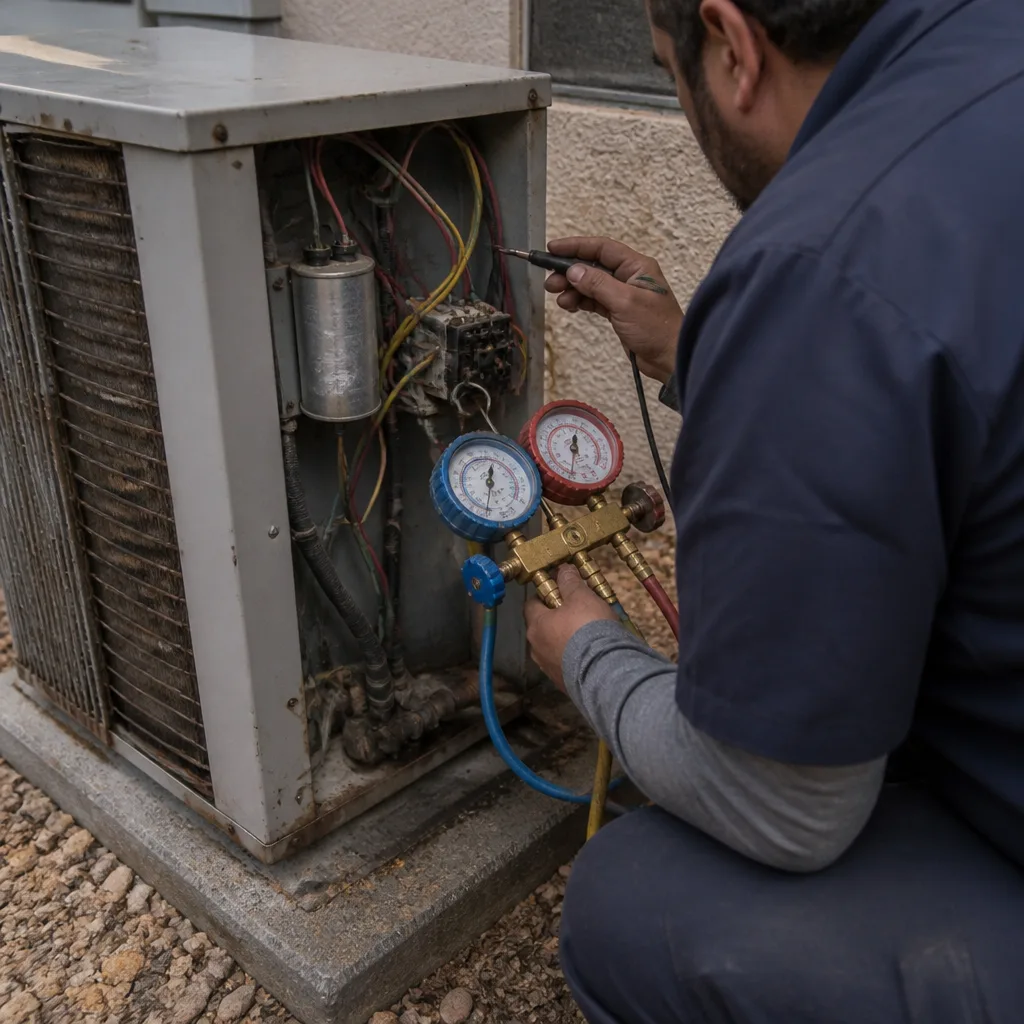 Before
 After
 Before
 After
 Before
 After