
Last updated November 17, 2026
 AC repair
 Furnace & heating
 Heat pumps
 Ductless mini splits
 Carrier
 Trane
 Goodman
Seasonal tune-up and full diagnostic on your Carrier, Trane, or Goodman system - readings shown to you before any repair is proposed
Diagnosis first, numbers second - you approve the repair price before a single part goes in.
Get your free estimateThe Complete Furnace Repair Guide for Spring Valley Homeowners
Spring Valley averages fewer than 25 nights below 40°F a year, which means your furnace sits idle for nine months. That idle time is exactly what causes most of the breakdowns we see on the first cold night of the season. Dormant furnaces in Spring Valley collect desert dust, dry out their igniters, and corrode their flame sensors while nobody is looking. Then the first cold snap arrives, everyone calls the same week, and parts get scarce. This guide is a field manual for that exact situation: what breaks, what a fair repair costs, how to triage a dead furnace before you call anyone, and how to read a written quote so you can tell a fair price from an inflated one.
Quick Answer
Most furnace repair in Spring Valley, NV runs between $150 and $450, and the five most common failures are flame sensors, igniters, inducer motors, pressure switches, and clogged condensate lines. A legitimate repair comes with a written price before any work starts and a written guarantee on the repair, not a verbal promise. If your furnace won’t light on the first cold night, the triage steps in this guide resolve roughly one in five no-heat calls for free.
Styles & brands we work with
- AC repair
- Furnace & heating
- Heat pumps
- Ductless mini splits
- Carrier
- Trane
- Goodman
Table of Contents
- Why Spring Valley’s Short Heating Season Breeds Its Own Failure Pattern
- The Local Context: Clark County Gas, Unit Ages, and Desert Dust
- The Pre-Call Triage: Four Steps Before You Dial
- What the Five Most Common Repairs Should Cost in Spring Valley
- How to Read a Written Quote (and Spot an Inflated One)
- What a One-Year Written Repair Guarantee Actually Covers
- Repair or Replace? A Straight Answer for Desert Furnaces
Why Spring Valley’s Short Heating Season Breeds Its Own Failure Pattern
In a cold-climate city like Denver or Minneapolis, furnaces run for months and the failures that dominate are wear-related: heat exchangers, blower motors, worn igniters with thousands of cycles on them. Spring Valley is the opposite. Your furnace runs maybe 300 to 400 hours a year, in short bursts, on the handful of cold nights that actually stick. Cold-climate failure lists don’t apply here, and guides that copy them are describing a different furnace in a different climate.
Here’s what nine months of idleness does to a Spring Valley furnace:
Cracked igniter insulators
The silicon nitride or silicon carbide igniter in a modern furnace is brittle when new and worse after sitting. Desert temperature swings from 100°F summer days to sub-40°F winter nights expand and contract that ceramic insulator thousands of times. By the time the igniter gets called on, it has a hairline crack. The furnace calls for heat, the igniter doesn’t glow, and the control board locks out. If you’ve ever punched the thermostat to heat in mid-November and heard the inducer start and stop with no flame, this is often why. An igniter is a small part. Weaker shops use it as an excuse to sell a whole new furnace; don’t let them.
Corroded flame sensor rods
The flame sensor is a metal rod that sits in the burner flame and tells the control board “yes, we have fire, keep the gas valve open.” When the rod gets a coating of oxide, the board reads a weak signal and shuts the gas off after three to seven seconds of flame. The result is short cycling: furnace lights, runs briefly, shuts down, tries again. Once every other furnace on the block works in cold climates, but the rod corroding through dormant summers is a Spring Valley pattern. Cleaning a flame sensor is a five-minute job with the right tool; replacing it is rarely needed on a furnace under 15 years old.
Dried inducer motor bearings
The inducer is a small draft fan that pushes exhaust out through the flue before the gas valve opens. Its bearings sit with oil in them, and when the furnace doesn’t run, the oil migrates. Sitting for months then spinning up on the first cold night is exactly how the bearing begins to whine, then seize. If your furnace makes a high-pitched growl in the first two minutes of a heat cycle, the inducer is likely asking for service.
None of these failures show up on a cold-climate list because cold-climate furnaces get constant exercise. A Spring Valley homeowner who knows the local pattern can often name the symptom, know the likely part, and be ready for a fair quote in under ten minutes on the phone.
The Local Context: Clark County Gas, Unit Ages, and Desert Dust
Almost all Spring Valley homes are on natural gas; Clark County codes on for gas appliances are the ones to know, and any gas-side repair on a furnace has to follow them. A few practical things that come from living here:
Unit ages you’ll actually see in Spring Valley
If you live in a house built in the early-to-mid 2000s, you likely have a furnace from that era, which puts the unit somewhere around 20 years old. Newer builds and furnace replacements past 2015 sit in the 8-to-10-year range. Older units are more prone to igniter and inducer issues; younger units can still fail on flame sensors and condensate. The age of the unit changes the conversation, not the triage. Call because it’s not heating, not because it’s old.
Desert dust loads the heat exchanger
Spring Valley sits in a basin with construction dust, caliche dust, and windy afternoons from March through May. Furnace manufacturers size their filter and blower design for average indoor dust. Our dust is not average. Heat exchangers in Spring Valley accumulate fine particulate 2 to 3 times faster than the manufacturer’s maintenance schedule assumes, and a dusty heat exchanger runs hot, which shortens its life and can crack a weld. Yearly filter changes are not optional here. On windy weeks, change them at 60 days and don’t think twice about it.
Why parts run thin on the first cold night
Every HVAC shop in the valley stocks igniters and flame sensors, but not every shop carries a burner for a 20-year-old Lennox, a heat exchanger gasket for a Goodman, or an inducer assembly for a Rheem. On the first genuinely cold night, the parts truck is already committed to 30 other calls, and the odd part is a next-day order anywhere in the county. If the tech can’t get the part tonight, a fair shop tells you the exact part number, the expected cost, and the appointment to install it – in writing, before they leave.
The Pre-Call Triage: Four Steps Before You Dial
Roughly 20% of the no-heat calls we get in Spring Valley turn out to be one of four things a homeowner can check in about ten minutes. None of these steps open the furnace cabinet or touch a gas line. If any of them fixes the problem, you’ve saved a service call.
- Check the thermostat. Make sure it’s set to HEAT, the setpoint is at least 3 degrees above room temperature, the fan is on AUTO (not ON – ON makes the blower run with no call for heat, which many homeowners mistake for a working furnace), and the batteries are fresh. A thermostat in a cold house with dead batteries reads nothing, and a thermostat that lost its programming overnight might be sitting on 60°F.
- Check the filter. Pull the filter, look at it against a light. Can you see light through all of it? If not, replace it. A clogged filter can trip the high-limit switch, and the furnace will lock out until the switch resets. That reset takes 30 to 60 minutes of cooling down, so try the filter first and give it an hour.
- Check the breaker. Furnaces have their own circuit breaker, and it’s easy to lose track of which breaker feeds the air handler. Reset it once. If it trips again, stop – that’s an electrical problem and needs a trained technician, not a second flip.
- Check the condensate line. High-efficiency furnaces (PVC flue, usually 90%+ AFUE) produce water as they run, and that water goes out through a drain line that runs to a floor drain or a condensate pump. In a Spring Valley summer, the same line handles AC runoff and the pump can seize from months of sitting. Look for standing water at the furnace base or a drain line full of crud. If the furnace has a safety switch on the condensate, a full line trips it and locks the furnace out.
If none of those four fix it, or if you smell gas, hear a boom or rumble, or see soot on the furnace cabinet, call a technician. Gas smell is never a triage problem; leave the house and call from outside.
What the Five Most Common Repairs Should Cost in Spring Valley
Prices in Spring Valley track a mid-size Western metro, not a big-city premium and not a small-town bargain. Here’s what a fair written range looks like for the five failures that dominate our local call volume – the ranges include parts and labor, and a diagnostic fee that a fair shop will roll into the repair if you go ahead.
- Flame sensor clean or replace: $150 to $250. Cleaning is the cheaper version and should be tried first; the rod rarely needs replacement. If a quote lands at $400 for a flame sensor, ask for the part number and the written list.
- Hot surface igniter replacement: $180 to $320. The part itself runs $30 to $80 depending on brand (Goodman and York igniters sit on the low end, Lennox and Rheem on the high end). The rest is labor, diagnostic, and warranty.
- Inducer motor replacement: $350 to $650. This is the repair with the widest spread because inducer assemblies are not standardized across brands; a Rheem assembly and a Trane assembly are completely different parts. Get the quote in writing with the part number on it.
- Pressure switch replacement: $200 to $400. Often this switch fails because the port behind it is clogged, not because the switch is bad. A good technician checks the port before replacing the switch. If the quote skips that step, ask about it.
- Condensate line clearing or pump replacement: $150 to $400. Clearing a clogged line is on the low end; replacing a burned-out condensate pump is on the upper end. Both are straightforward and should not take an hour.
Repairs outside this list – blower motor, control board, heat exchanger – run higher and deserve their own written price with the part number and the guarantee attached. For comparison on the bigger equipment picture, our furnace repair in Spring Valley page walks through the same pricing structure in more detail.
How to Read a Written Quote (and Spot an Inflated One)
A written quote is your only real protection in a valley where verbal promises do not survive the first cold night. Here’s what an honest one contains, and what to look for when it doesn’t.
- The exact part number. A quote that says “igniter” is not specific enough to protect you. “Lennox 80M56 igniter” is. If a shop won’t put a part number on the paper, they cannot later claim they installed the right part.
- The diagnostic fee, stated separately. A fair shop charges for the diagnostic and tells you the amount, then credits it against the repair if you say yes. A shop that says “free estimate” and then writes a diagnostic fee on the invoice at the door is doing the thing that gives this trade a bad name.
- The labor description and the timing. Two hours for a flame sensor is not a fair written quote; ten minutes is. The quote should also say when the tech arrives and when the work finishes.
- The guarantee, printed on the same page. “Guaranteed” on a phone call is not a guarantee. It should be a written line item: what’s covered, for how long, and what the company does if it fails. Ours says a full year of coverage on the repair, not a 30-day window.
- No pressure line items. Anything written as a “today-only” discount with a deadline attached is a sales tactic, not a repair quote. The Garrison Standard forbids it on any Dalton job, and it’s a reasonable red flag on any other shop’s paper.
The most reliable sign of a fair quote is whether the tech is willing to leave a copy with you before any tool comes out of the bag. If the number only shows up on a tablet at the end of the visit, walk.
What a One-Year Written Repair Guarantee Actually Covers
A one-year written repair guarantee means the company that fixed your furnace is on the hook for a full year if the same problem comes back. That is a different thing than what most furnace repairs in the valley are sold with. A lot of shops guarantee only the part, only against manufacturer defect, and only for 30 to 90 days – and their technicians will tell you that verbally while the paper they hand you says something else. Read the paper.
Here’s what an honest full-year written guarantee covers, and what it doesn’t:
- Covered: The repair fails in the same way within 12 months – same part, same symptom, caused by the repair. The company returns at no charge. On our jobs, that return visit is included in the guarantee, not a paid callback.
- Covered: The part fails for a reason unrelated to the original repair but traceable to the install (a bad igniter from the box, for example). We replace it; you don’t pay a second time.
- Not covered: A different failure in a different part. If we replaced the flame sensor and the inducer motor seizes six months later, the inducer is a separate repair. Any shop that says otherwise is either not being square with you or doesn’t know how a furnace works.
- Not covered: Damage from a power surge, a flooded furnace closet, or a homeowner replacing their own part. Warranties protect against the repair failing, not against new damage.
The single biggest difference between a one-year written guarantee and a verbal promise is what happens on month eight, when the same symptom returns. With a written guarantee, you call, we return free. With a verbal promise from a shop that’s gone quiet, you are paying for the same repair twice.
Repair or Replace? A Straight Answer for Desert Furnaces
In a four-season climate, the repair-versus-replace question can go either way on a 15-year-old furnace; in Spring Valley, the math tilts a bit differently for two reasons. Our furnaces live shorter lives because they run so little but cycle so infrequently, and the parts they need – igniters, sensors, inducer assemblies – are usually available and affordable through year 20 or so. The bigger question is what happens to the rest of the house if the furnace dies in February.
Our working rule with a Spring Valley furnace:
- Repair if the unit is under 15 years old, the repair lands under $700, and the diagnosis is a single part. Most of what we see in Spring Valley falls here.
- Repair carefully if the unit is 15 to 20 years old and the repair lands under $700. Ask the tech to check the heat exchanger while they’re in there; a cracked heat exchanger is a safety issue, not a repair.
- Replace if the repair exceeds $800, the heat exchanger is cracked, or the same furnace has had three or more separate repairs in 24 months. At that point each repair is paying twice for the same equipment.
If replacement is the honest answer, the conversation is a different one: a load calculation, a set install date, fixed price in writing, and rebate paperwork handled. There’s no same-day promise on a furnace replacement because it isn’t a same-day job. If you’re weighing the move to a heat pump instead of another gas furnace, our heat pump installation in Spring Valley page covers the numbers and the rebates – heat pumps look different in a desert than in a cold climate, and the sizing math matters.
Common Mistakes to Avoid
- Skipping the filter change through the summer. In Spring Valley, the same filter that handles furnace air also pulls AC air through summer, and the AC air is dustier. A filter that sat from June to November will lock out a furnace on the first cold night. Change at least quarterly, and every 60 days on windy months.
- Treating “it lit and then shut off” as a mystery. That pattern is almost always the flame sensor. If you know it, you can describe it accurately on the phone, and the tech can bring the right part on the first visit instead of the second.
- Accepting a verbal quote. Verbal repairs in Spring Valley turn into door-step invoices with mystery line items on the first cold week, when the customer has no leverage. Ask for the number in writing before any tool comes out.
- Letting someone sell you a furnace when you called about an igniter. The most common upsell we hear about is a no-heat call that turns into a replacement quote before the technician has checked the igniter, flame sensor, and inducer.
- Ignoring a cracked heat exchanger. That’s a real safety issue, not a repair conversation. Carbon monoxide from a cracked exchanger is the one failure on this list that can hurt someone. If a tech flags it, take it seriously and get the written diagnosis.
- Waiting until the first cold night to schedule. In Spring Valley, the first real cold snap arrives on a weekend and everyone calls at once. Parts get thin, appointments back up, and the tech who could have had you warm all week is now three days out.
- Assuming a one-year guarantee is standard. It’s not. It’s the exception in this market, which is why it’s worth asking for on paper before the work starts.
For furnace work as part of the full home picture, our Dalton Heating & Air Spring Valley home and AC Repair in Spring Valley pages cover how furnace and AC maintenance line up on a spring or fall appointment.
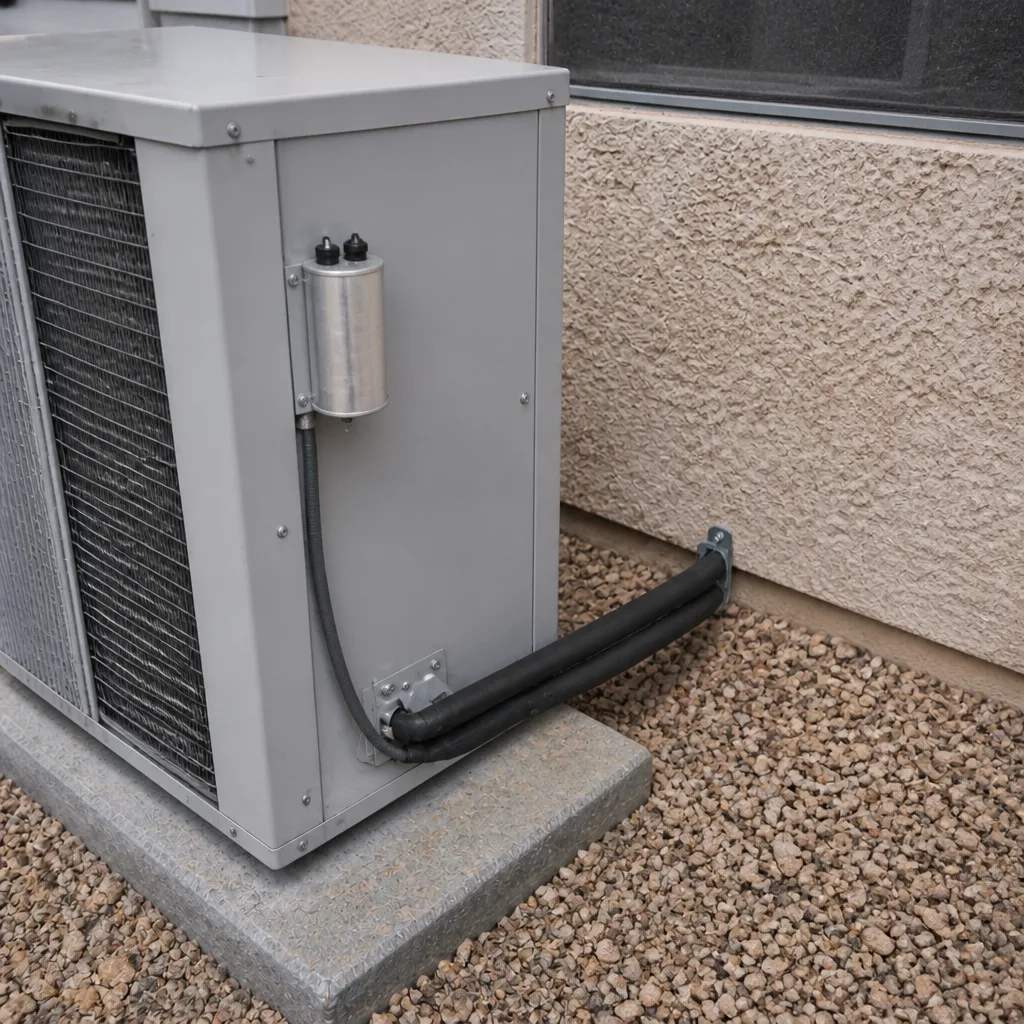
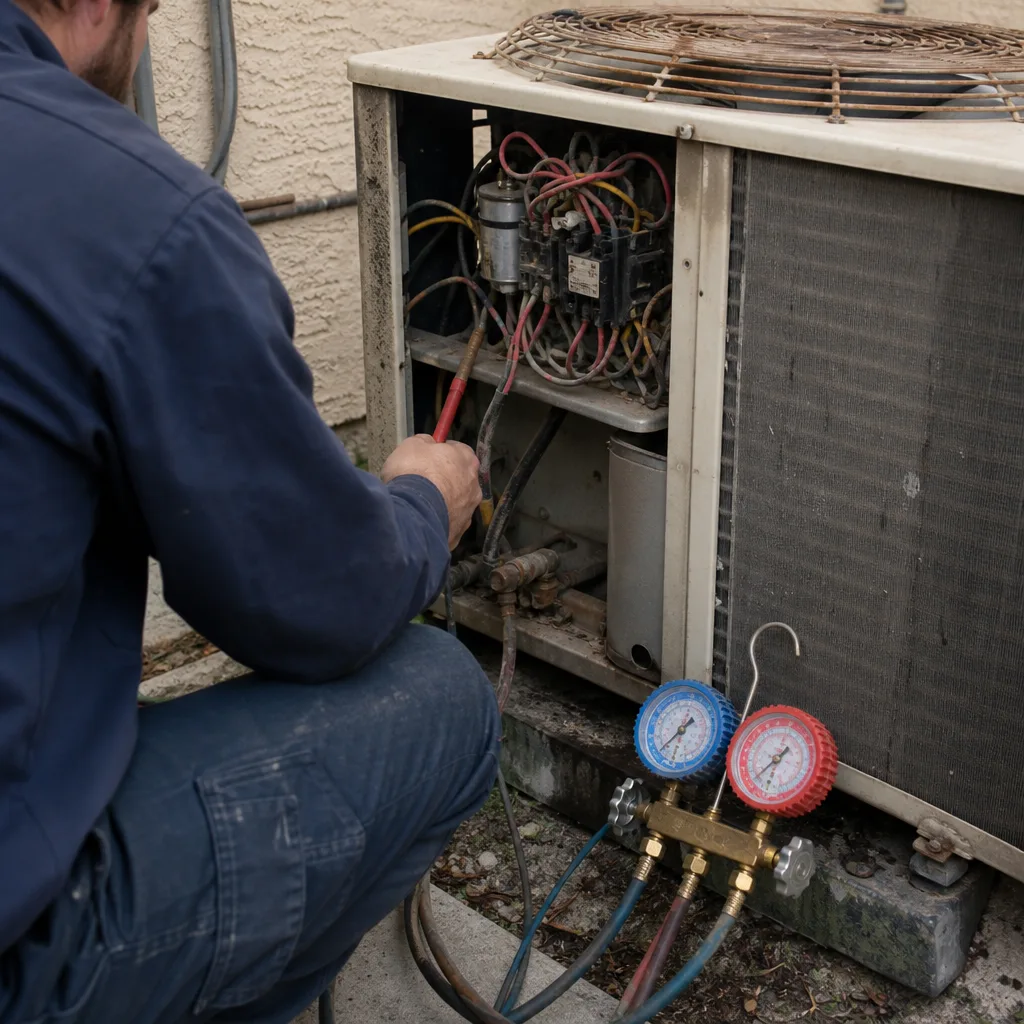
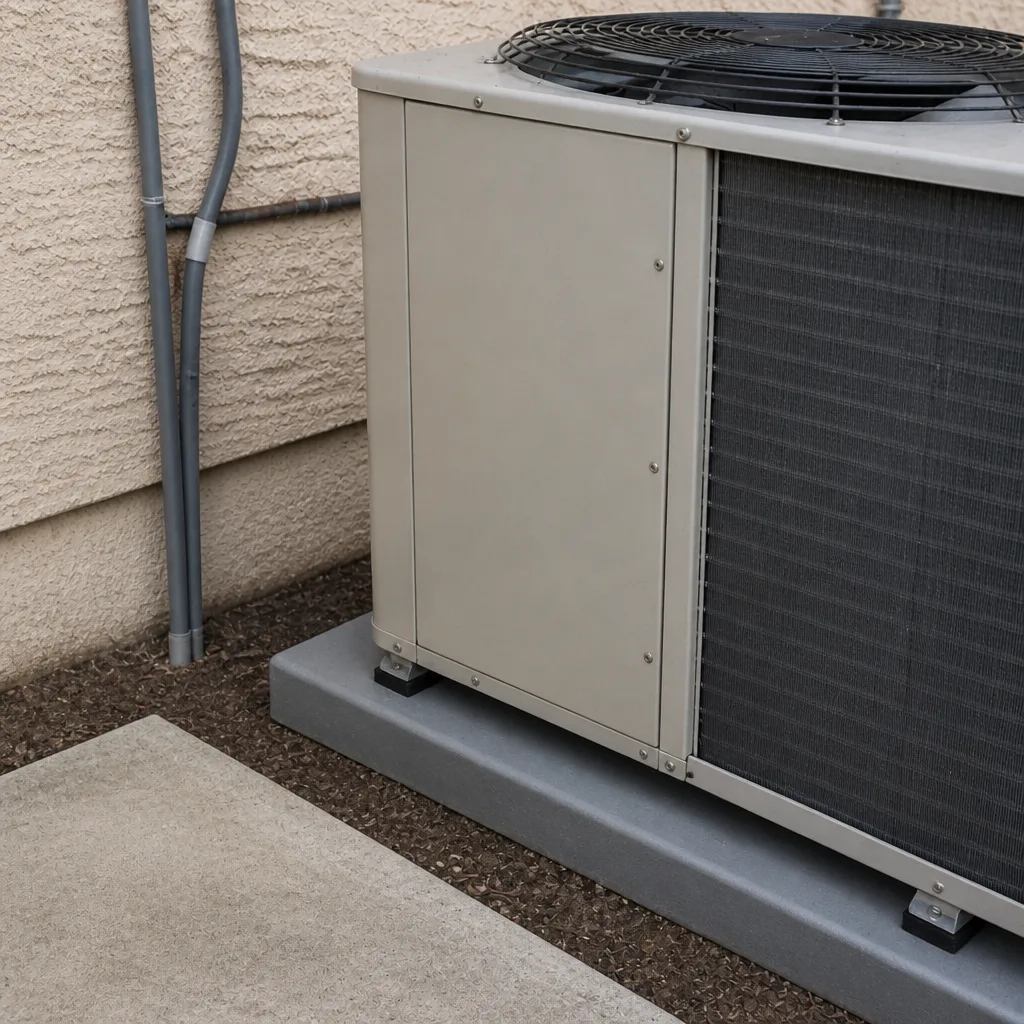
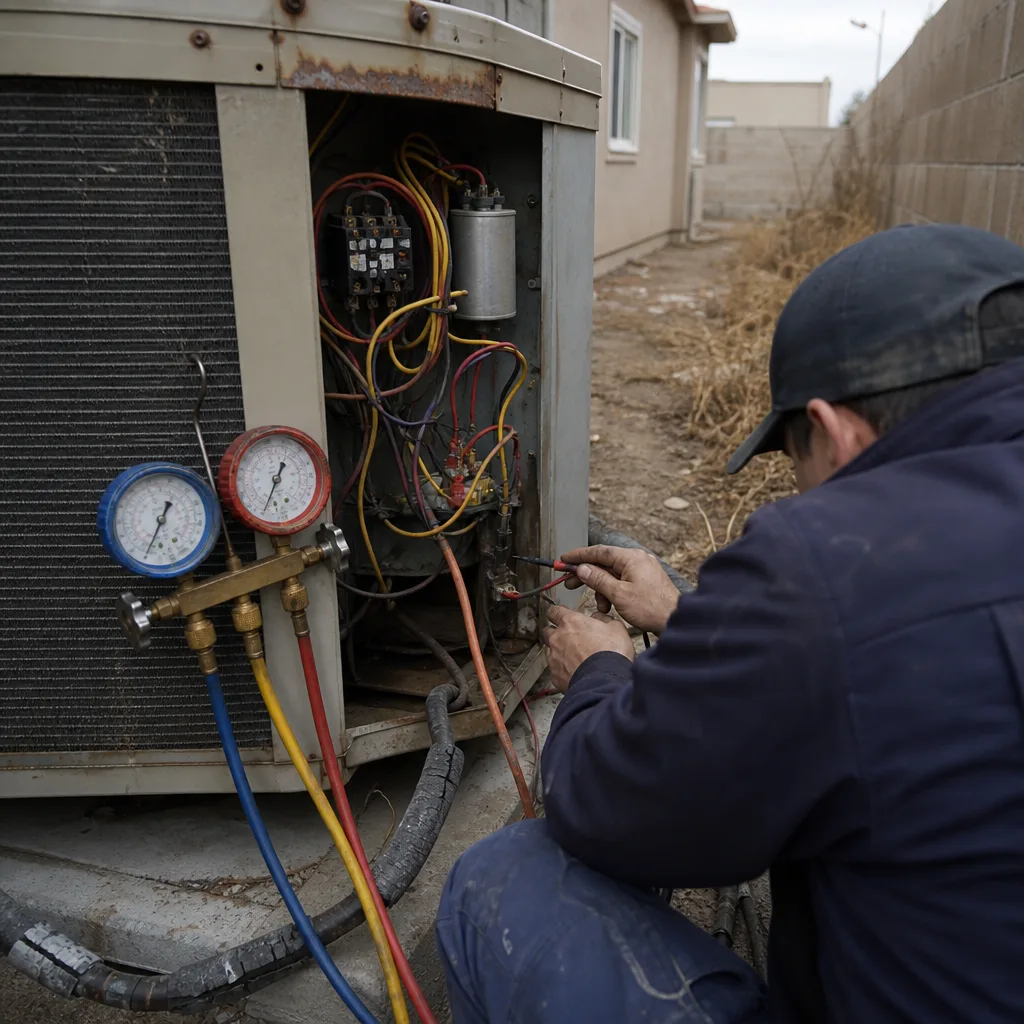
See the difference
 Before
 After
 Before
 After
 Before
 After
When to Call a Professional
Call a technician for any of the following, in Spring Valley or anywhere in the valley. A furnace that won’t light after the four triage steps – thermostat, filter, breaker, condensate – is a professional call. A furnace that lights and shuts off after a few seconds is a professional call. Any smell of gas, any rumble or boom on ignition, any soot on the cabinet or yellow flame instead of blue is an immediate call, and you should leave the house first if it’s gas. A furnace that tripped a breaker twice is an electrical problem, not a triage problem. A furnace that’s over 15 years old and last got serviced when it was installed is a good candidate for a service call before the first cold night, not after. Dalton Heating & Air Spring Valley offers free estimates in Spring Valley – call (888) 268-6106. Calls are answered by a live person 24/7, prices are in writing before any work starts, and every repair carries a written guarantee plus a free second visit if it doesn’t hold.
Frequently Asked Questions
Most furnace repairs in Spring Valley run $150 to $450 for the common failures – flame sensor, igniter, pressure switch, condensate repair – and $350 to $650 for an inducer motor. A fair shop charges a diagnostic fee that gets credited against the repair. Call (888) 268-6106 for an exact quote; the estimate is free and the price is in writing before any work starts.
Because it’s been sitting idle for months. In Spring Valley, the parts that fail on the first cold night – cracked igniter insulators, corroded flame sensors, dried inducer bearings – are exactly the parts that go bad from dormancy, not from wear. A short fall tune-up catches them before the first cold snap. Call (888) 268-6106 to schedule one before the season hits.
It covers the same repair failing the same way within 12 months – the company returns and fixes it at no charge. It doesn’t cover a different part failing later, or damage from a power surge or a flood. Ask for the guarantee in writing on the same page as the price. Every Dalton repair carries one; call (888) 268-6106 for the details on your job.
In most cases yes, and the phone is answered by a real person 24/7. Spring Valley calls on the first cold week fill up fast, so the earlier in the day you call, the more likely we get to you before dark. Call (888) 268-6106 and we’ll give you a window you can count on.
Repair it if the diagnosis is a single part and the total lands under $700 – that’s the honest answer for most 15-year-old furnaces here, because our units don’t run enough hours to be truly worn out. Replace it if the repair exceeds $800, the heat exchanger is cracked, or you’ve had three or more separate repairs in two years. Call (888) 268-6106 for a written diagnosis before deciding.
Yes, though the specific programs change year to year and depend on the equipment efficiency rating. Any replacement we quote includes a written fixed price and rebate paperwork handled as part of the job, not left to you. Call (888) 268-6106 to get the current rebate picture for your unit.
The Bottom Line
Spring Valley’s furnace problem is a dormancy problem, not a wear problem. Cracked igniters, corroded flame sensors, and dried inducer bearings show up on the first cold night because the furnace sat idle for nine months. The four-step triage in this guide resolves roughly one in five no-heat calls for free. When you do call, expect a written price before any work starts, a written guarantee on the repair, and a reasonable range – $150 to $450 for the common failures, $350 to $650 for an inducer. Anything outside those numbers, or any quote that only lives on a tablet at the door, deserves a second look. Our technicians have up to 23 years of experience on nine major brands – Carrier, Trane, Lennox, Goodman, Rheem, York, Daikin, Bryant, and American Standard – and every repair carries a 365-Day Done Right Promise.
Get a Free Estimate This Week
If your furnace is already showing any of the symptoms in this guide – short cycling, no flame, a high-pitched growl on startup – the cheapest repair is the one you schedule before the first cold snap. Call Dalton Heating & Air Spring Valley at (888) 268-6106 for a free estimate, a written price before any work starts, and a repair guarantee in writing. A Garrison Partners company operating under The Garrison Standard since 2003, we answer the phone with a live person 24/7, we show up inside the window, and every job is finished by the book and left clean.
Written by the team at Dalton Heating & Air Spring Valley.