
Last updated November 17, 2026
 AC repair
 Furnace & heating
 Heat pumps
 Ductless mini splits
 Carrier
 Trane
 Goodman
Seasonal tune-up and full diagnostic on your Carrier, Trane, or Goodman system - readings shown to you before any repair is proposed
Diagnosis first, numbers second - you approve the repair price before a single part goes in.
Get your free estimateDIY vs Professional Furnace Repair: What’s Safe to Do Yourself
A $12 flame sensor cleaning from a YouTube video can turn into a $1,400 inducer motor replacement six weeks later. Not because the homeowner cleaned the sensor wrong, but because nobody pulled the fault history and asked why a sensor that shouldn’t be dirty was dirty in the first place. That’s the real dividing line in the DIY furnace repair debate, and it isn’t about courage or cheapness. It’s about gas. Replacing a filter is DIY. Cleaning a flame sensor is DIY. Anything that touches gas pressure, the heat exchanger, or the sequence of combustion is a place where the risk stops being financial and starts being physical. In this guide, we’ll draw that line task by task, explain the Nevada licensing and insurance reality, and give you a clear rule for knowing when the DIY window in Spring Valley has closed.
Quick Answer
Safe DIY furnace tasks are limited to air filter replacement, flame sensor cleaning with steel wool, thermostat battery or unit swaps, and clearing a clogged condensate drain. Everything involving the gas valve, gas line, heat exchanger, control board, or combustion diagnosis belongs to a licensed technician, and in Nevada that’s a legal boundary, not just a safety preference. If the same fault code returns twice within 30 days, the professional call is the cheaper path.
- DIY: filter, flame sensor cleaning, thermostat swap, condensate drain
- Licensed tech: gas valve, heat exchanger, control board, gas line work, combustion verification
- The rule: two identical fault codes in 30 days closes the DIY window
Our technicians have up to 23 years of experience on furnaces across every major brand, and we’ve learned the hard way that the tasks people get hurt on are never the ones they expected.
Styles & brands we work with
- AC repair
- Furnace & heating
- Heat pumps
- Ductless mini splits
- Carrier
- Trane
- Goodman
Table of Contents
- Where the DIY Boundary Actually Sits
- Furnace Tasks That Are Safe to Do Yourself
- Furnace Tasks That Require a Licensed Technician
- The Flame Sensor Cleaning: When It’s Actually a Fix
- Nevada Law, Insurance, and Unlicensed Gas Work
- The Diagnostic Tool Gap You Can’t DIY Around
- A Framework for When to Stop and Call
- Why Spring Valley Furnaces Behave the Way They Do
Where the DIY Boundary Actually Sits
The DIY furnace conversation is usually framed as cost savings versus risk. That framing is unhelpful because it makes it sound like a judgment call about your own tolerance. The more useful frame is a technical boundary that exists independent of how careful you are. On one side of the line are electrical and mechanical tasks: swapping a part, cleaning a component, checking a reading. On the other side is gas pressure and combustion, where the failure mode isn’t “the furnace doesn’t heat” but “carbon monoxide enters the living space.”
That second category includes anything that changes, measures, or depends on gas pressure and anything that verifies the integrity of the heat exchanger. A heat exchanger is the metal component that separates combustion gases from the air you breathe. When it cracks, the two mix. You can’t see the crack, smell it, or detect it by feel. It takes a combustion analyzer, a camera, or both.
In our experience across Spring Valley, the calls we get for “furnace smells like exhaust” almost always trace back to a heat exchanger or venting problem that a homeowner tried to diagnose by process of elimination. Cleaning parts can’t confirm a heat exchanger is intact. Only inspection and measurement can.
Furnace Tasks That Are Safe to Do Yourself
These four jobs are genuinely within reach for a careful homeowner with basic tools and a willingness to shut off power at the breaker first. None of them involve gas.
- Air filter replacement. Pull the old filter, note the size stamped on the frame, and match the MERV rating. In Spring Valley, the fine desert dust loads filters faster than most of the country expects, so check monthly during heating season rather than waiting the typical 90 days. A clogged filter is the single most common cause of restricted airflow and overheating.
- Flame sensor cleaning. Shut off the breaker and gas, remove the sensor, buff the metal rod with fine steel wool until it’s bright again, and reinstall it exactly as it came out. This is a real fix when the sensor is genuinely dirty.
- Thermostat replacement. A no-volt thermostat swap is safe for a homeowner who follows the wiring diagram and kills power first. Label every wire before disconnecting it.
- Condensate drain clearing. On high-efficiency furnaces, a clogged condensate line can trip a pressure switch or cause water damage. Flushing the trap with a mix of water and a splash of distilled vinegar is a reasonable homeowner task.
If you’re not comfortable identifying the sensor or shutting off gas at the valve, that’s not failure. That’s information. We’ve walked plenty of folks through what to check without touching anything, and a fast phone call beats guessing on live equipment.
Furnace Tasks That Require a Licensed Technician
The list on the professional side of the line is shorter and more serious. None of it is a matter of skill level. It’s a matter of licensing, liability, and detection ability.
- Gas valve replacement or adjustment. Adjusting gas pressure requires a manometer and the manufacturer’s spec. Setting it wrong produces incomplete combustion and carbon monoxide.
- Gas line work of any kind. New runs, leak repair, and pressure testing are licensed trades in Nevada and require permits.
- Heat exchanger inspection. Cracks and pinholes are invisible to the eye. This is the most important inspection on any older furnace and the one homeowners most often skip.
- Control board replacement. The board is expensive, and the cause of a blown board is almost never the board. Diagnostics come first.
- Combustion analysis and venting verification. You can’t confirm a repair held without a combustion analyzer reading on flue gases and draft. That’s the difference between things being clean and things being safe.
- Anything involving refrigerant. Furnaces don’t use it, but a heat pump system does, and refrigerant work is federally regulated.
Those specific tasks do not belong in a homeowner’s hands, no matter how many tutorials you’ve watched. For a full picture of what a proper diagnostic covers, our page on Furnace Repair in Spring Valley lays out what’s included in a service call.
The Flame Sensor Cleaning: When It’s Actually a Fix
The flame sensor cleaning is the most popular furnace DIY video on the internet, and it’s also the most misunderstood. The sensor is a small metal rod that sits in the burner flame and measures current flow. When the flame is present, the sensor generates a tiny electrical signal the control board reads. If the signal drops, the furnace shuts down as a safety measure. That’s why cleaning it sometimes fixes a no-heat problem.
Here’s where most tutorials stop short. Ask why a sensor got dirty enough to fail. In our experience there are three real possibilities:
- The sensor is genuinely worn or coated. Cleaning or replacing it fixes the problem, and the fault doesn’t return.
- The furnace is under-drafting. A blocked flue, a pinched vent, or a ductwork issue pulls the flame away from the sensor. Cleaning changes nothing, and the sensor gets dirty again within weeks.
- Gas pressure is off. Improper gas manifold pressure makes the flame lazy and weak enough to lose contact with the sensor. The sensor gets blamed. The gas valve is responsible.
That’s the trap. A homeowner spends $12, cleans the sensor, the furnace runs, and the problem goes into hibernation. Six weeks later the inducer motor fails because it’s been running with a restricted flue the entire time. The $1,400 replacement was avoidable. This is the case we see most often in Spring Valley homes with older venting setups.
Nevada Law, Insurance, and Unlicensed Gas Work
Nevada licensing rules treat gas work as a licensed trade. A homeowner may work on their own home’s systems in some narrow circumstances, but the moment work is performed for compensation, or a permit is required, or the work touches gas piping, the homeowner is outside protected territory. That matters for two reasons that have nothing to do with getting away with it.
The first is insurance. If a fire or carbon monoxide incident traces back to unpermitted or unlicensed gas work, a homeowner’s policy can deny the claim. Property damage, injury to family members, and water damage from a subsequent failure all fall under that shadow. The insurer doesn’t need to prove you did the work poorly. They only need to show the work wasn’t permitted by a licensed professional, which breaks the terms of most policies.
The second is liability when selling. A home inspection that flags unpermitted gas work can kill a sale or force expensive remediation. In Spring Valley, where the housing stock includes a lot of construction from the 1990s through the 2000s, we’ve seen inspectors catch DIY gas connections during resale inspections more than once.
Licensed technicians carry their own liability. That’s part of what the license is for. Replacing a filter doesn’t need one. Touching the gas line does.
The Diagnostic Tool Gap You Can’t DIY Around
You can clean a part. You cannot verify the repair held without tools no homeowner owns. That’s the honest limit of DIY, and it’s why “it’s running again” and “it’s fixed” aren’t the same sentence.
- Combustion analyzer. Measures flue gas composition, including carbon monoxide, oxygen, and excess air. Confirms whether combustion is complete and safe. Nobody has this in a junk drawer.
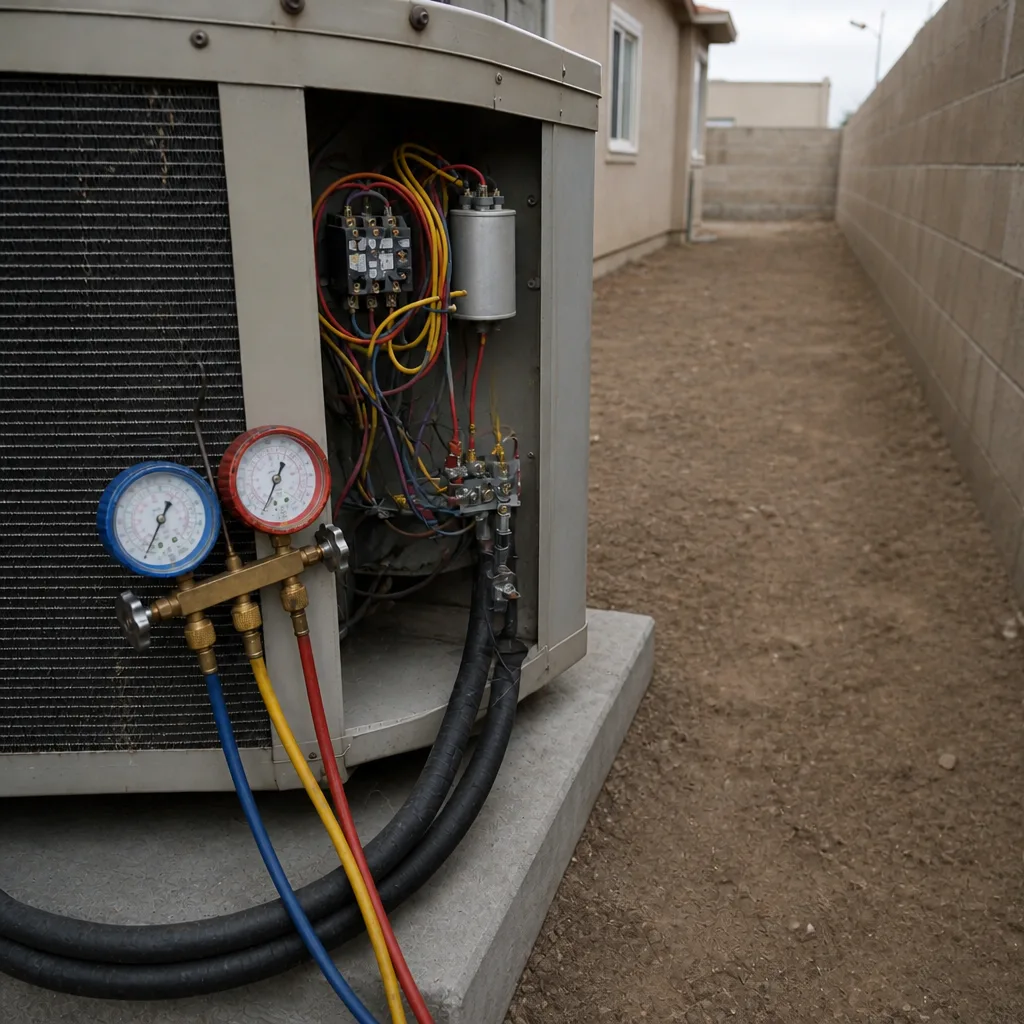
- Digital manifold gauge. Reads system pressures to spec, allowing verification of gas pressure and refrigerant charge depending on the system.
- Amp clamp. Measures current draw on the inducer motor, blower motor, and ignitor so technicians can see a component is struggling before it fails. This is how you catch a dying inducer before it strands you in January.
- Digital manometer. Reads draft pressure in the flue to verify venting is working as the manufacturer requires.
Every single fault code a furnace throws is a symptom, not a diagnosis. If you’ve cleaned a part and the fault returns, the tools above are what reveal the cause. Our team uses all of them on every diagnostic call, and we fit them to nine major brands, including Carrier, Trane, Lennox, and Goodman.
A Framework for When to Stop and Call
Here’s the simplest decision rule we can offer, and it’s the one we use ourselves when talking to homeowners.
- First fault, obvious cause, non-gas part. DIY is reasonable. Try the clean or the swap.
- First fault, no obvious cause, or the fault came back. Stop. The second occurrence is a diagnostic signal, not bad luck.
- Same fault code appears twice within 30 days. The DIY window has closed. The most economical move is a professional diagnosis, full stop.
- The fault involves gas, heat exchanger, or a code you can’t clean your way out of. Call before you touch anything.
Why the 30-day number? Because furnace faults have seasons. The first occurrence in October may be a burner that needs cleaning. The second in November is data. The third in December is a component that’s failing, and by January you’re paying emergency rates for something you could have solved in October. The math favors the early call.
We also see the opposite mistake: homeowners who call us for a filter swap. That’s a waste of a service call and we’ll tell you so. If a job is genuinely DIY-safe, do it. When it isn’t, don’t. To see how our team handles a diagnostic call, you can read more about Dalton Heating & Air Spring Valley home and how we work.
Why Spring Valley Furnaces Behave the Way They Do
Spring Valley has a specific combination of factors that affects furnace behavior in ways the generic “your furnace is dirty” advice doesn’t account for. Fine desert dust in the air is a filter killer. Homes here hit filter saturation in 30 to 45 days during heating season, not the typical 90. That’s not because the dust is unusual. It’s because the dust is unusually fine and it penetrates past cheap filters fast. A MERV 11 or 13 filter pays for itself in comfort and blower-motor life.
The second factor is the wide day-to-night temperature swing in winter. Spring Valley can swing from the high 60s during the day to the low 30s overnight, which means furnaces cycle on and off more than their design anticipates. That cycling stress exposes weak flame sensors and inducer bearings faster than constant operation would. We see ignitor and sensor failures here at a rate that surprises homeowners moving in from wetter climates.
Third: many Spring Valley homes have furnaces in garages or exterior closets, where summer heat is brutal on control boards and pressure switches. Rubber diaphragms in pressure switches dry out faster in this climate. If a furnace here trips a pressure switch, the first question should be why, not how do I reset it. Resetting without investigating, as we covered, is how you end up at the $1,400 inducer motor replacement. For heat pump and cooling specifics in the same climate, our AC Repair in Spring Valley and Heat Pump Installation in Spring Valley pages cover how the seasons affect those systems too.
Common Mistakes to Avoid
- Resetting a tripped pressure switch without finding the cause. The switch is a message, not a problem. Resetting it silences the message while the underlying draft issue damages the inducer motor.
- Cleaning every sensor you can reach without checking the fault history. Cleaning a working sensor is fine. Cleaning a sensor that’s signaling a gas pressure problem just delays the diagnosis.
- Using a shop vac on the heat exchanger. You can’t inspect for cracks with a vacuum, and you can’t see them with a flashlight. This is the one inspection homeowners should never skip on a furnace over 15 years old.
- Assuming a garage-installed furnace in Spring Valley is safe after 10 years without inspection. The heat cycling stress is real. Control boards and pressure switches fail early here.
- Skipping the permit on gas line work. Unpermitted work can void insurance and kill a resale. The savings disappear the moment the claim is denied.
- Waiting out two or three identical fault codes in a heating season. By the time you call, you’re paying for the emergency visit and the part that failed because the original fault wasn’t diagnosed.
- Replacing the furnace or control board before diagnostics. A control board rarely fails first. It fails after something upstream has been overworking it. Diagnose first, replace second.
See the difference
 Before
 After
 Before
 After
 Before
 After
When to Call a Professional
Call a licensed technician when the fault code repeats, when the smell of gas or exhaust is present, when the furnace is over 15 years old and has never had a heat exchanger inspection, or when the work touches the gas valve, gas line, venting, or control board. Call immediately if a carbon monoxide alarm has sounded in the home. For anything on the professional side of the line, the math is straightforward: the diagnostic visit costs less than the part you’d likely replace by guessing.
Dalton Heating & Air Spring Valley offers free estimates in Spring Valley, the price in writing before any work starts, and a full-year written guarantee on every repair. If the repair fails inside that year, we return at no charge. Call (888) 268-6106 to schedule.
Frequently Asked Questions
Yes, cleaning a flame sensor with fine steel wool is a safe homeowner task as long as you cut power at the breaker and gas at the valve first and reinstall the sensor exactly as it came out. The sensor itself is a passive metal rod with no electronics. The real question is whether cleaning is the correct fix. If the sensor was genuinely dirty, the fault won’t return. If it wasn’t, the sensor will foul again within weeks and the cause is upstream in draft or gas pressure. Call (888) 268-6106 if the fault returns.
No. Gas valve replacement requires measuring and setting manifold pressure to the manufacturer’s spec, which takes a digital manometer and a combustion analyzer to verify. Setting pressure wrong produces incomplete combustion and carbon monoxide. In Nevada, gas work is a licensed trade, and unpermitted work can void a homeowner’s insurance claim if a failure traces back to it. This is a beyond-DIY job, not a skill-level judgment call.
Any fault code that involves gas pressure, the heat exchanger, or a lockout of three or more attempts without a clear fix is a stop-and-call signal. Same for a pressure switch code, which almost always traces to draft or venting issues. If the same fault code returns twice within 30 days, the DIY window is closed. Call (888) 268-6106 so we can diagnose rather than guess.
Possibly not. Most homeowner policies exclude damage caused by unpermitted or unlicensed work. If a fire or carbon monoxide incident traces back to unlicensed gas work, the insurer can deny the claim entirely, leaving the homeowner on the hook for property damage, injury, and liability. That’s the risk most people don’t weigh against the money saved on labor.
Every 30 to 45 days during heating season, not the typical 90. The desert dust in Spring Valley is fine enough to load filters faster than in wetter climates, and a clogged filter causes restricted airflow, overheating, and short blower motor life. Use a MERV 11 or 13 filter if you can. If you’re unsure how to access the filter location on your specific furnace, call us and we’ll walk you through it.
Get a proper diagnostic first, then decide. Three identical faults on a furnace under 12 years old usually means an upstream cause that was never diagnosed, and the fix may be inexpensive once identified. On a furnace over 18 years old with a heat exchanger concern, replacement often becomes the more economical call. Call (888) 268-6106 and we’ll price both options in writing before you commit to either.
The Bottom Line
The DIY window on a furnace is real but narrow. Clean the filter, clean the flame sensor, swap the thermostat, clear the condensate line. Those four jobs are genuinely safe and worth doing yourself. Everything involving gas pressure, the heat exchanger, the control board, or combustion verification belongs to a licensed technician, and in Nevada that’s a legal boundary that affects insurance and resale. When the same fault code shows up twice within 30 days, the cheapest thing you can do is call. That’s not a sales pitch. That’s the math that keeps homeowners out of the $1,400 replacement.
Call Dalton Heating & Air Spring Valley at (888) 268-6106 for a free estimate. Live phone support is answered by a real person 24 hours a day, and every visit comes with the price in writing before work starts and a full-year written guarantee.
Written by the team at Dalton Heating & Air Spring Valley.