
Last updated November 17, 2026
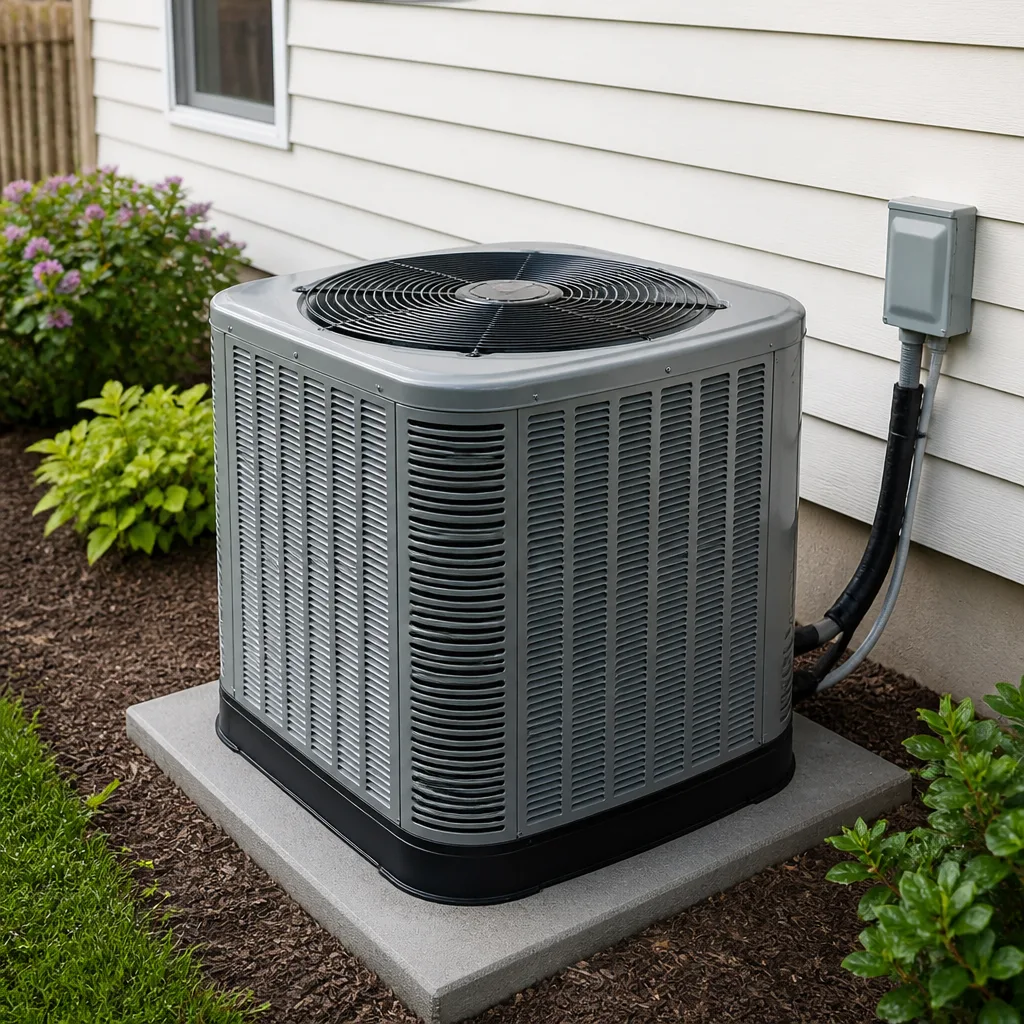 AC repair
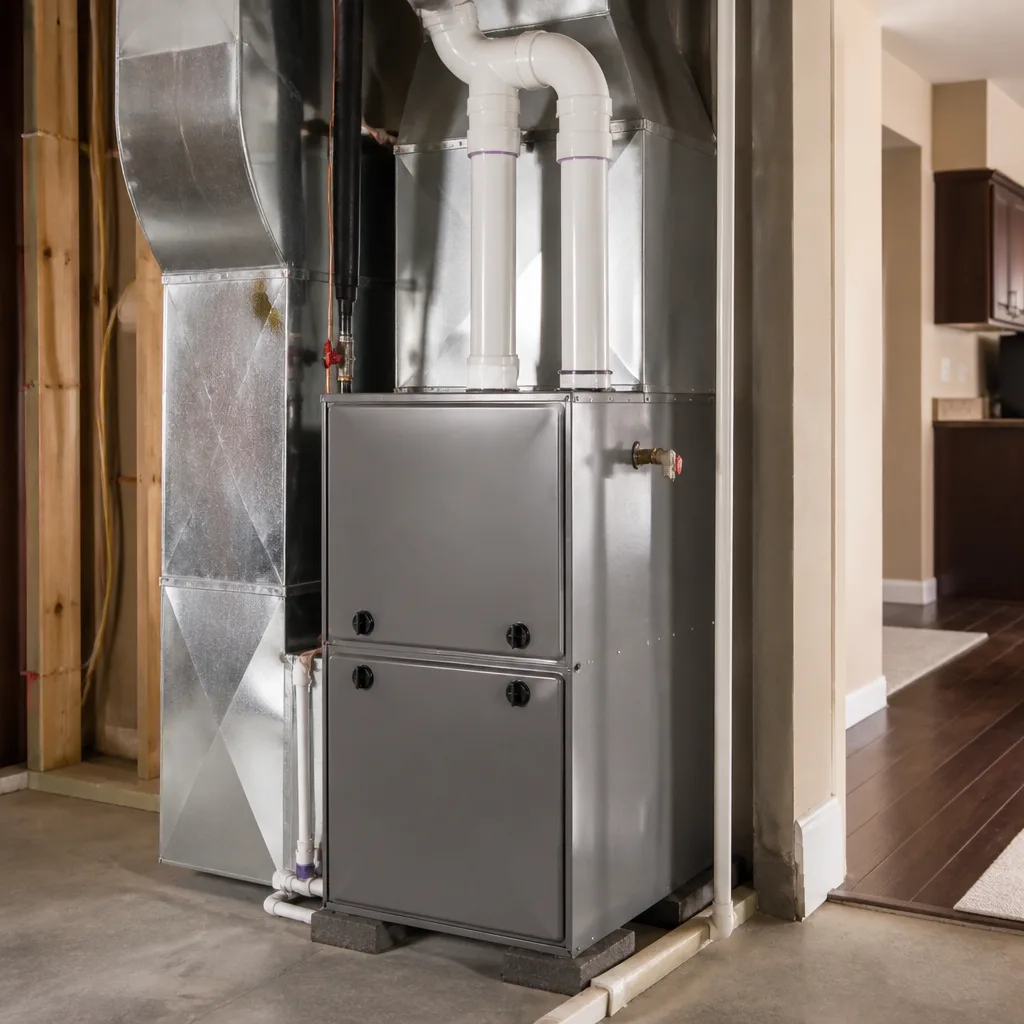 Furnace & heating
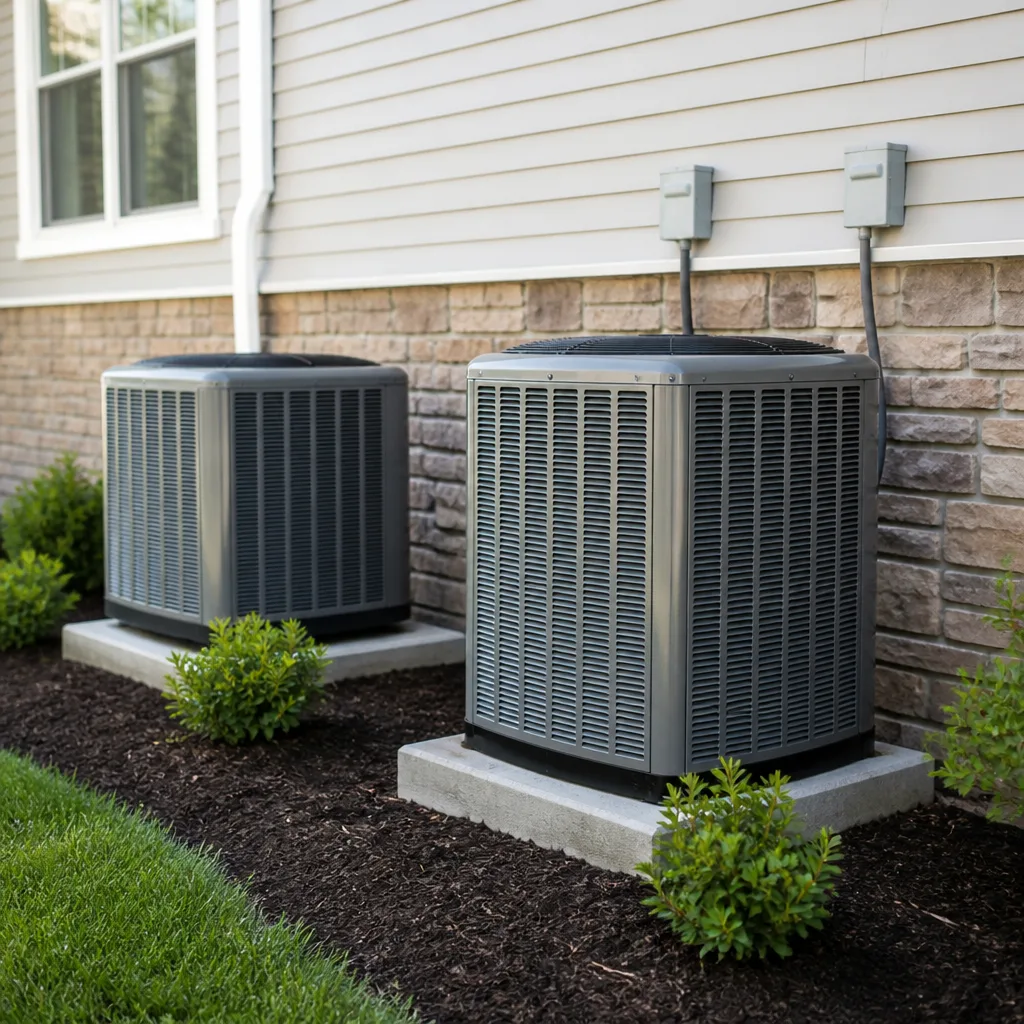 Heat pumps
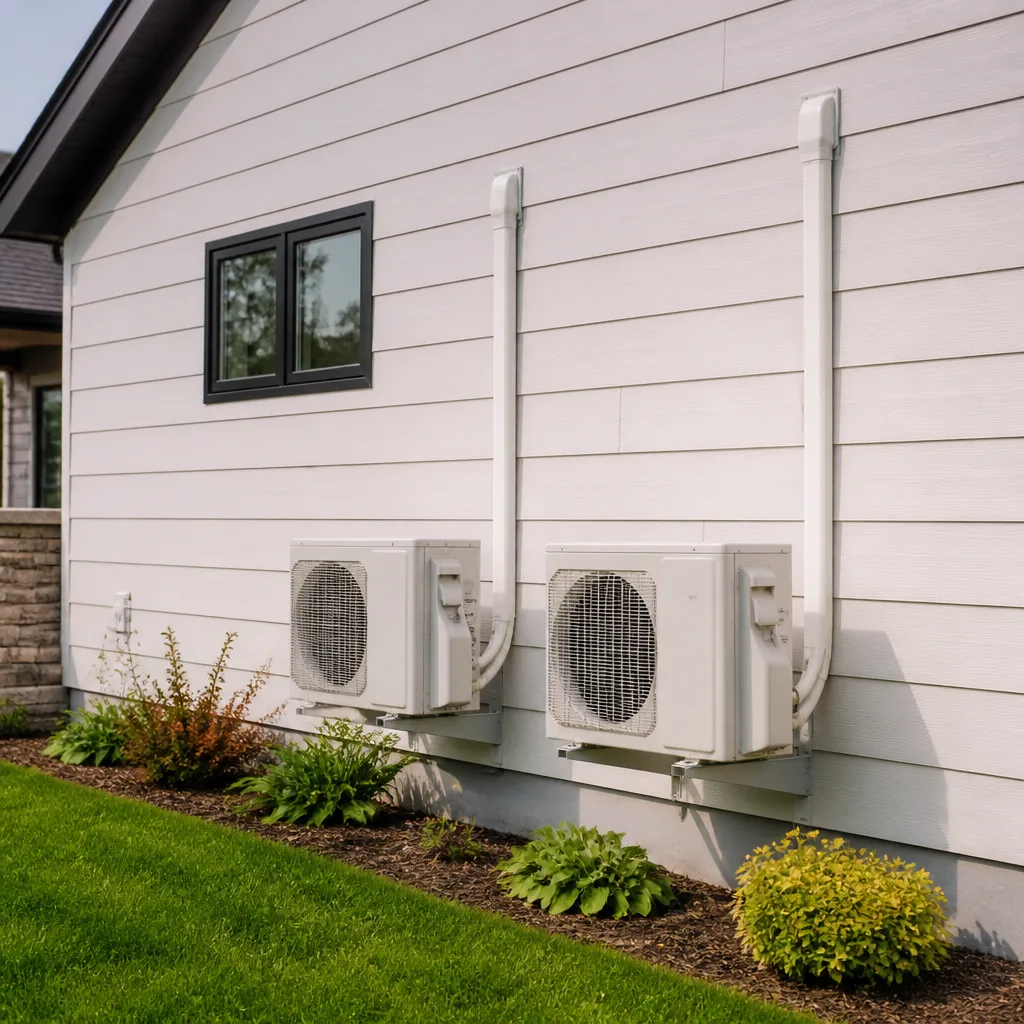 Ductless mini splits
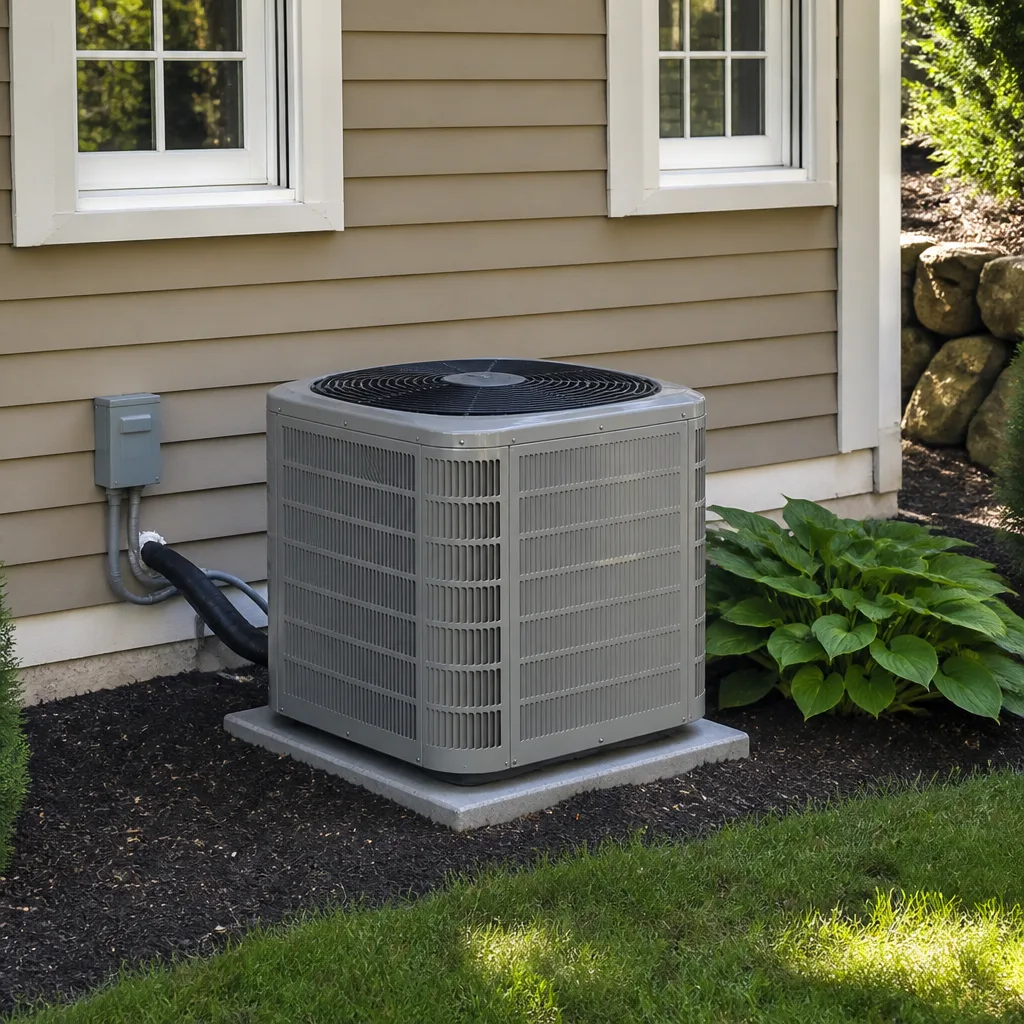 Carrier
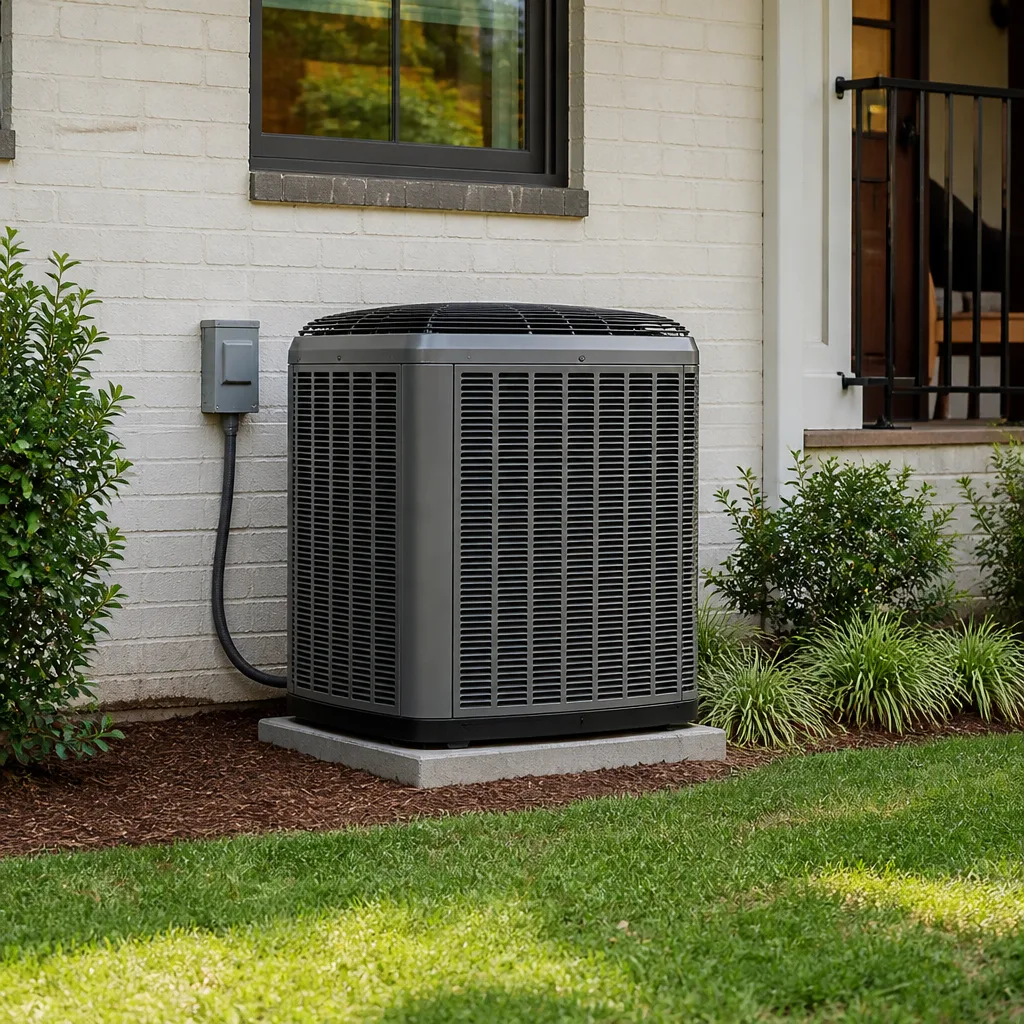 Trane
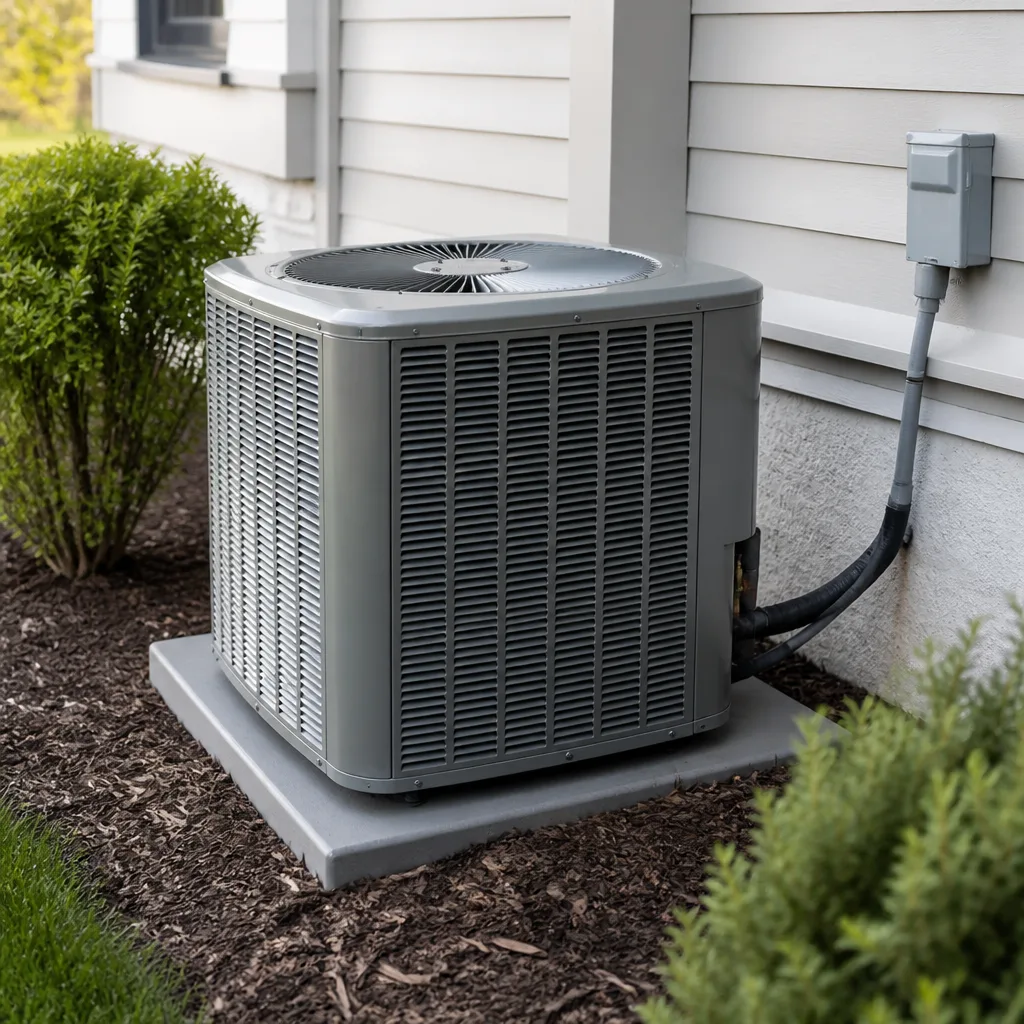 Goodman
Seasonal tune-up and full diagnostic on your Carrier, Trane, or Goodman system - readings shown to you before any repair is proposed
Diagnosis first, numbers second - you approve the repair price before a single part goes in.
Get your free estimateDIY vs Professional HVAC: The Spring Valley Homeowner’s Decision Guide
Replacing a run capacitor on a residential AC unit in Nevada is perfectly legal for a homeowner to do. Recovering and recharging refrigerant is a federal violation if you’re not Section 608 certified, and low refrigerant is the problem that follows most failed capacitors. That gap between what feels like the same job and what the law treats very differently is where Spring Valley homeowners get into trouble. This guide draws the line precisely: which tasks are genuinely yours to handle, which ones carry legal exposure, and which ones come down to simple risk math. You’ll also learn how to spot a repair video filmed in a climate nothing like Spring Valley’s.
Quick Answer
About 40% of the HVAC work a homeowner faces is genuinely safe and legal to do yourself: filter changes, thermostat swaps, condensate drain flushes, and outdoor coil cleaning. Everything involving refrigerant, gas piping, electrical panel work on the air handler, or the sealed refrigeration circuit is off-limits, and in the case of refrigerant, it’s a federal EPA Section 608 violation without certification. Repairs that touch the refrigerant loop, the gas train, or high-voltage wiring belong to a licensed technician, and in Spring Valley the summer heat makes those repairs more urgent, not less.
Styles & brands we work with
- AC repair
- Furnace & heating
- Heat pumps
- Ductless mini splits
- Carrier
- Trane
- Goodman
Table of Contents
- Where the Legal Line Actually Is: EPA Section 608 in Plain English
- The Owner-Appropriate Tasks (With Real Instructions)
- The Capacitor Question: Risk Math on a $30 Part
- Nevada Licensing Law and the Unlicensed Handyman Problem
- How to Vet a YouTube Repair Video for Spring Valley
- Why Spring Valley Heat Changes the Procedure
- When DIY Stops Making Sense
- Frequently Asked Questions
Where the Legal Line Actually Is: EPA Section 608 in Plain English
EPA Section 608 of the Clean Air Act regulates who may handle refrigerants used in stationary air conditioning and refrigeration equipment. In plain terms, if the job involves opening the sealed refrigeration circuit, recovering refrigerant, adding refrigerant, or disposing of refrigerant, the person doing it must hold a Section 608 certification. Homeowners can own refrigerant. They just can’t legally open the system, recover it, or recharge it themselves.
What homeowners can legally do:
- Change air filters (any type, any time)
- Replace a thermostat (line-voltage or low-voltage, assuming the wiring matches)
- Flush a condensate drain line with vinegar or water
- Clean the outdoor condenser coil with a garden hose
- Replace a run capacitor on a permanently split system, which sits on the electrical side, not the refrigerant side
- Replace a contactor or a blower motor on some configurations, though the electrical risk rises with each
What requires a Section 608-certified technician, no exceptions:
- Adding or recovering refrigerant (R-410A, R-32, R-454B, and older R-22)
- Brazing or repairing refrigerant lines
- Replacing the compressor, evaporator coil, or condenser coil
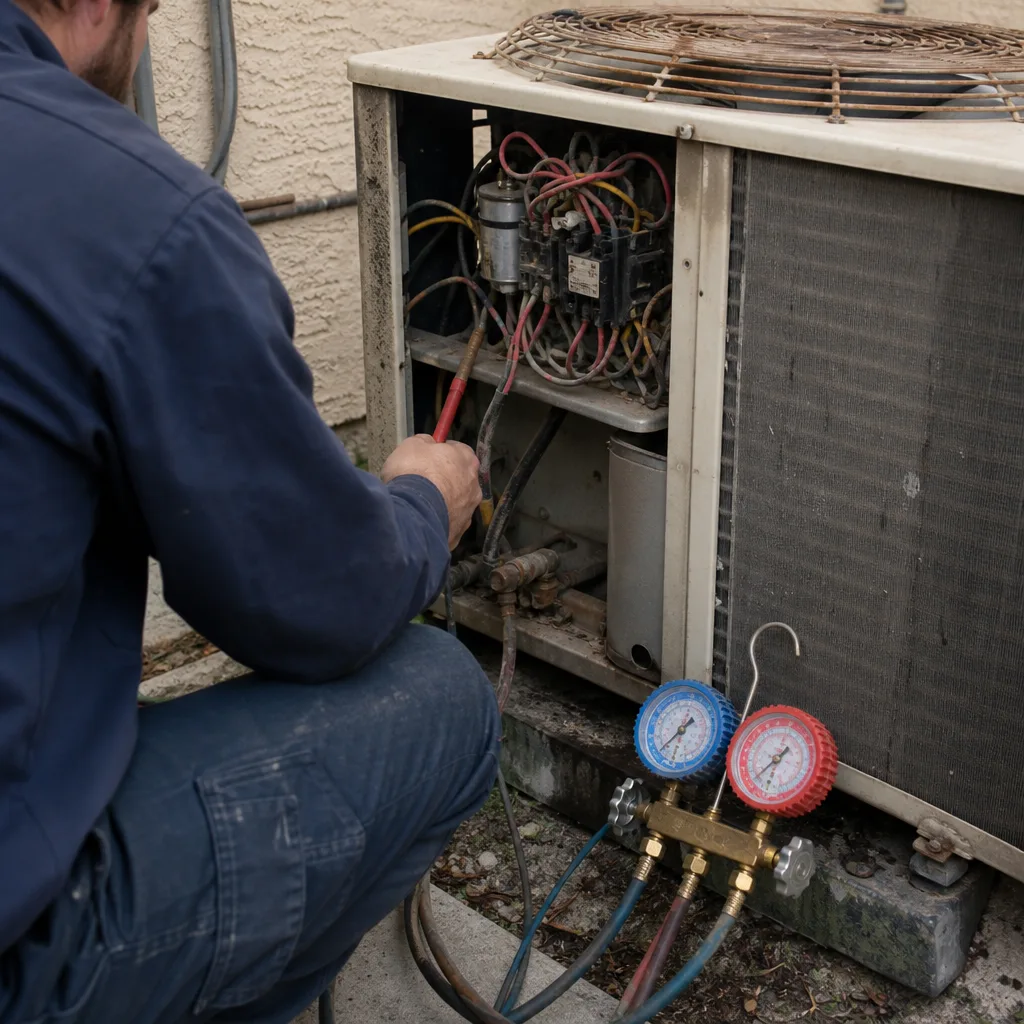
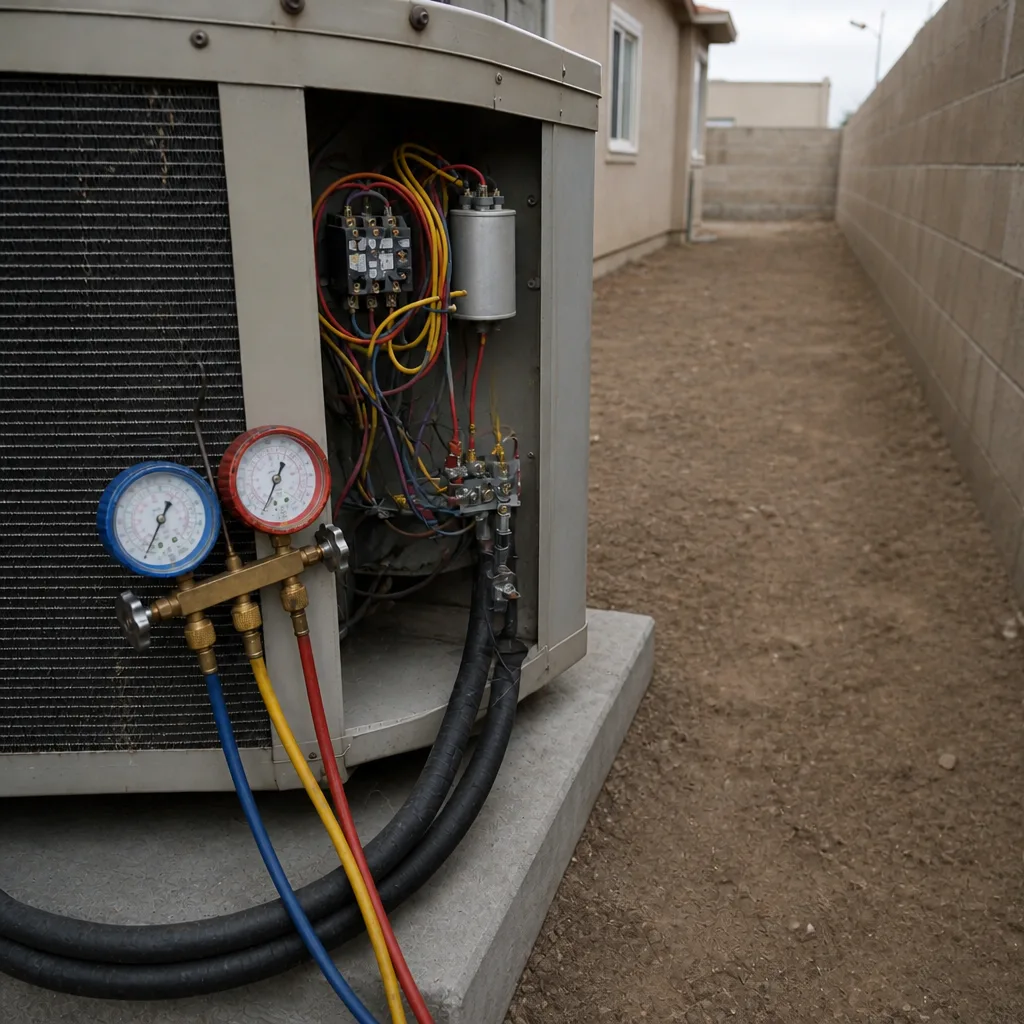
- Diagnosing a refrigerant leak with gauges or an electronic leak detector
- Any work on the sealed circuit
A homeowner who buys a jug of R-410A and tops off their own system is committing a federal violation, and the seller of that refrigerant to an uncertified buyer is committing one too. We’ve seen this play out in Spring Valley more than once, usually after someone watched a video and decided they’d “just add a little refrigerant.” The fine structure alone is enough to make the professional call the cheaper option every time. If you suspect a refrigerant issue, our AC Repair in Spring Valley team handles it with the proper certification and equipment.
The Owner-Appropriate Tasks (With Real Instructions)
Four jobs are genuinely yours. Each takes under 30 minutes, requires no license, and costs under $40 in parts. Here’s how to do each one well, and what can go wrong if you don’t.
1. Filter changes
Pull the filter, hold it up to a light. If you can’t see through it clearly, replace it. Use a MERV 8 to MERV 11 filter for most Spring Valley homes, and skip the high-MERV 13+ filters unless your system was designed for the added static pressure. In our experience, the biggest mistake is buying the highest-MERV filter on the shelf. That chokes airflow on older systems and shortens blower motor life. Change every 60 to 90 days. During heavy summer use, every 30 days.
2. Thermostat swaps
Snap a photo of the wire terminals before you disconnect anything. That photo is your only reliable map. The main trap: if your system has a “C-wire” (common wire), the new smart thermostat needs it to run reliably. If your old thermostat ran on batteries and had no C-wire, the new one may not power up. Check compatibility before you buy. Also kill the breaker to the air handler, not just the thermostat.
3. Condensate drain flushes
Find the PVC drain line coming off the indoor coil. Pour a cup of white vinegar down the cleanout port or the tee. Let it sit 30 minutes. Flush with water. In Spring Valley’s dry heat, condensate lines clog more slowly than in humid climates, but they still clog, and a clogged drain means a flooded pan and water damage to the ceiling below. Flush quarterly.
4. Outdoor unit cleaning
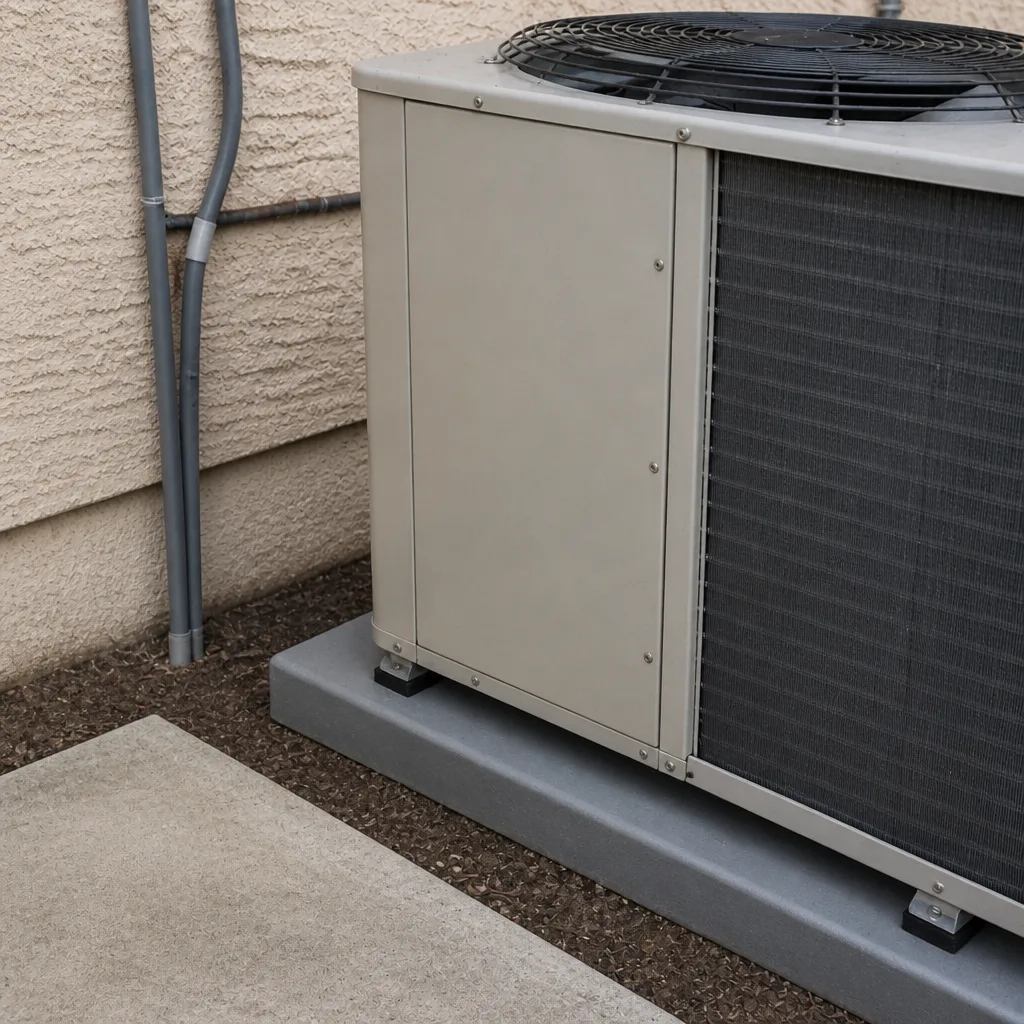
Kill the breaker. Rinse the outdoor coil from the inside out with a garden hose, no pressure washer. Pressure washers bend fins and cost you hundreds in repairs. Clear any leaves or debris from the base. Trim back vegetation to a 24-inch clearance. In Spring Valley, dust and cottonwood fuzz build up on coils faster than homeowners expect. If your unit sits near a gravel lot or open desert edge, clean it every six weeks in summer.
The Capacitor Question: Risk Math on a $30 Part
A run capacitor costs $15 to $40 at any parts house. A professional replacement costs $180 to $340 installed in Spring Valley, including the diagnostic visit. That’s a wide spread, and it’s why homeowners watch one video and decide to try it. Here’s the honest math, because for some people the DIY route genuinely makes sense and for others it doesn’t.
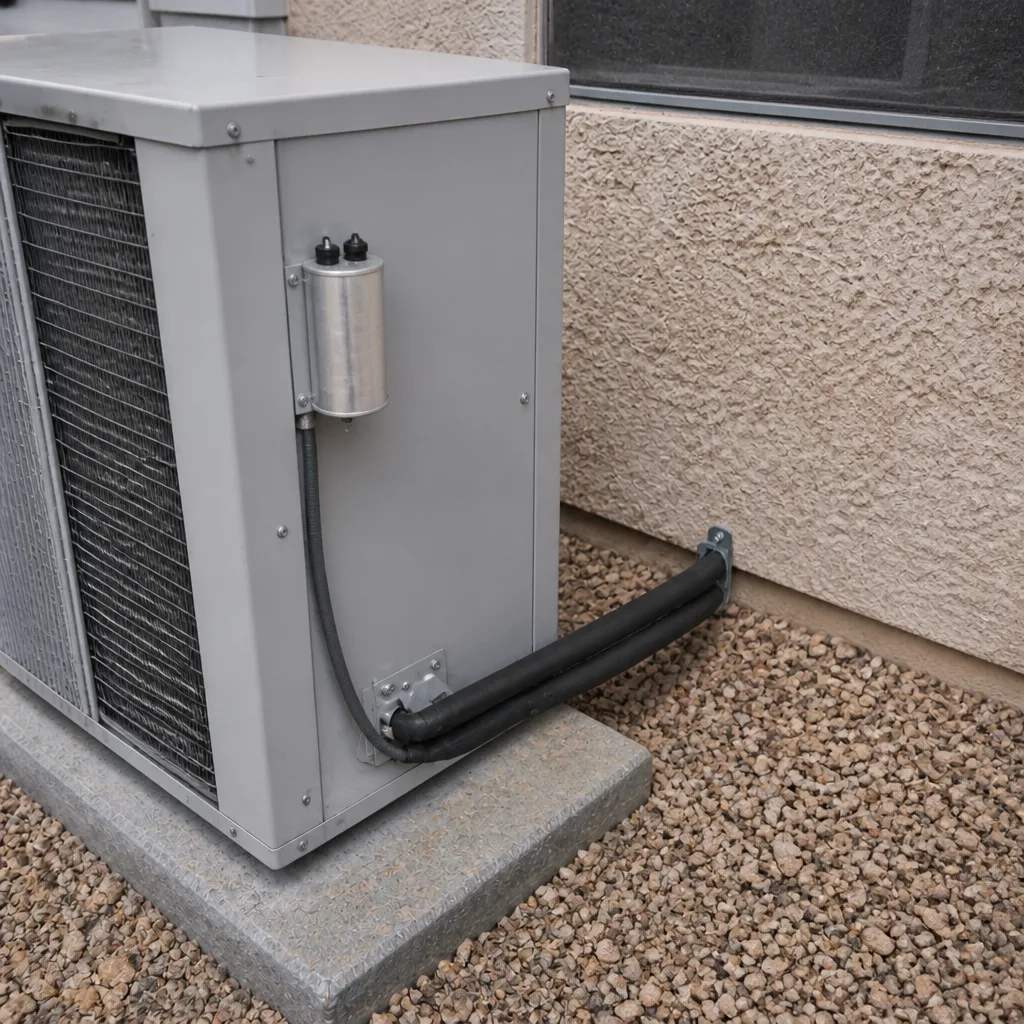
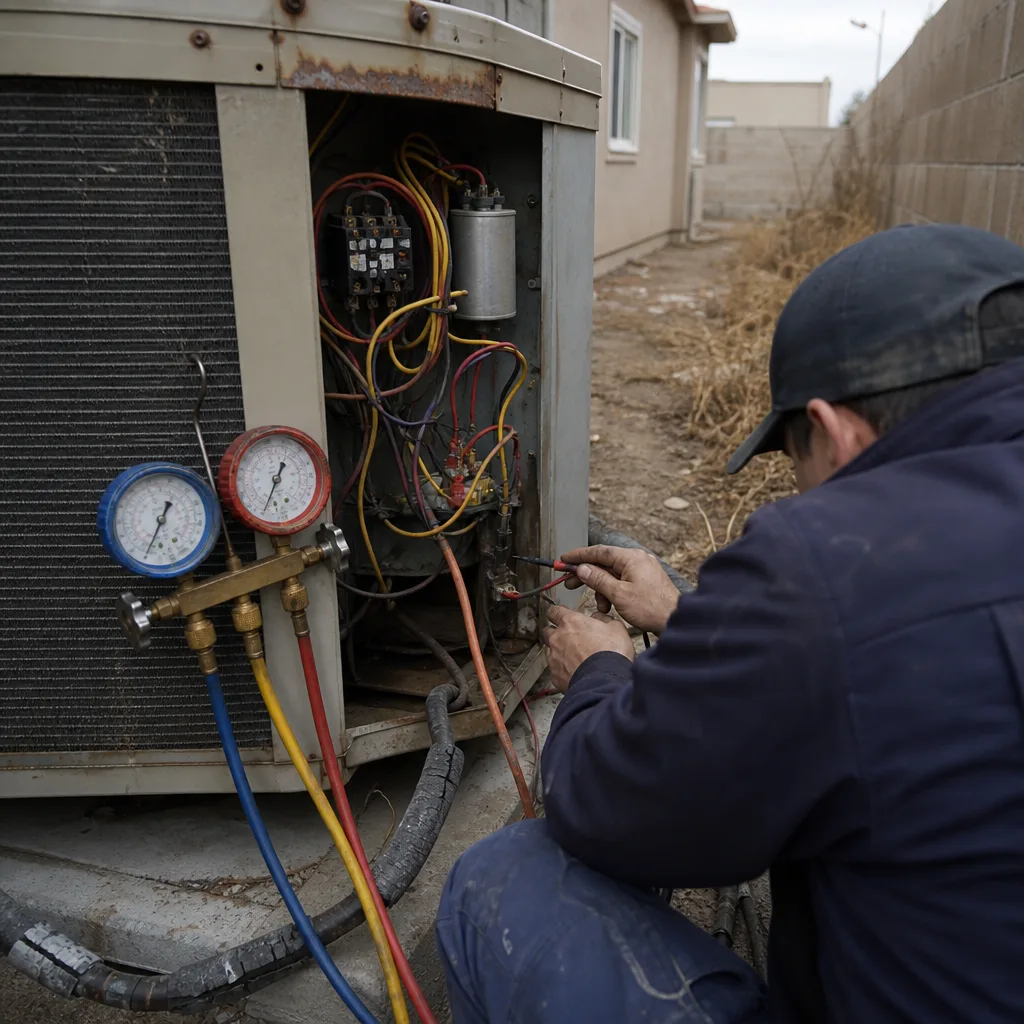
What’s actually involved: the capacitor is a cylindrical component in the outdoor unit’s electrical compartment. You kill the disconnect, discharge the capacitor safely (it holds a charge even after power is off), test it with a multimeter that reads microfarads, match the microfarad rating and voltage rating to the OEM spec, and swap the wires. The part is cheap. The procedure is 20 minutes if you already own a good meter and know how to use it.
What can go wrong:
- Wrong capacitor rating – a mismatch burns out the compressor, a $1,200 to $2,400 repair
- Residual charge shock – a capacitor holding a charge can deliver a serious shock even with the disconnect pulled; it needs to be discharged with a resistor, not a screwdriver
- Misdiagnosis – a failed capacitor and a failing compressor can present the same way from the thermostat. Replacing the capacitor on a system with a dying compressor just delays a bigger bill
- The system still won’t cool – in our experience, when a capacitor fails on a Gulf Coast unit it often fails because the compressor was running hot due to low refrigerant. The capacitor was the symptom, not the disease. Only a certified technician can check the charge legally
If you own a multimeter, understand microfarad ratings, and can discharge a capacitor safely, replacing it is a reasonable DIY job on most single-stage condensers. If any of those three conditions isn’t true, the professional call is cheaper than the compressor.
Trade word, plain definition: a “run capacitor” is a small electrical component that gives the compressor and outdoor fan motor the extra jolt they need to start and keep running. When it fails, the outdoor fan stops or the compressor hums without starting. A “start capacitor,” which is different and used on some systems, is a separate part with a similar failure mode.
Nevada Licensing Law and the Unlicensed Handyman Problem
Nevada requires HVAC contractors to hold a state contractor’s license with the appropriate classification to perform work over a set dollar threshold (currently $1,000, including labor and materials). Hiring an unlicensed handyman to do anything beyond the owner-appropriate tasks above creates two problems, and only one of them is the technician’s.
- The handyman’s exposure – unlicensed contracting in Nevada is a criminal offense, and the state actively pursues it.
- The homeowner’s exposure – if an unlicensed worker damages your system, causes a refrigerant leak, or gets injured on your property, your homeowner’s insurance may not cover the loss, and you have no recourse through the state contractor’s recovery fund. You also may lose any manufacturer’s warranty on the equipment because the work wasn’t done by a licensed contractor.
The most common version of this we see in Spring Valley is a handyman who offers to “top off the refrigerant” for cash. That handyman is committing a federal EPA violation if he isn’t Section 608 certified, and you’re the one left holding a system with an uncertified repair record. Manufacturer warranties on Lennox, Goodman, Rheem, and York equipment are routinely voided by documented unlicensed work. Call a licensed company. The savings disappear the first time something fails.
How to Vet a YouTube Repair Video for Spring Valley
A repair video filmed in Miami or Atlanta assumes 90% relative humidity and a 30-degree summer swing. A Spring Valley summer runs 105°F ambient, 15% humidity, and weeks of triple-digit highs. The procedure can be identical. The stress on the equipment is not. Here’s how to tell whether the video applies to your system in your city.
- Check the location tag. Any channel that films on a coastal dock, near a lake, or in a leafy green yard is in a humid climate. Procedures involving condensate, coil freezing, and compressor load will differ.
- Check the equipment. A video on a 15-year-old single-stage Carrier isn’t a match for your 2024 variable-speed Lennox. Match the brand, model family, and capacity.
- Check the refrigerant. Videos that mention R-22 are pre-2010 and mostly irrelevant. Modern Spring Valley systems run R-410A or newer R-32 and R-454B blends, which have different pressure characteristics.
- Check for “just add refrigerant” advice. Any video that suggests adding refrigerant without leak testing is recommending a federal violation. Skip it and find a different video.
- Check the comment section for failures. Sort by newest comments and read the ones where people say “did this and now the unit won’t start.” Those comments are the most honest part of the video.
We’ve watched hundreds of these. The good ones usually come from manufacturers, trade schools, or technician training channels, and they explicitly warn about discharge, refrigerant law, and misdiagnosis. The bad ones skip all three and film in someone’s garage.
See the difference
 Before
 After
 Before
 After
 Before
 After
Why Spring Valley Heat Changes the Procedure
Ambient temperature affects more than comfort. It changes when and how a technician is allowed to work on your system, and it changes what a homeowner can reasonably do.
Three ways Spring Valley heat matters:
- Charging by superheat and subcooling – proper refrigerant charge is set based on indoor and outdoor temperature, and a technician can only verify the charge accurately above certain ambient thresholds (typically above 65°F outdoor). In Spring Valley, this isn’t a constraint on most days, but in a cold spring morning a technician has to wait for ambient to rise before checking charge accurately.
- Capacitor failure rates – capacitor life is measured in hours at temperature, and Spring Valley condensers see 3,000+ hours per year at 100°F+ ambient. That’s why we replace more capacitors here than techs in coastal markets do. A 5-year-old unit in Spring Valley has the capacitor wear of a 10-year-old unit in Seattle.
- Diagnostic windows – a system that fails on a 110°F afternoon may run fine the next morning. A technician needs to see the failure under load, which means scheduling during peak heat. If your AC only fails when it’s hottest, say so when you call, because the repair plan depends on catching the failure live.
One more thing: attic air handlers in Spring Valley routinely reach 140°F before dawn in July. A homeowner who climbs into the attic at 4 p.m. to swap a blower motor is stepping into a space that can cause heat illness in 10 minutes. If the job requires attic access in summer, schedule it for early morning or pay a professional who does this weekly.
When DIY Stops Making Sense
Four signs it’s time to put the tools down and call:
1. The system involves refrigerant. This is the line. If diagnosis has gotten to the point where the answer is “the system is low” or “there might be a leak,” you’ve crossed from the electrical side (legal) into the sealed circuit (federal). Stop.
2. The repair is inside the air handler or gas furnace. Gas train work, burners, flue termination, and heat exchanger diagnostics require licensed technicians and a professional combustion analysis. Heat exchanger cracks on a 10-year-old furnace in Spring Valley are not a homeowner diagnosis. If you smell gas or your CO detector alarms, leave the house and call from outside. Our Furnace Repair in Spring Valley team treats those calls as priority.
3. The part is over $150. Below that, the risk math often favors DIY. Above it, the downside of a misdiagnosis is a larger repair bill than the professional call would have cost.
4. You don’t own the diagnostic tools. A clamp meter, a microfarad-capable multimeter, and a thermometer that reads split-temperature differential are the minimum for HVAC troubleshooting. That’s about $180 in tools. If you’re buying tools to save a $250 repair, the math has already failed.
System replacements, heat pump changeouts, and any refrigerant-circuit repair are not homeowner work by any measure. Our Heat Pump Installation in Spring Valley team handles those jobs with load calculations and permit filings, which no homeowner can do properly for a modern variable-speed system.
Common Mistakes to Avoid
- Adding refrigerant without leak testing. If the system is low, it’s leaking, and adding refrigerant is a federal Section 608 violation for an uncertified homeowner. Find the leak first, with a certified technician. This single mistake costs Spring Valley homeowners more money and legal exposure than any other DIY decision.
- Using a pressure washer on the outdoor coil. High-pressure water bends fins flat and ruins the coil’s heat transfer. A garden hose on a gentle spray is all the cleaning these units need.
- Buying the highest-MERV filter on the shelf. A MERV 13 filter on an older residential system chokes airflow and cracks the blower. Stick with MERV 8 to MERV 11 unless the equipment was designed for more.
- Assuming a failed capacitor is the whole problem. On a 105°F afternoon, a failed capacitor often signals the compressor was running hot due to low refrigerant. Replace the capacitor, and the new one may fail again in a week if the underlying problem isn’t handled.
- Hiring an unlicensed handyman for a “quick fix.” Beyond the licensing problem, unlicensed work voids most manufacturer warranties. In Spring Valley, a licensed contractor sticker on the air handler is often the difference between a warranty claim and a $2,000 out-of-pocket repair.
- Following a YouTube video filmed in a humid climate. Procedures around condensate, coil freezing, and compressor load assume conditions that don’t exist in Southern Nevada. If the video shows a green lawn, the procedure may still work but the diagnostic thresholds don’t.
- Skipping the breaker before touching the electrical compartment. The air handler runs on 240-volt power, and the capacitor stores energy even with the disconnect pulled. Discharge it with a resistor, not a screwdriver.
When to Call a Professional
Call a professional if the repair involves refrigerant, the gas train, the sealed circuit, high-voltage wiring beyond a simple capacitor or contactor, or if the diagnostic tools required cost more than a professional visit. Call immediately if you smell gas, if the CO detector alarms, or if the system trips the breaker twice in a row. Call sooner than you think you need to if the unit is older than 12 years, if you’ve had two repairs in the same season, or if the system has been serviced by an unlicensed tech at any point. Dalton Heating & Air Spring Valley offers free estimates in Spring Valley, written pricing before any work starts, and a full-year written guarantee on every repair. Call (888) 268-6106 and we’ll tell you straight whether the job is yours to do or ours.
The Garage Standard we operate under means no price surprises and no return-visit cost if the repair fails. You’ll know who is showing up, when they’ll arrive, and what the final bill will be, in writing, before the work starts. Our technicians have up to 23 years of experience and are factory-trained on nine major brands, including Lennox, Goodman, Rheem, and York. Start at our Dalton Heating & Air Spring Valley home page if you’re new to us.
Frequently Asked Questions
No. Recovering, adding, or handling refrigerant in a stationary AC system requires EPA Section 608 certification, and doing it without certification is a federal violation under the Clean Air Act. Homeowners may own refrigerant, but opening the sealed circuit or recharging is off-limits. Call a certified technician for any refrigerant issue.
Yes, for a homeowner who already owns a multimeter with microfarad capability, understands the rating on the old capacitor, and knows how to discharge the component safely. It’s an electrical-side part, not part of the sealed refrigerant circuit, so no EPA certification is required. If any of those three conditions isn’t true, the professional call is cheaper than a compressor replacement. Call (888) 268-6106 for a written quote.
Most furnace and AC repairs run $150 to $450 professionally, including the diagnostic visit and parts. The same repair as a DIY job usually costs $20 to $80 in parts plus tools and time. Capacitor replacement professionally runs $180 to $340 installed. Refrigerant work isn’t DIY at any price because it’s federally restricted. Call (888) 268-6106 for an exact written quote before any work starts.
More than the savings, usually. Nevada requires an HVAC contractor license for work over $1,000, and unlicensed work isn’t covered by the state contractor recovery fund, voids most manufacturer warranties on equipment from brands like Lennox, Goodman, and York, and leaves you without recourse if the work fails. The cheaper bid often costs more over the life of the system.
Spring Valley’s condenser units run thousands of hours per summer at ambient temperatures above 100°F, and capacitor life is measured in hours at temperature. A 5-year-old capacitor in Spring Valley has roughly the wear of a 10-year-old capacitor in a cooler coastal city. If you’re replacing a capacitor every 3 to 5 years, that’s normal for the climate, not a sign your system is failing.
Yes, with two precautions: photograph the wire terminals before disconnecting anything, and confirm your new thermostat is compatible with your system’s wiring (especially the C-wire) before you buy. A failed thermostat install is the single most common DIY mistake we see in Spring Valley. If the new unit won’t power up, kill the breaker before troubleshooting. Call (888) 268-6106 if you’d rather we handle it.
The Bottom Line
The line between DIY and professional HVAC isn’t skill, it’s law and risk. Filters, thermostats, condensate lines, and outdoor coils are yours to handle, and doing them well saves real money. Capacitors sit on the legal side but require tools and comfort that not every homeowner has. Refrigerant, gas, the sealed circuit, and the flame side of your furnace belong to certified technicians, and skipping that line is a federal violation, a warranty void, and a safety risk. Know which side each job falls on. Call a licensed pro when the answer isn’t obvious. That’s the whole decision, and Spring Valley homeowners who get it right save the most money over time.
If you’re in Spring Valley and want a straight answer about a repair, call Dalton Heating & Air Spring Valley at (888) 268-6106 for a free estimate. Written price before any work starts. Background-checked, uniformed technicians. A full-year written guarantee on every repair. Free return visit if the work doesn’t hold. That’s The Garrison Standard, and it’s the same on every job.
Written by the team at Dalton Heating & Air Spring Valley.