
Last updated November 17, 2026
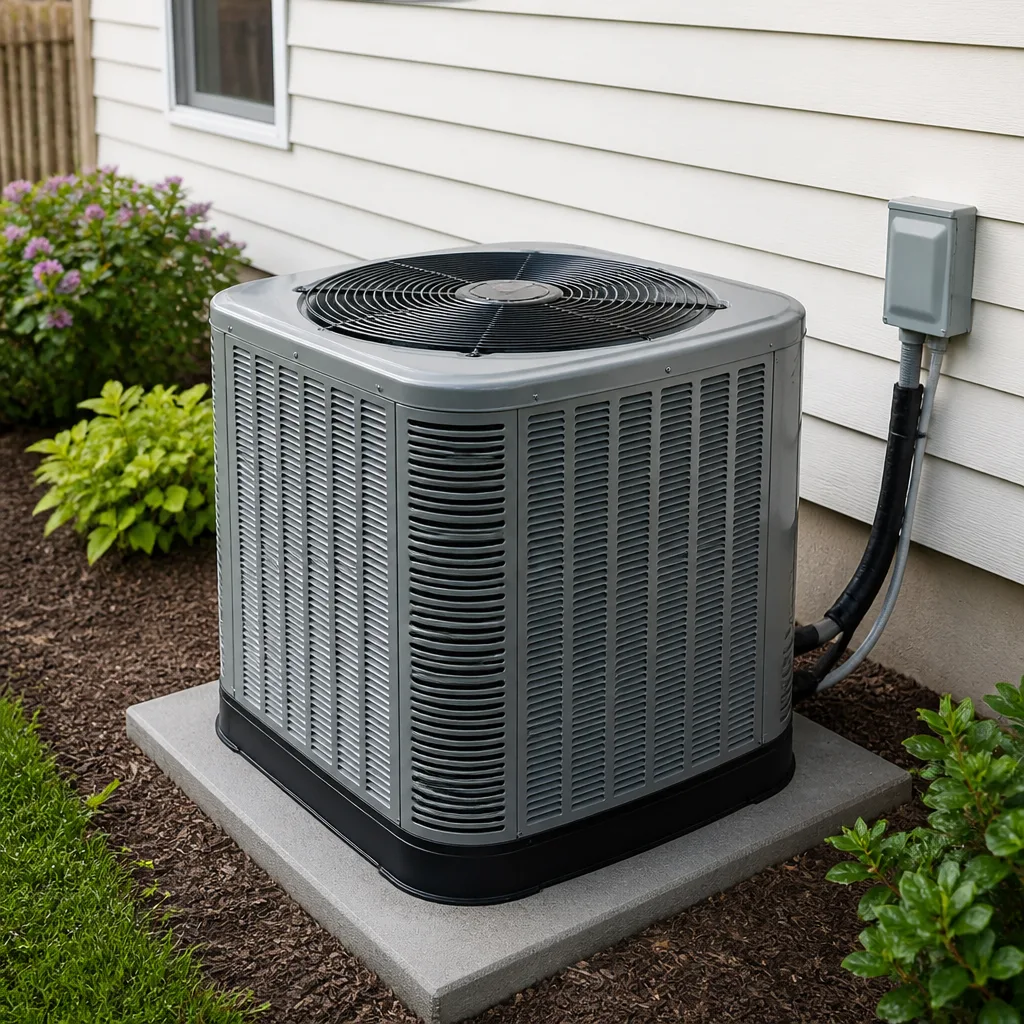 AC repair
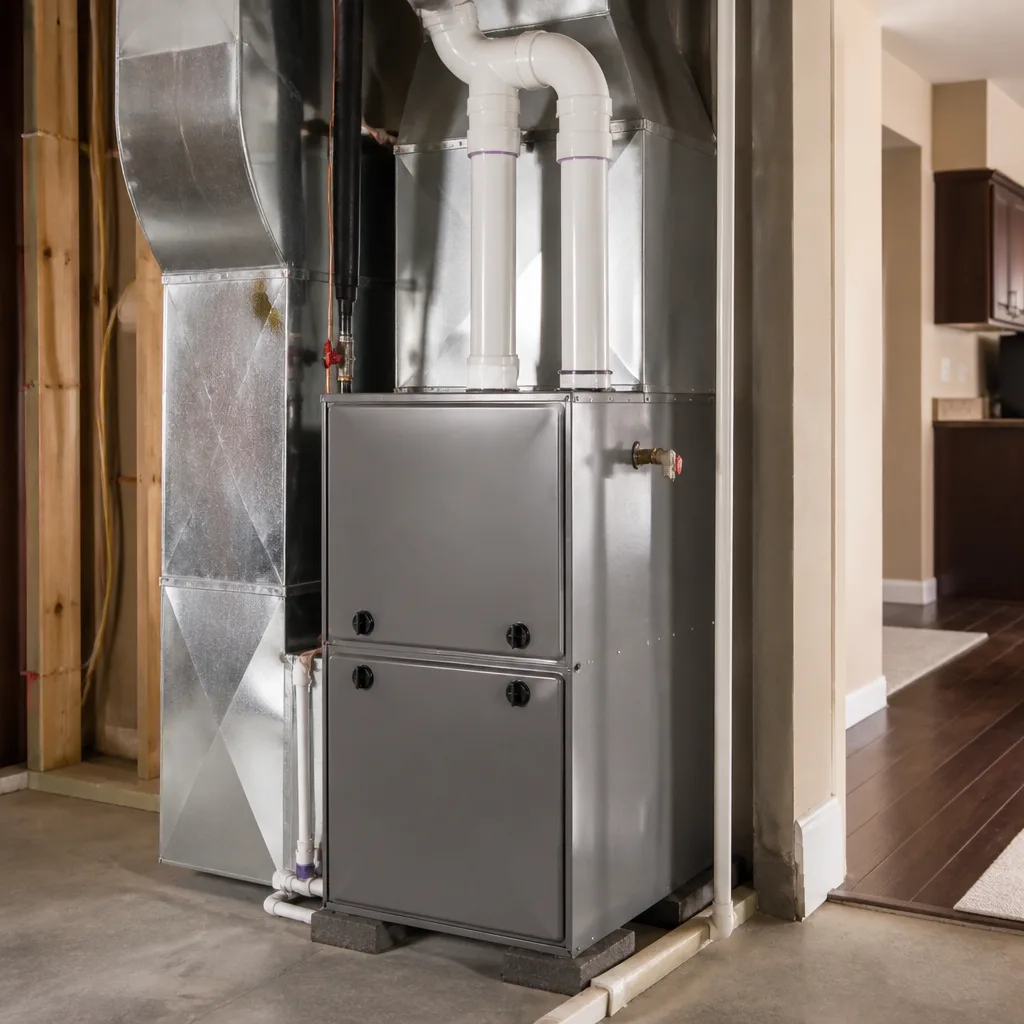 Furnace & heating
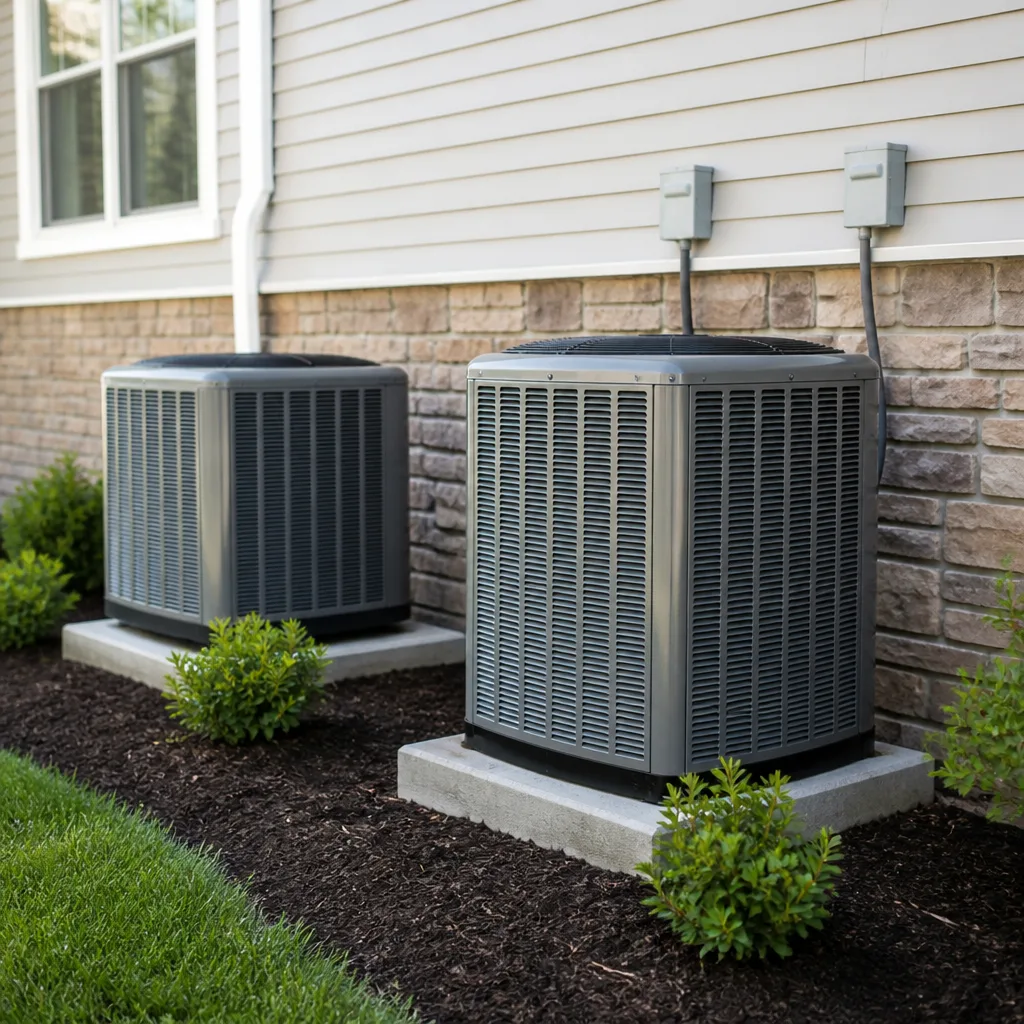 Heat pumps
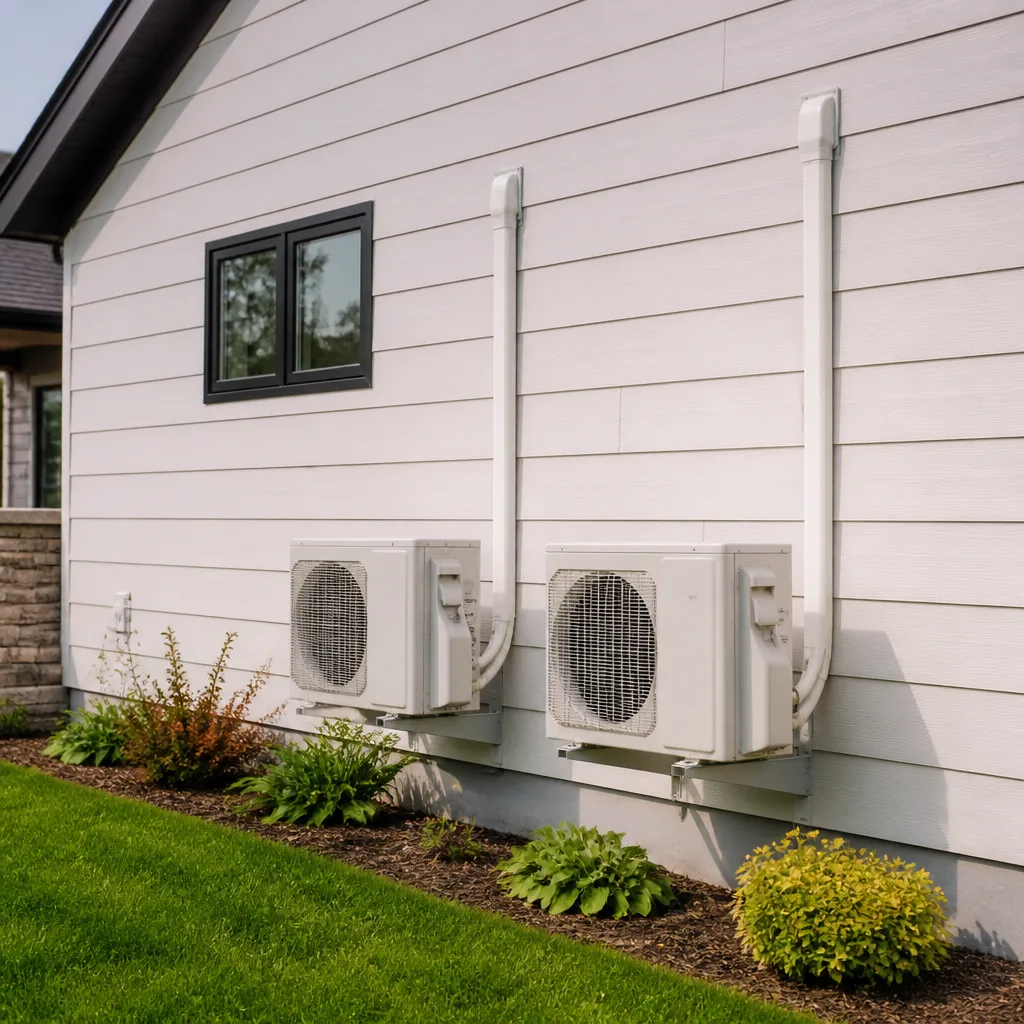 Ductless mini splits
 Carrier
 Trane
 Goodman
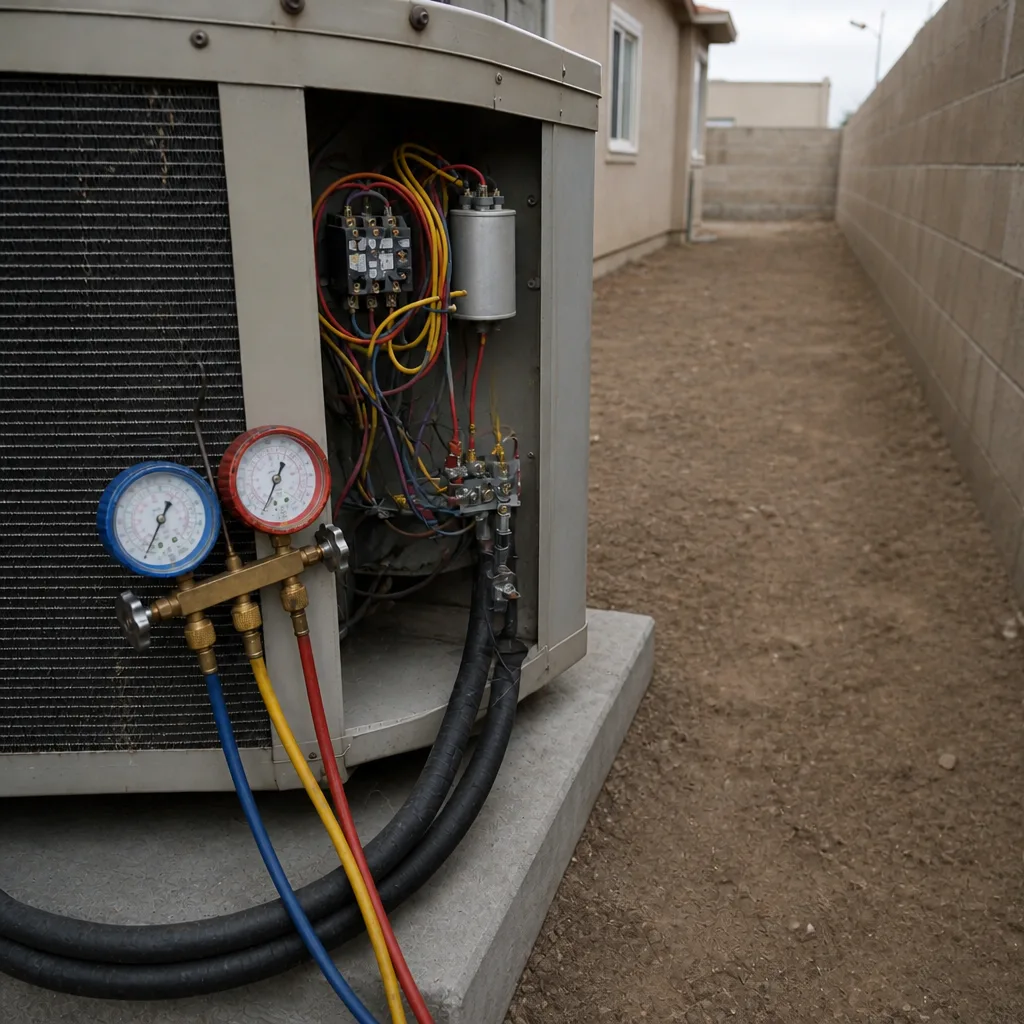
Seasonal tune-up and full diagnostic on your Carrier, Trane, or Goodman system - readings shown to you before any repair is proposed
Diagnosis first, numbers second - you approve the repair price before a single part goes in.
Get your free estimateAC Repair Troubleshooting: Common Problems and How to Fix Them
Warm air coming out of a vent can be a $12 clogged filter or a $1,400 failed compressor, and nothing on the thermostat tells you which one you’re dealing with. What separates those two outcomes isn’t luck. It’s two or three observations any homeowner can make in about three minutes without opening a panel or touching a wire. This guide organizes air conditioning problems by cost tier, so before you pick up the phone you’ll know roughly what you’re facing. We’ve run these calls across Spring Valley for years, and the homeowners who call with specific symptoms almost always get a tighter quote than the ones who just say “it’s broken.”
Quick Answer
Most residential AC problems fall into four cost tiers: airflow and electrical fixes ($100 – $250), refrigerant and capacitor work ($200 – $500), blower and control board repairs ($400 – $900), and compressor or coil replacement ($1,000 – $2,000+). A three-question check covering airflow, thermostat behavior, and outdoor unit sound can tell you which tier you’re likely in before a technician arrives. That ten minutes of observation is the difference between a ballpark guess and a real estimate.
Styles & brands we work with
- AC repair
- Furnace & heating
- Heat pumps
- Ductless mini splits
- Carrier
- Trane
- Goodman
Table of Contents
- The Three-Question Triage Sequence
- Four Cost Tiers: What Your Symptom Is Telling You
- Capacitor vs. Compressor: Reading the Sounds
- Why a Frozen Coil Means Two Different Things
- Reading Your Thermostat Error Code
- What to Tell the Dispatcher for an Accurate Quote
- Common Mistakes to Avoid
- When to Call a Professional
The Three-Question Triage Sequence
Before you call anyone, answer these three questions. They narrow the fault to one of four cost tiers in about three minutes and, in our experience, they’re the same questions a good technician starts with on the driveway.
- Is air moving at all? Hold your hand at a supply vent. Strong airflow that’s merely warm points one direction. Weak airflow points another. No airflow at all usually means the blower or a safety switch, which is a different call entirely.
- What is the thermostat actually doing? Is the screen blank, is it displaying an error code, or is it calling for cool but nothing happens? A thermostat that’s on but not triggering the outdoor unit flags a control or low-voltage problem, not a refrigerant problem.
- What does the outdoor unit sound like? Step outside and listen for thirty seconds. A hum that repeats and resets, a loud click with nothing after it, or silence while the indoor fan runs each point to a different repair.
Write down your answers. When you call for AC Repair in Spring Valley, those three observations are the difference between a wide diagnostic range and a tight estimate. In Spring Valley’s dry summer heat, which routinely pushes past 105°F, the system usually fails on the hottest afternoons of July and August, so getting the diagnosis right the first time matters more than in milder climates.
Four Cost Tiers: What Your Symptom Is Telling You
This is the part most troubleshooting guides skip. Knowing the tier helps you decide whether to schedule a routine appointment or call in an emergency.
Tier 1 – Airflow and electrical ($100 – $250). Clogged filter, tripped breaker, dead thermostat battery, loose disconnect. These are the fixes completed in a single short visit. A dirty filter in a Spring Valley home is often worse than elsewhere because dust and construction particulate from new builds in the area load filters faster. Change it monthly during cooling season.
Tier 2 – Refrigerant and capacitor ($200 – $500). Low refrigerant charge (a leak or a topping-off), a failed run capacitor, a bad contactor. Capacitors are common in our heat: the outdoor unit bakes in direct sun all day, and that shortens capacitor life. This tier is where most warm-air complaints land.
Tier 3 – Blower and control board ($400 – $900). Blower motor failure, a control board that won’t signal the compressor, a stuck reversing valve on a heat pump. These require parts and a bit more diagnostic time.
Tier 4 – Compressor or coil ($1,000 – $2,000+). Compressor failure, a leaking evaporator or condenser coil. At this tier, repair-versus-replace becomes a real conversation, and we’ll always walk you through the math rather than push a sale.
- Tier 1: airflow, breaker, thermostat – under $250
- Tier 2: capacitor, refrigerant, contactor – $200 – $500
- Tier 3: blower, control board, reversing valve – $400 – $900
- Tier 4: compressor, coil – $1,000 – $2,000+
Capacitor vs. Compressor: Reading the Sounds
Homeowners describe these two failures in almost identical words (“it just hums and won’t start”), but they’re wildly different in cost. Here’s how to tell them apart by ear.
A failing capacitor typically makes the outdoor unit hum and strain for a few seconds, click off, then try again. You’ll hear a rhythmic try-fail-try pattern. This means the start capacitor can’t give the compressor the jolt it needs to spin up. It’s a small, common part, and the repair is usually in the $180 – $350 range. We replace capacitors in Spring Valley on a near-weekly basis in summer.
A failing compressor is different. The unit may hum briefly and then trip the breaker repeatedly, or it may click hard once and then go silent with the indoor fan still blowing warm air. A compressor that’s mechanically seized won’t recover with a part swap. That’s Tier 4.
One more sound to know: a loud metallic rattle or grinding from the outdoor fan is usually a fan motor bearing, not the compressor, and it’s a Tier 3 fix. If you can put a plain-language word to what you hear (hum-click-hum, or click-then-silence), tell the dispatcher exactly that.
Why a Frozen Coil Means Two Different Things
Ice on the indoor coil in the middle of a Spring Valley summer is counterintuitive, but it happens. The key distinction is whether the indoor blower is running.
If the blower is running and the coil still freezes: this usually points to low refrigerant (an undercharge or a leak). Cold refrigerant plus reduced flow means the coil drops below freezing and frost builds up, eventually blocking airflow. Refrigerant work is not a DIY job. Refrigerant is handled under EPA rules and requires gauges and a trained technician, so this belongs with a pro. Expect a diagnostic and recharge in the $200 – $500 range depending on the leak and the refrigerant type.
If the blower is not running and the coil freezes: this usually means the blower failed or a limit switch tripped, so warm air isn’t moving across the coil to keep it above freezing. The fix is the blower or control board, a Tier 3 repair. Wiring and control board work involve live electrical components, so this is not a homeowner task either.
In both cases, turn the system off at the thermostat, let the ice melt, and don’t run it frozen. Running a frozen coil can force liquid refrigerant back to the compressor – called slugging – and that’s how a Tier 2 problem becomes a Tier 4 replacement.
Reading Your Thermostat Error Code
Many modern thermostats display short codes, and reading them saves diagnostic time. Here’s how the five most common models in Nevada tract homes speak.
- Carrier / Bryant (Infinity and similar): a two-digit fault code (like 24 or 34) flashes on the display. Codes in the 20s are usually pressure or refrigerant related; a 34 typically signals low refrigerant or a pressure switch. Bryant units use the same fault language as Carrier.
- American Standard / Trane (Comfort Control): these often blink or show “E” followed by a number. Flashing versus solid matters – a flashing display means the system is in a lockout.
- Daikin (Fit and similar): shows codes like U4 (communication) or E5 (refrigerant/pressure). Daikin mini-splits often use a signal lamp count, so count the blinks.
- Goodman: a single or double blink sequence on the control board – count the blinks to get the code.
- Lennox: uses a letter-number pattern (H for heat, C for cool faults, P for pressure).
You don’t need to interpret the code. Just read it to the dispatcher exactly as it appears. To give the code a plain-language label is not necessary; note the number and whether it’s flashing or solid. That single detail can save a diagnostic step and get you a more specific estimate before the technician rolls up.
What to Tell the Dispatcher for an Accurate Quote
A good dispatcher can turn your symptoms into a tight written range, and a vague description turns into a wide diagnostic guess. Here’s what to have ready:
- Your three triage answers: airflow strength, thermostat behavior, and outdoor unit sound.
- Your system age and brand if you know it. A unit over 15 years old shifts the repair-versus-replace math.
- The thermostat code, exactly as displayed, flashing or solid.
- The model and serial numbers from the outdoor unit (there’s a plate on the side) – this tells the dispatcher the part availability before you book.
- What you’ve already tried: filter changed, breaker reset, batteries swapped, all off.
At Dalton Heating & Air Spring Valley, every job gets a written price before any work starts – a written price means you know the number before the technician touches a wrench, not after. That’s part of The Garrison Standard, and it’s why we ask so many questions up front. The more specific you are at dispatch, the tighter the quote. In Spring Valley, we’ve learned that the homeowners who mention their model number or shown the serial plate over the phone get a firmer estimate than those who call cold.
Airflow is measured in cubic feet per minute (CFM) – how much air the blower pushes through the ducts each minute. When airflow drops, cooling drops with it, even if every motor is still running. That’s why the vent test tells us so much.
Common Mistakes to Avoid
- Running the system with a frozen coil. This can slug the compressor with liquid refrigerant and turn a $300 fix into a $1,400 one. Turn it off at the thermostat and let the ice melt.
- Throwing parts at it without diagnosing. A homeowner who swaps a capacitor without testing it wastes money and risks the compressor. One diagnostic test beats three guess-swaps.
- Assuming warm air always means “add refrigerant.” Low charge is one cause; a dirty filter or a failed blower can produce the same symptom. Check the filter first – it costs nothing.
- Ignoring a breaker that trips repeatedly. A breaker that keeps tripping is a symptom of a shorted compressor or a bad motor, not a bad breaker. Reset it twice, and if it trips again, stop and call.
- Covering the outdoor unit with a tarp in summer. Some people do this to “protect” it from the sun, but it blocks the airflow the condenser needs and causes high-pressure lockouts. Let it breathe.
- Running a dirty filter during Spring Valley’s dust season. Our dry climate and construction dust load filters fast. Change it every 30 days during July and August, not every 90.
- Skipping the written quote because the verbal number sounded fine. Verbal prices shift; written prices don’t. Always ask for it in writing before work starts.
When to Call a Professional
Some things are worth a professional call the moment you notice them. Breakers that trip repeatedly, any odor of burning wire, water pouring from the indoor unit, or a thermostat that goes blank and won’t reset all point to electrical or refrigerant work that carries real risk. Refrigerant handling, control board work, and compressor diagnostics require EPA-certified technicians, gauges, and torches – not homeowner tools – and our technicians have up to 23 years of experience on exactly those jobs. In our experience, the calls that go worst are the ones where a homeowner spends a weekend trying to fix an electrical fault without training. Dalton Heating & Air Spring Valley offers free estimates in Spring Valley – call (888) 268-6106, and we’ll be there inside the stated window with a live person on the other end of the line, day or night.
See the difference
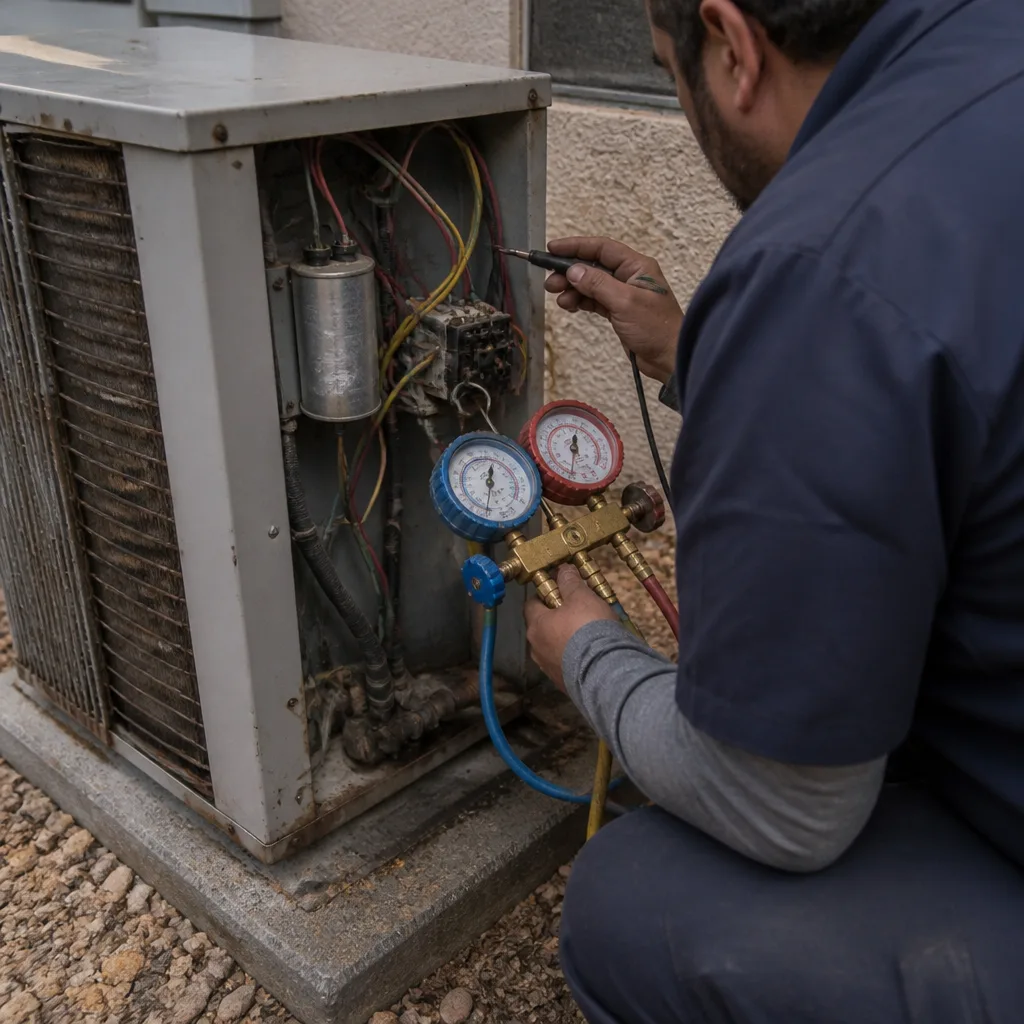 Before
 After
 Before
 After
 Before
 After
Frequently Asked Questions
The most common causes are a clogged filter, low refrigerant, a failed capacitor, or a compressor that’s not starting. Check the filter first – it’s free and fixes the most common cause. If airflow is strong but warm, the outdoor unit is the suspect; if airflow is weak, the indoor blower is.
Most repairs run $150 – $500 depending on the tier. Airflow and electrical fixes are $100 – $250, refrigerant or capacitor work is $200 – $500, and blower or control board repairs are $400 – $900. A compressor or coil is $1,000 – $2,000+. Call (888) 268-6106 for an exact quote – estimates are free, and the price is in writing before work starts.
Yes. A severely clogged filter restricts airflow, which can freeze the coil and drop cooling capacity until the supply air feels warm. Replacing the filter is the first thing to try, and in Spring Valley’s dust season it’s often the whole fix.
Not necessarily. Read the code exactly as it appears to the dispatcher; many codes narrow the fault to a single system. A technician can sometimes diagnose from the code alone and bring the right part, which is one reason calling with the code saves you time and money.
If the repair is below about a third of replacement cost and the unit is under 12 years old, repair usually wins. If you’re facing a Tier 4 compressor fix on a unit over 15 years old, replacement is often the better buy. We’ll run the numbers with you, in writing, before you decide. For heat pump systems in Spring Valley, Heat Pump Installation in Spring Valley is worth considering if you’re already facing a major repair.
We quote our pricing up front and in writing, so you know the number before we start. For a failed system in a Spring Valley summer, calls are answered by a live person 24/7. Call (888) 268-6106 for a free estimate.
The Bottom Line
Most AC failures are diagnosable from three simple observations and land in one of four cost tiers. A warm vent plus strong airflow points to refrigerant or the outdoor unit; warm vent plus weak airflow points to the filter or blower; a frozen coil depends on whether the blower is running. Learn your thermostat code, note the model number, and call with specifics. That’s how you get a written price instead of a range. Whether you’re dealing with a failed unit or want a second opinion on a repair quote, the Dalton Heating & Air Spring Valley home team is one call away.
If you’re in a repair-or-replace situation, Furnace Repair in Spring Valley and heat pump installation pages cover the trade-in math, and our Spring Valley HVAC team is ready to help.
Contact
When you’ve done the triage and you’re ready for a real answer, give us a call. Dalton Heating & Air Spring Valley answers live 24/7, arrives inside the stated window, and puts the price in writing before any work starts. Every repair is backed by the 365-Day Done Right Promise, and if it doesn’t hold, we return at no charge. Call (888) 268-6106 for a free estimate and get your Spring Valley home cooling again.
Written by the team at Dalton Heating & Air Spring Valley.