

 AC repair
 Furnace & heating
 Heat pumps
 Ductless mini splits
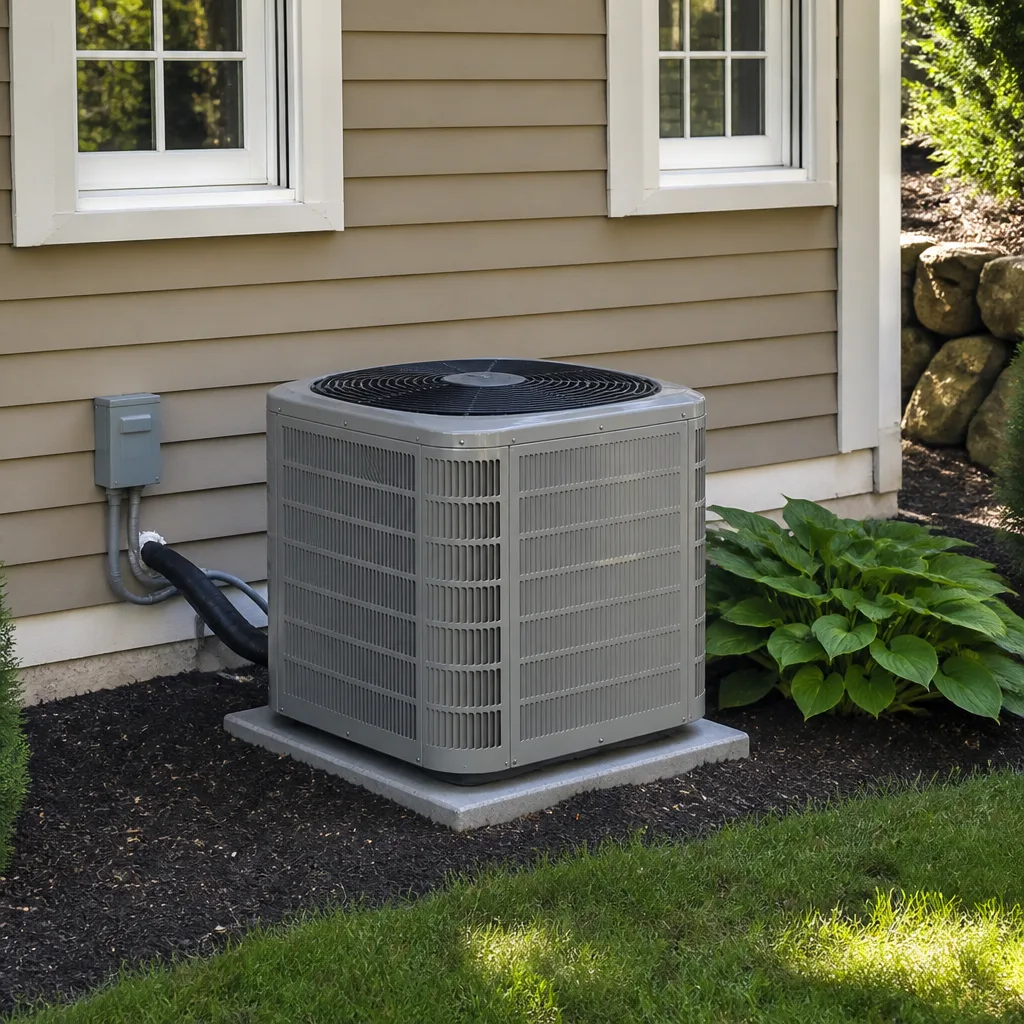 Carrier
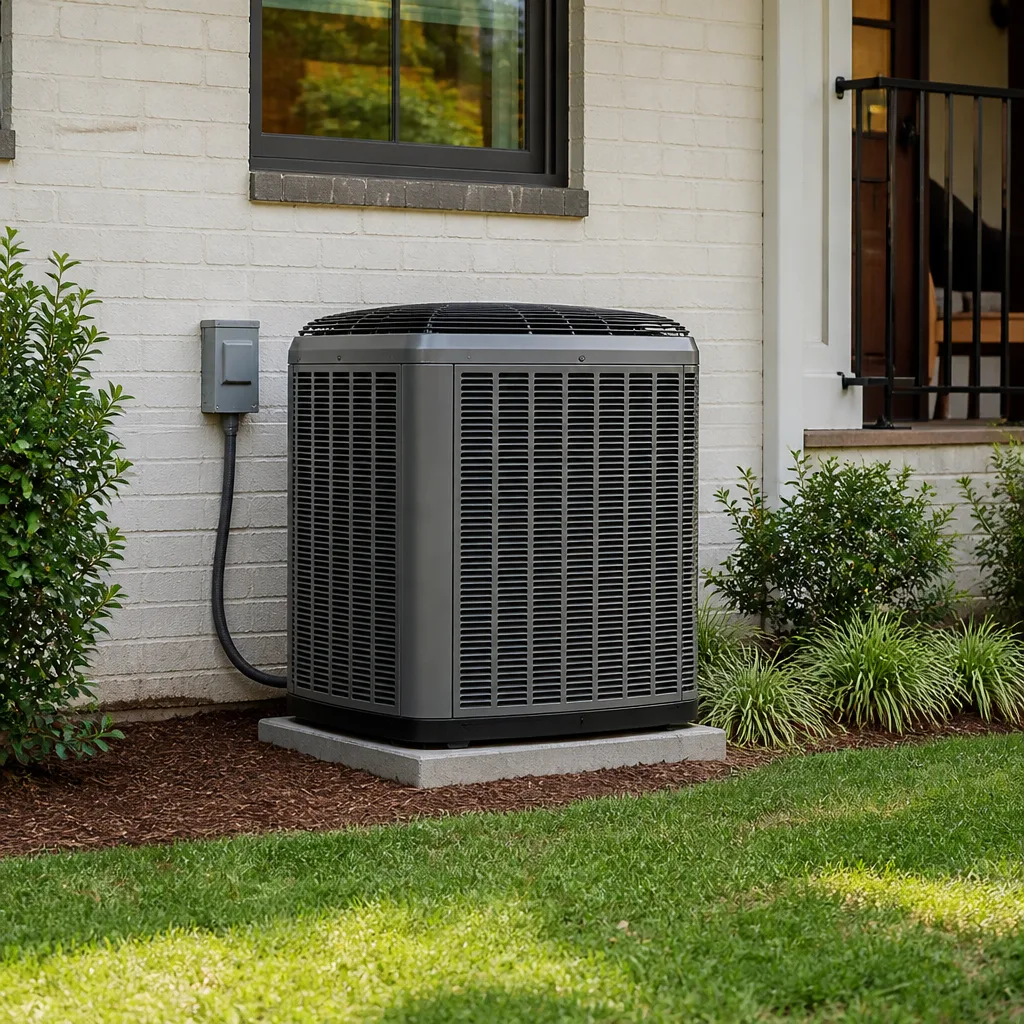 Trane
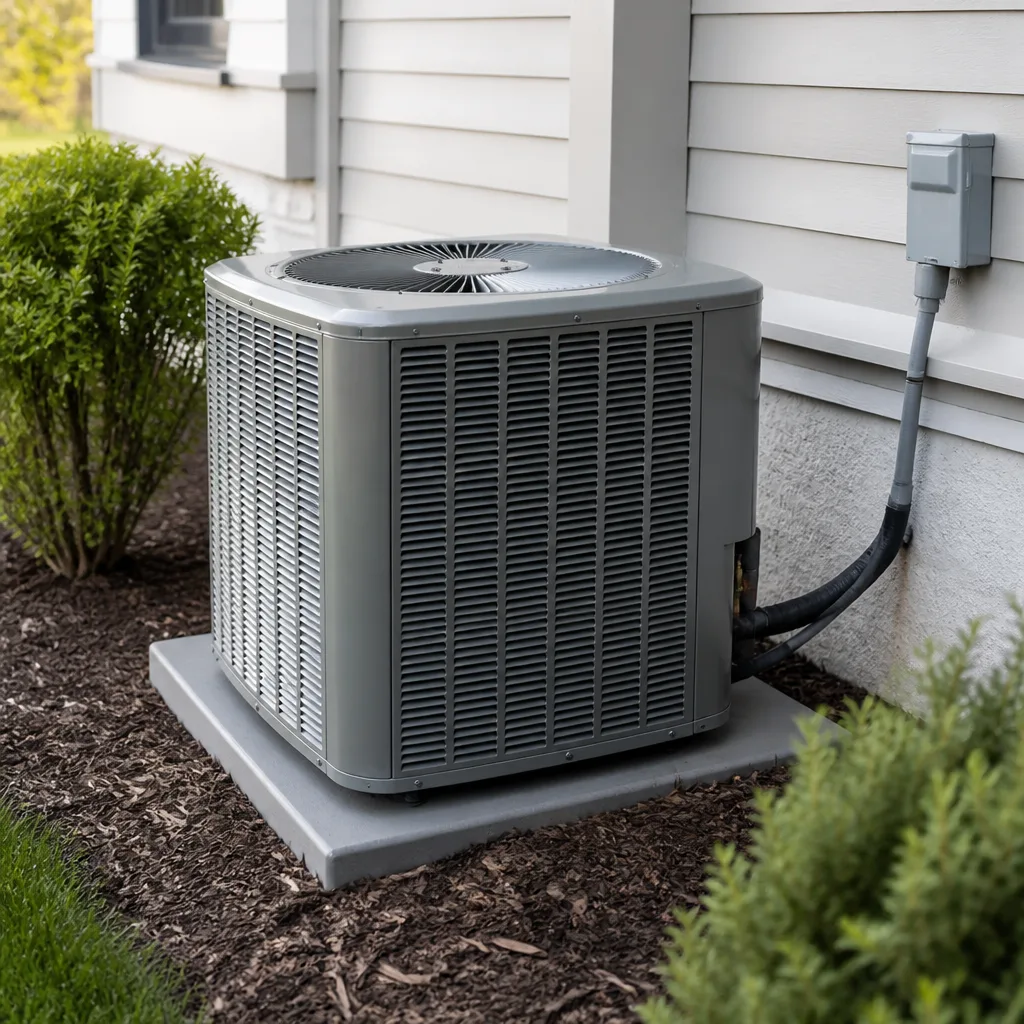 Goodman
Seasonal tune-up and full diagnostic on your Carrier, Trane, or Goodman system - readings shown to you before any repair is proposed
Diagnosis first, numbers second - you approve the repair price before a single part goes in.
Get your free estimateAmerican Standard Thermostat Installation: The Spring Valley Owner’s Guide
We install American Standard-compatible thermostats in Spring Valley for a typical installed range of $180 – $420, and most of that work is same-day because the swap is quick once the right model is on hand. Thermostat failures rarely announce themselves. You notice the house running three degrees off setpoint, the display flickering or going blank, the schedule resetting itself after a power blip, or short cycling that started the same week the screen started acting up. That pattern is the usual way Spring Valley homeowners find out the old control is done.
We’re an independent service provider and not affiliated with American Standard. What we are is factory-trained to service American Standard systems across our nine supported brands, including Carrier, Trane and Lennox. Our technicians have up to 23 years of experience, and every job comes with a written price before any work starts and a written guarantee on the repair for a full year.
Which American Standard Models This Applies To
American Standard’s thermostat lineup splits by communication type, and that’s the compatibility gotcha most owners miss. Older single-stage and two-stage units run on traditional low-voltage control (24V, R-C-W-Y-G style terminals), so a standard programmable or smart thermostat is a direct swap. Newer communicating systems use proprietary data connections that only accept specific American Standard controls. If yours is communicating, a store-bought universal thermostat won’t talk to it no matter how good the brand is. That’s why we match the thermostat to the air handler and the control board before we quote.
To identify what you have, pull the existing thermostat off its baseplate and look at the terminal labels: if you see a letter sequence like R, C, W, Y, G, O/B, you have a conventional system. If you see something proprietary or a two-wire data connection, stop and let a trained technician confirm. On the OEM-versus-aftermarket question, we’ll install a genuine American Standard control when the owner wants an exact factory match, or a quality aftermarket equivalent from a brand like Honeywell or Ecobee when the wiring is conventional and the homeowner wants phone control and a lower installed price. We stock no parts and carry nothing on the truck, so the thermostat is sourced for your model before the appointment.
Styles & brands we work with
- AC repair
- Furnace & heating
- Heat pumps
- Ductless mini splits
- Carrier
- Trane
- Goodman
Signs Your American Standard Thermostat Installation Is Failing
Here’s what a failing thermostat actually looks like in a Spring Valley home in the middle of a June afternoon:
- Room air drifts five or more degrees off setpoint. The thermostat’s sensor has drifted out of calibration, so it’s reading the room warmer or colder than it really is and running the system on bad data. A digital thermometer placed next to it will show the gap.
- Display blanks out or flickers. Usually a failing low-voltage transformer, a loose C-wire (the common wire that powers the thermostat), or a dying thermostat itself. Losing the C-wire is the most common single cause of a blank screen.
- System short cycles in cooling. The thermostat’s anticipator or internal logic is releasing the contactor too early, so the compressor runs for two minutes, shuts off, and starts again. That wastes power and stresses the compressor.
- Schedule forgets itself. A thermostat that loses its program after a brief outage has a failing internal battery or memory chip. It’s a sign the board is on its last legs.
- Cooling and heating fight each other, or the fan won’t stop. Wired into a heat pump, a thermostat with a stuck reversing valve terminal (O or B) will run the wrong mode. A stuck fan terminal leaves the blower running after the call ends.
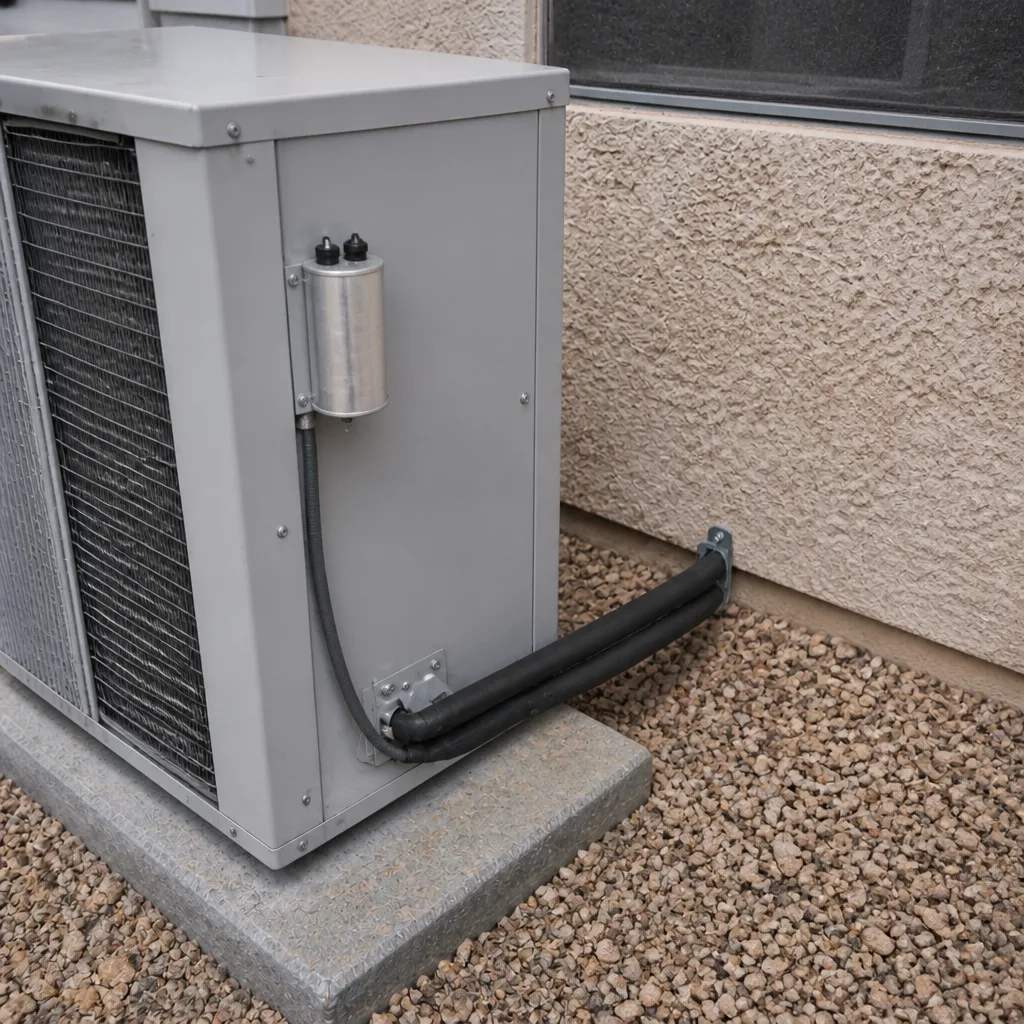
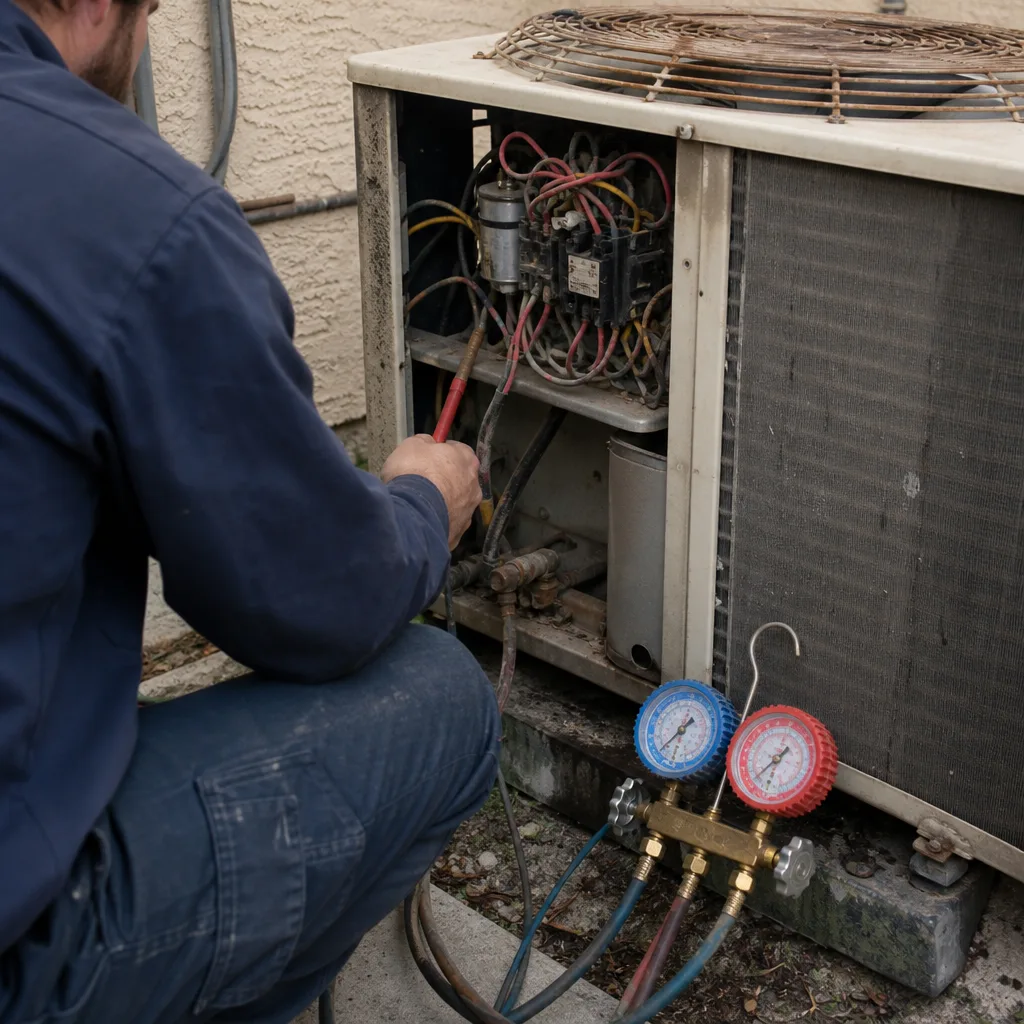
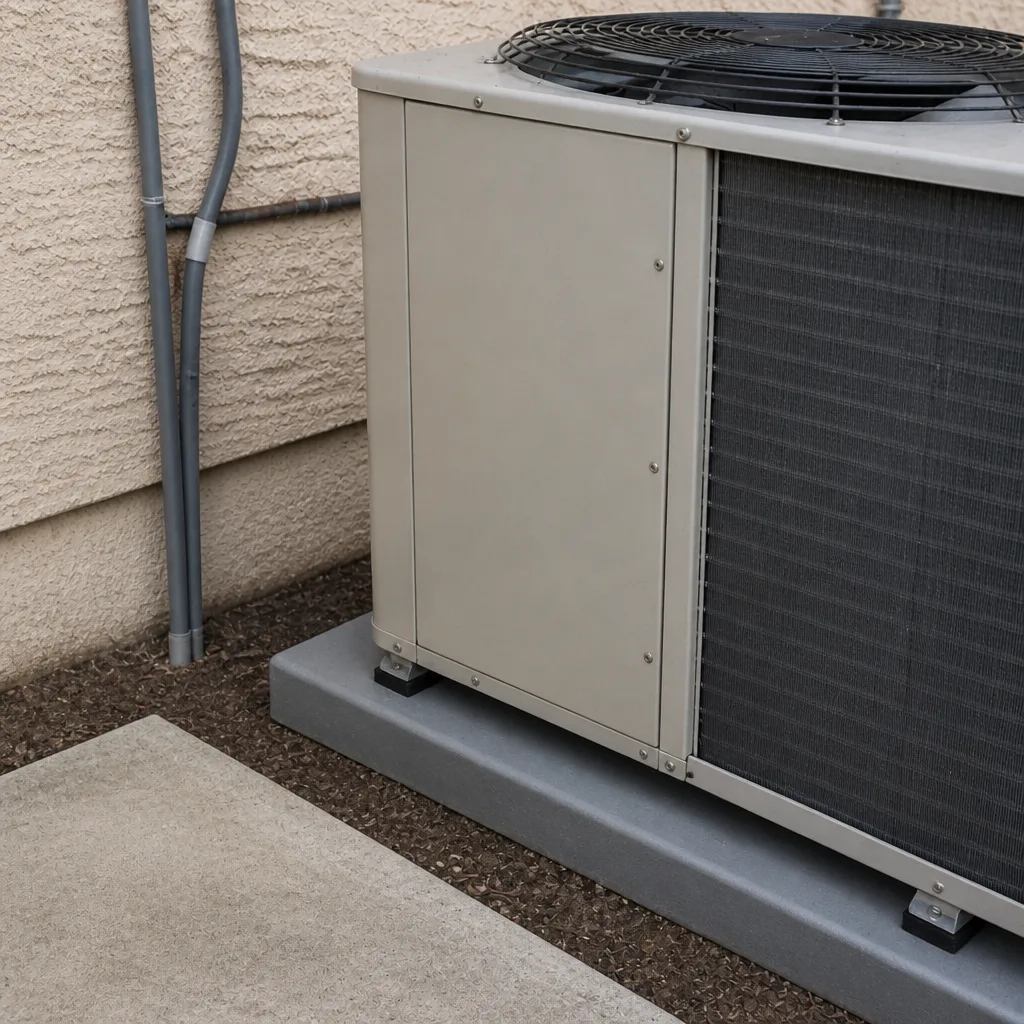
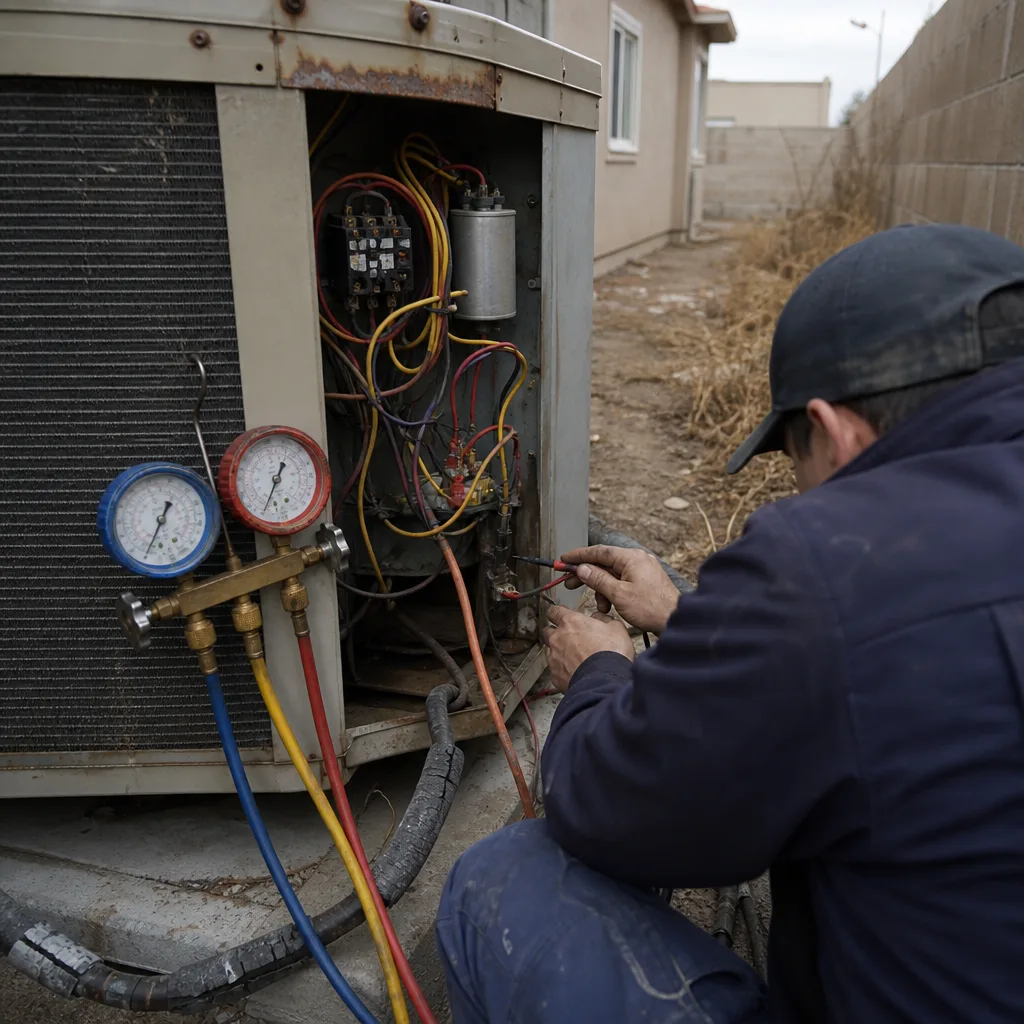
See the difference
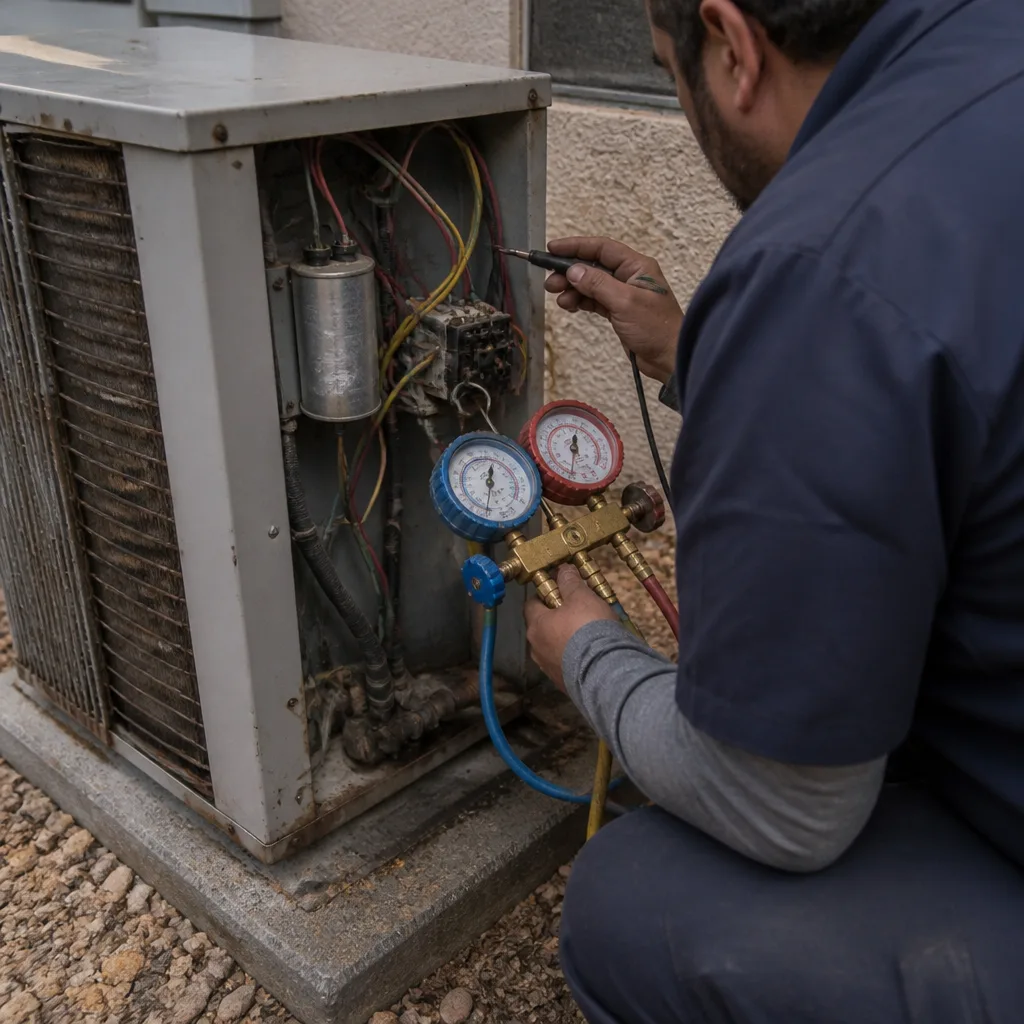 Before
 After
 Before
 After
 Before
 After
Replacement Cost & What’s Included
Most American Standard thermostat installations in Spring Valley land between $180 and $420 installed, including the control, wiring check, and setup. That’s separate from the AC repair range of $150 – $650, which is what changes when short cycling has already pushed a compressor or contactor over the edge.
What moves you within the range:
- Thermostat class. A basic programmable control costs less; a multi-stage smart thermostat with phone app and voice control costs more.
- Wiring condition. A clean conventional hookup is quick. Adding a C-wire, repairing a spliced low-voltage bundle, or tracing a shorted conductor adds labor and time.
- System type. Conventional single-stage is straightforward. Heat pumps, two-stage, or communicating systems take longer to configure correctly.
The parts-plus-labor price is written before we start. It includes the written guarantee for a full year, and if the repair fails in that window we come back at no charge. No surprise charges at the door.
DIY or Call Us?
You can safely do a few small things. Check the breaker at the panel, replace the batteries if your thermostat uses them, confirm the setpoint matches the mode (heat or cool), and pull the faceplate to see if any low-voltage wire is loose. That’s the honest limit.
What goes wrong on a DIY thermostat swap is the low-voltage wiring and the system configuration. Cross the R and C wires and you can blow the low-voltage transformer inside the air handler – a much more expensive repair than the thermostat itself. On a heat pump, a thermostat mis-wired for the reversing valve will heat in summer and cool in winter. And on communicating American Standard systems, a universal thermostat won’t configure at all. Low-voltage is a shock risk primarily in the panel, not the wire itself, but the mis-wiring and control-board damage are the real costs. If the display has gone blank or the mode has locked up, call us at (888) 268-6106 for a free estimate.
FAQs
Most thermostats hold up for 10 to 15 years, but in Spring Valley’s high-desert summers the electronics run hotter and we see failures earlier, around 8 to 12 years. A unit approaching that age with any of the symptoms above is a good candidate for replacement.
Usually no. Thermostats are sealed electronic assemblies, and once the internal sensor, memory, or board fails there’s no component-level repair. Replacing the control is the fix, and I’d add the caveat that the root cause is sometimes the transformer or wiring, not the thermostat itself – so diagnosis matters.
A conventional programmable swap runs 30 to 45 minutes. Smart or heat-pump thermostats take 45 to 90 minutes once we’ve confirmed the wiring and configured the stages. Communicating systems can take longer because they’re matched by model.
We confirm the model and control type first, then source a genuine American Standard control or a compatible smart thermostat to match. We stock no parts and carry none on the truck, so the thermostat is ordered for your specific system before the visit – and you see the price in writing before we begin.
Call (888) 268-6106 for a free estimate. Calls are answered by a live person 24/7, and we’ll get a technician out to confirm the model and quote the exact installed price.
Written by the team at Dalton Heating & Air Spring Valley, serving Spring Valley and nearby areas.