
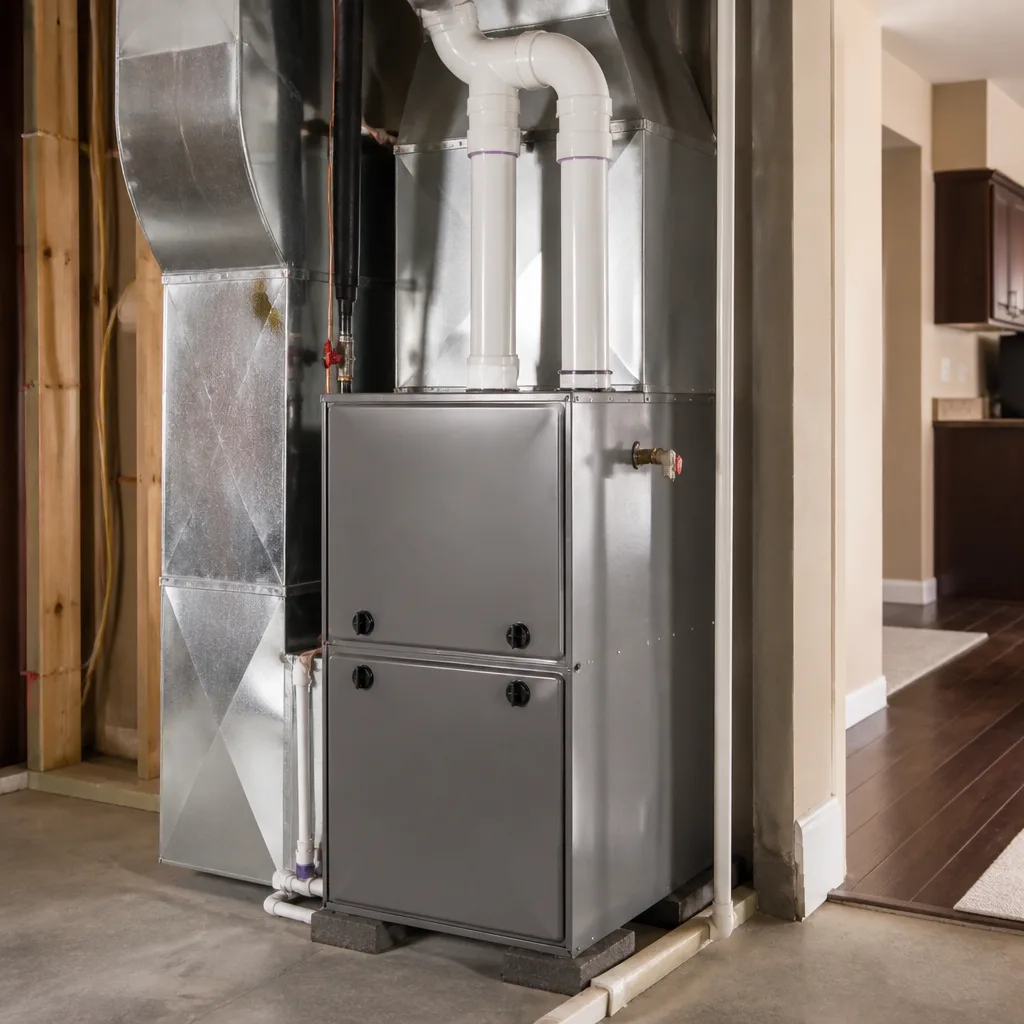
 Furnace & heating
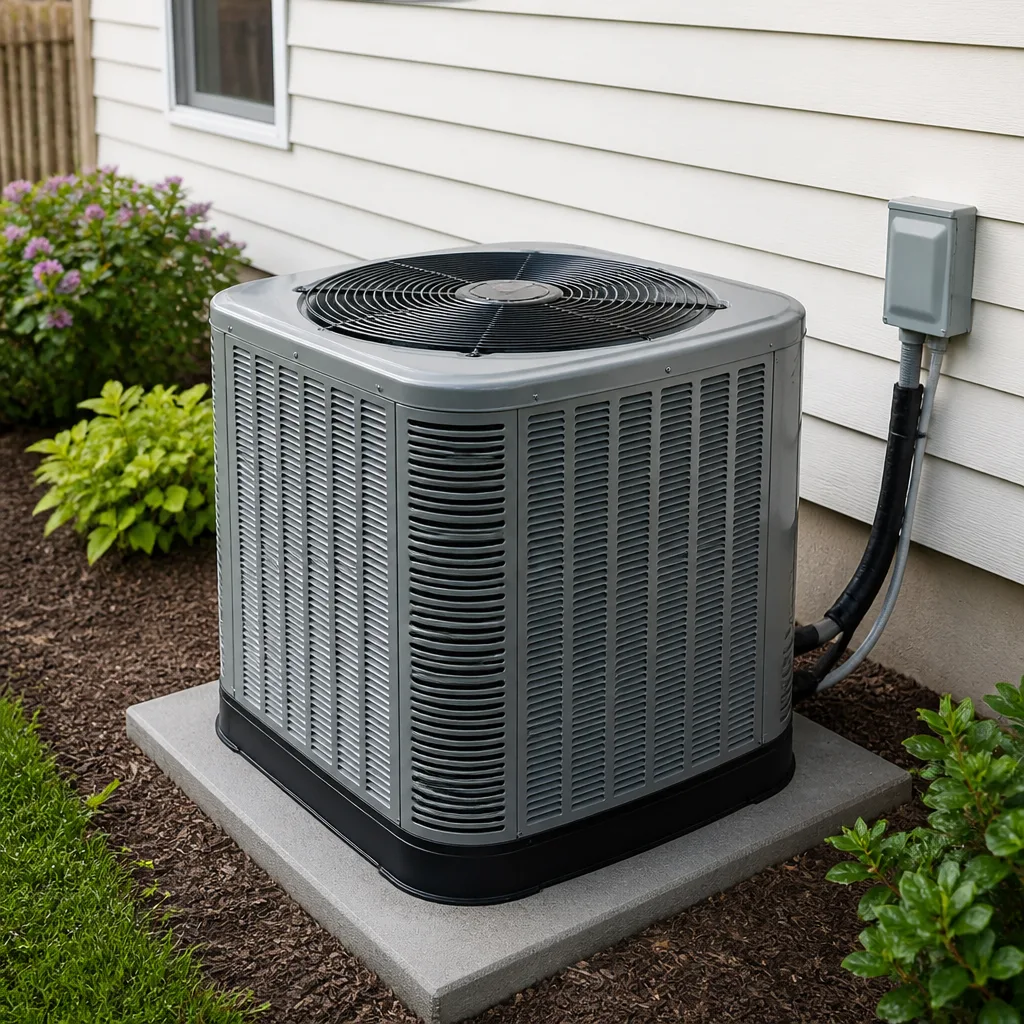 AC repair
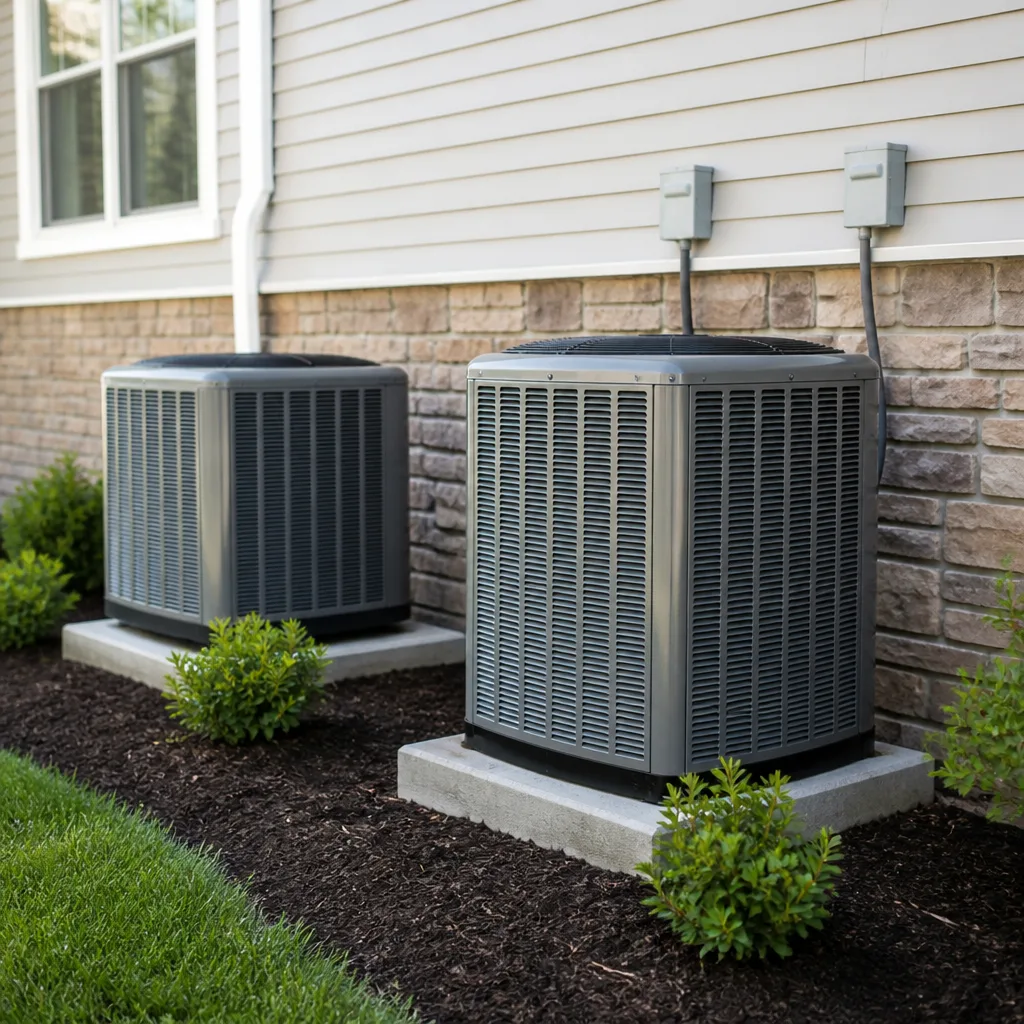 Heat pumps
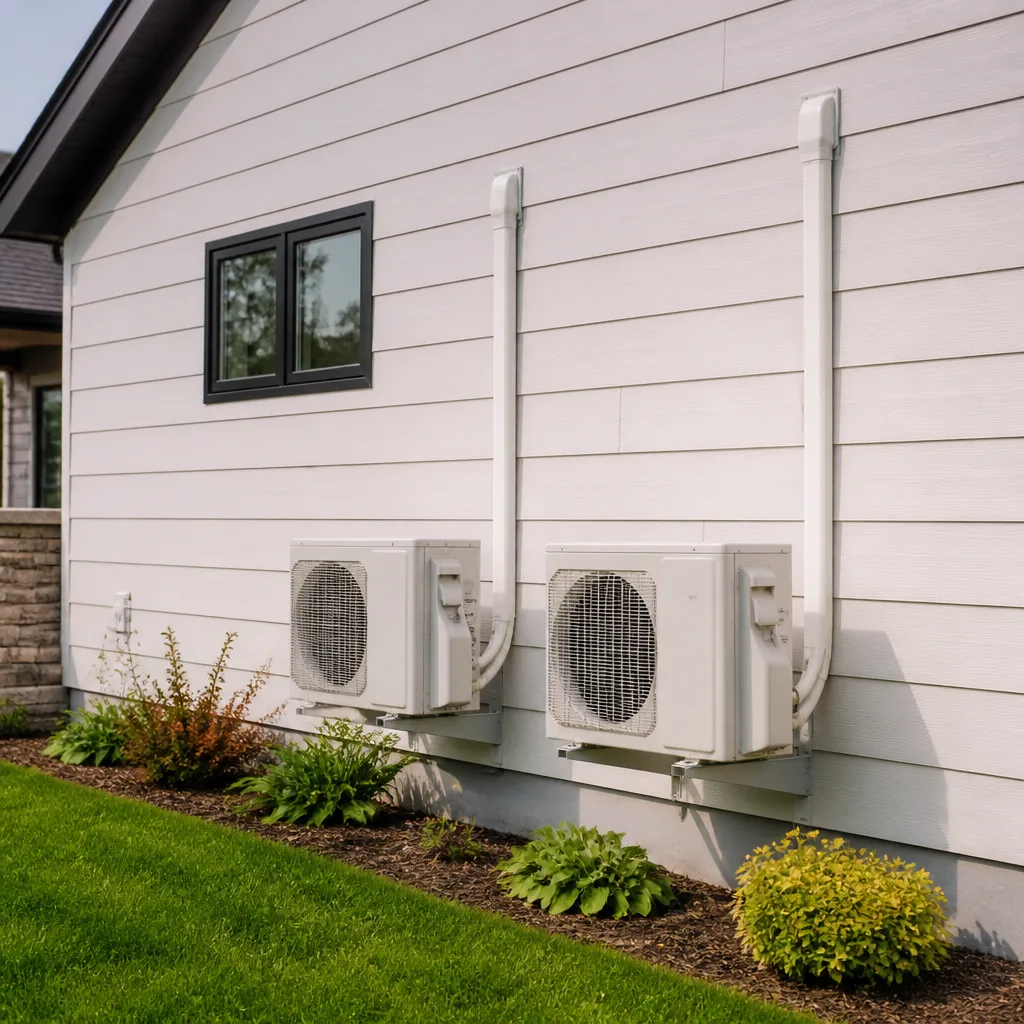 Ductless mini splits
 Carrier
 Trane
 Goodman
Seasonal tune-up and full diagnostic on your Carrier, Trane, or Goodman system - readings shown to you before any repair is proposed
Diagnosis first, numbers second - you approve the repair price before a single part goes in.
Get your free estimateStyles & brands we work with
- AC repair
- Furnace & heating
- Heat pumps
- Ductless mini splits
- Carrier
- Trane
- Goodman
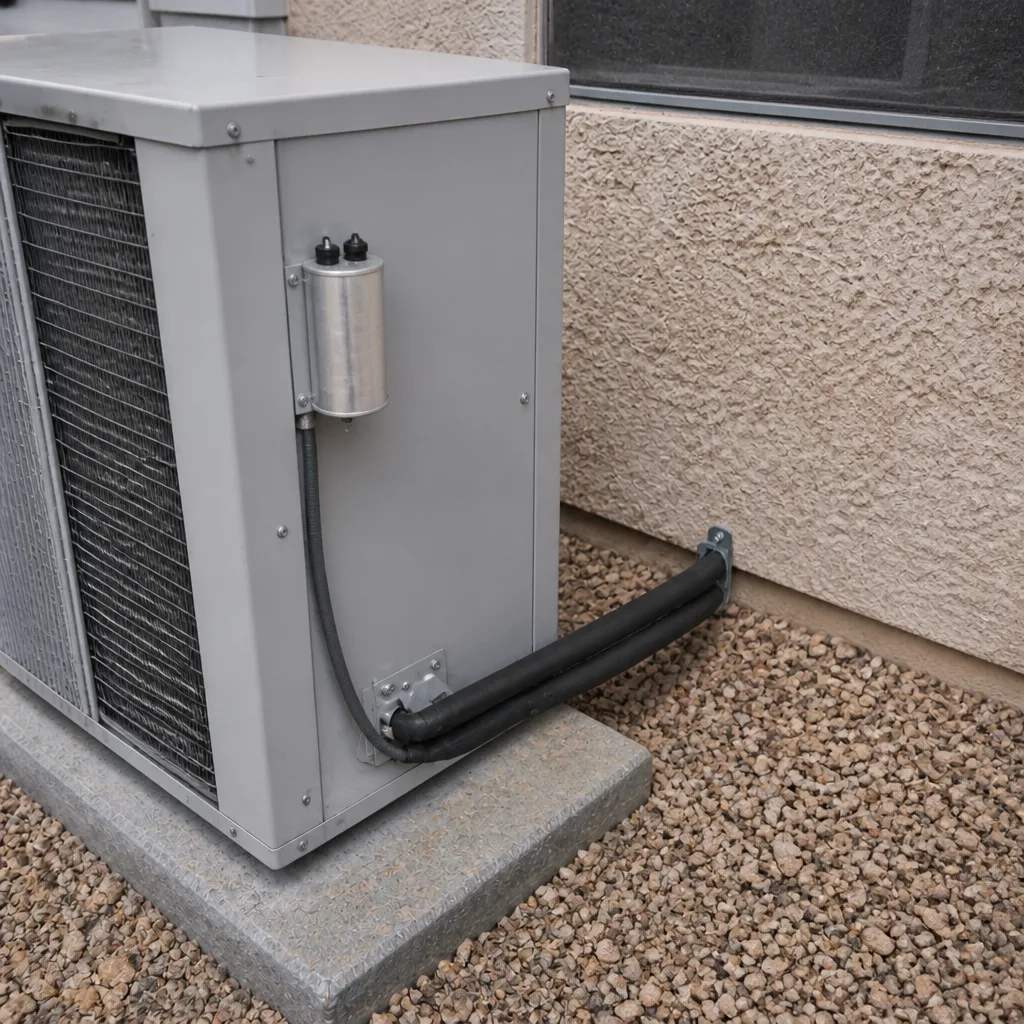
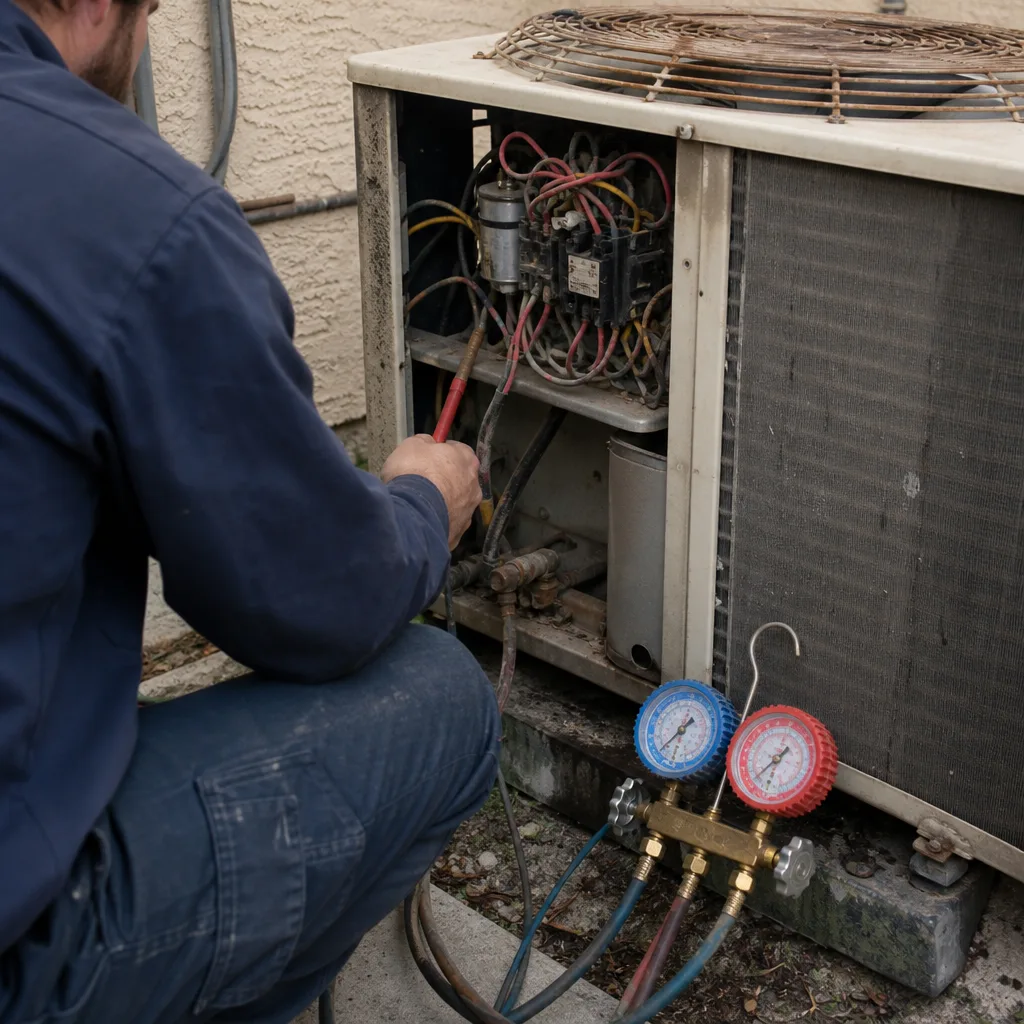
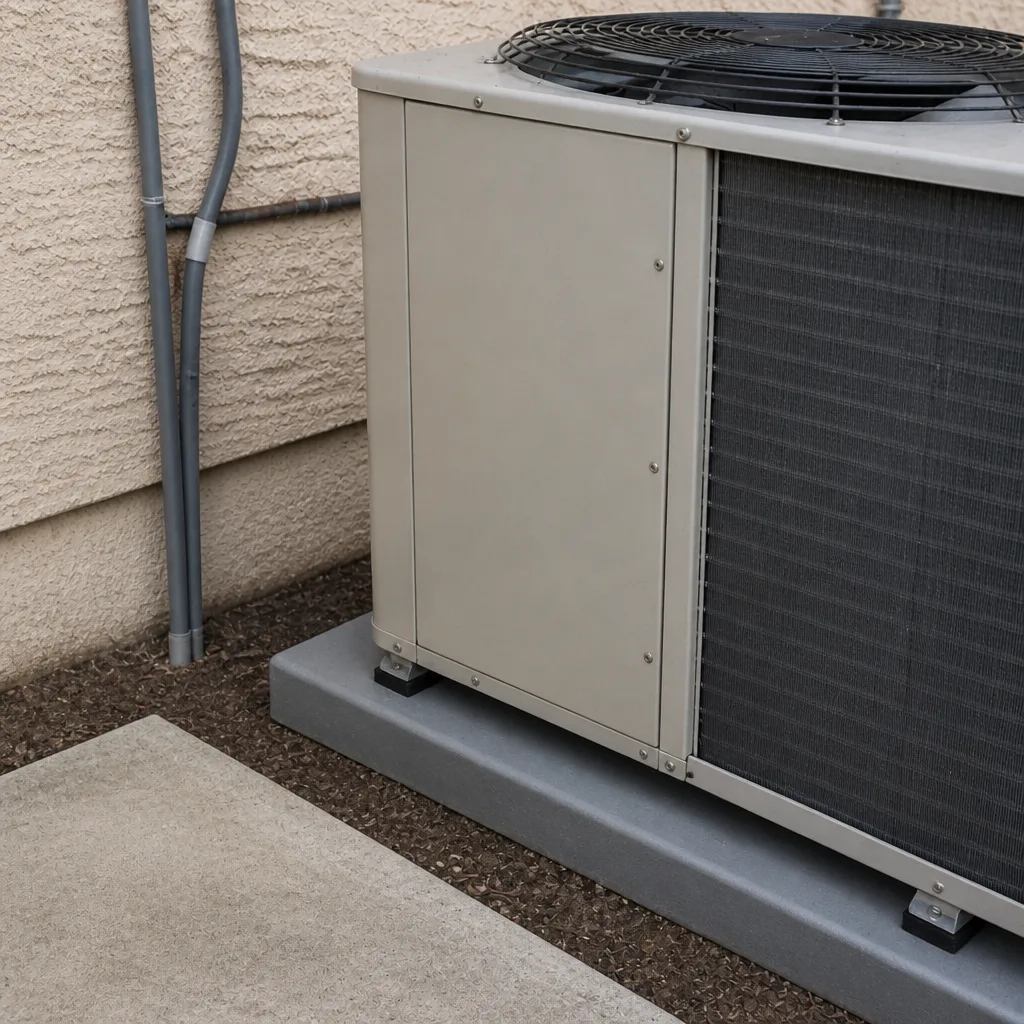
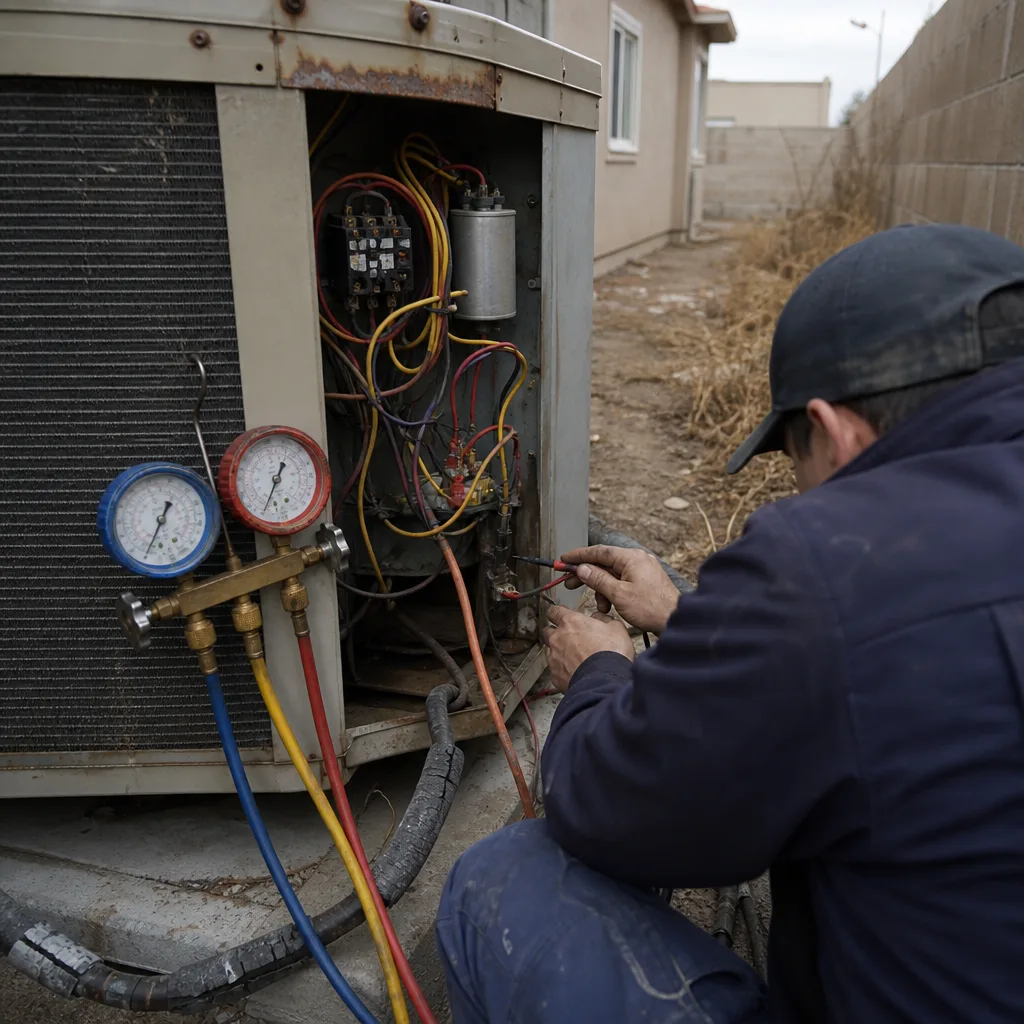
See the difference
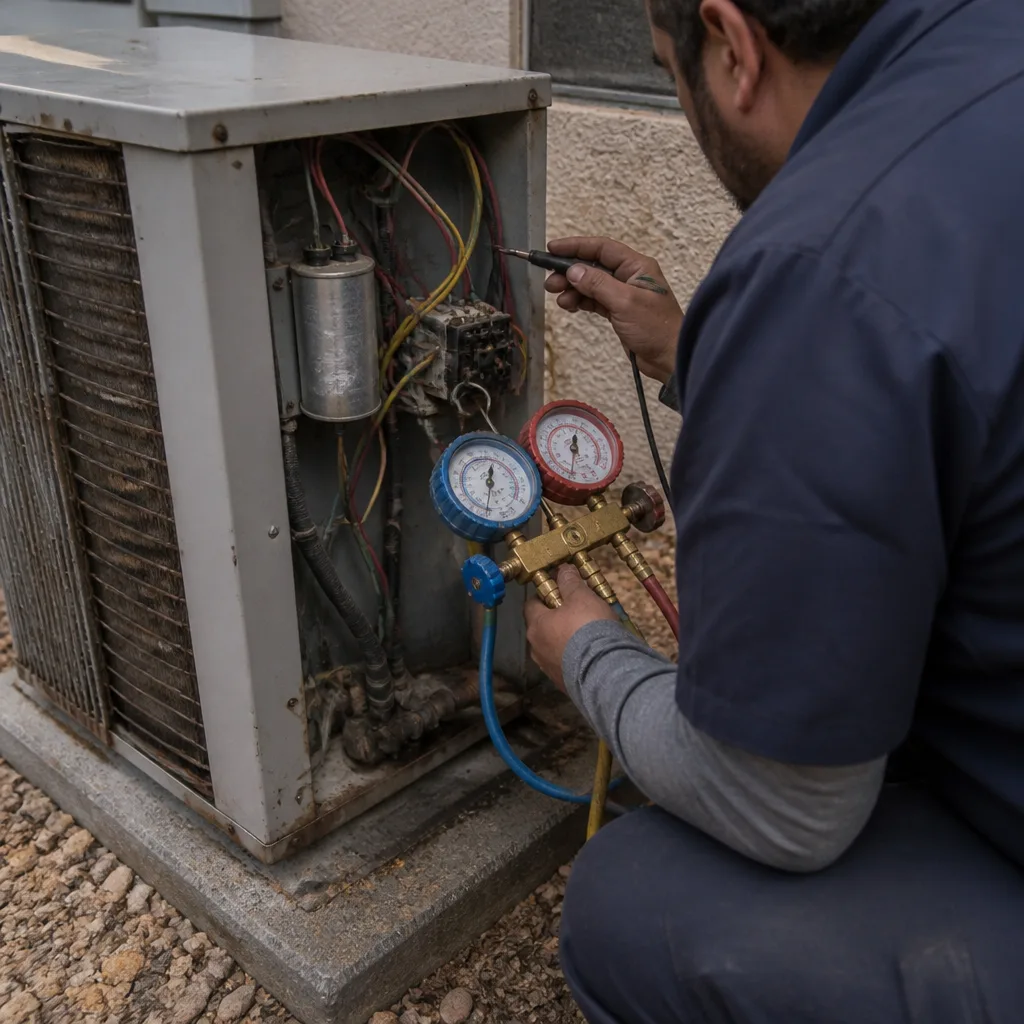 Before
 After
 Before
 After
 Before
 After
Why Your AC Won’t Turn On in Spring Valley, NV: Start With the Capacitor
If your AC won’t turn on, there’s a better-than-even chance a failed run capacitor is the culprit. If your outdoor unit hums for a few seconds and then goes quiet, or makes a clicking sound without starting, that’s the classic signature. The run capacitor is roughly the size of a soda can, it gives the compressor and fan motor the starting torque they need to spin, and in Spring Valley’s hard-working split systems it’s the single most common failure point. The part itself costs $15-$40. Most AC repairs, capacitor or otherwise, run $150-$650. Call (888) 268-6106 and a live person can walk you through the safe checks before we dispatch anyone.
Here’s what matters before you do anything else: a humming unit that won’t start isn’t the same as a dead system. It’s usually one small electrical component that quit after too many 100°F+ summers. Knowing how to tell the difference saves you a panic call and shortens the repair.
What the Run Capacitor Does, and Why It Fails Here First
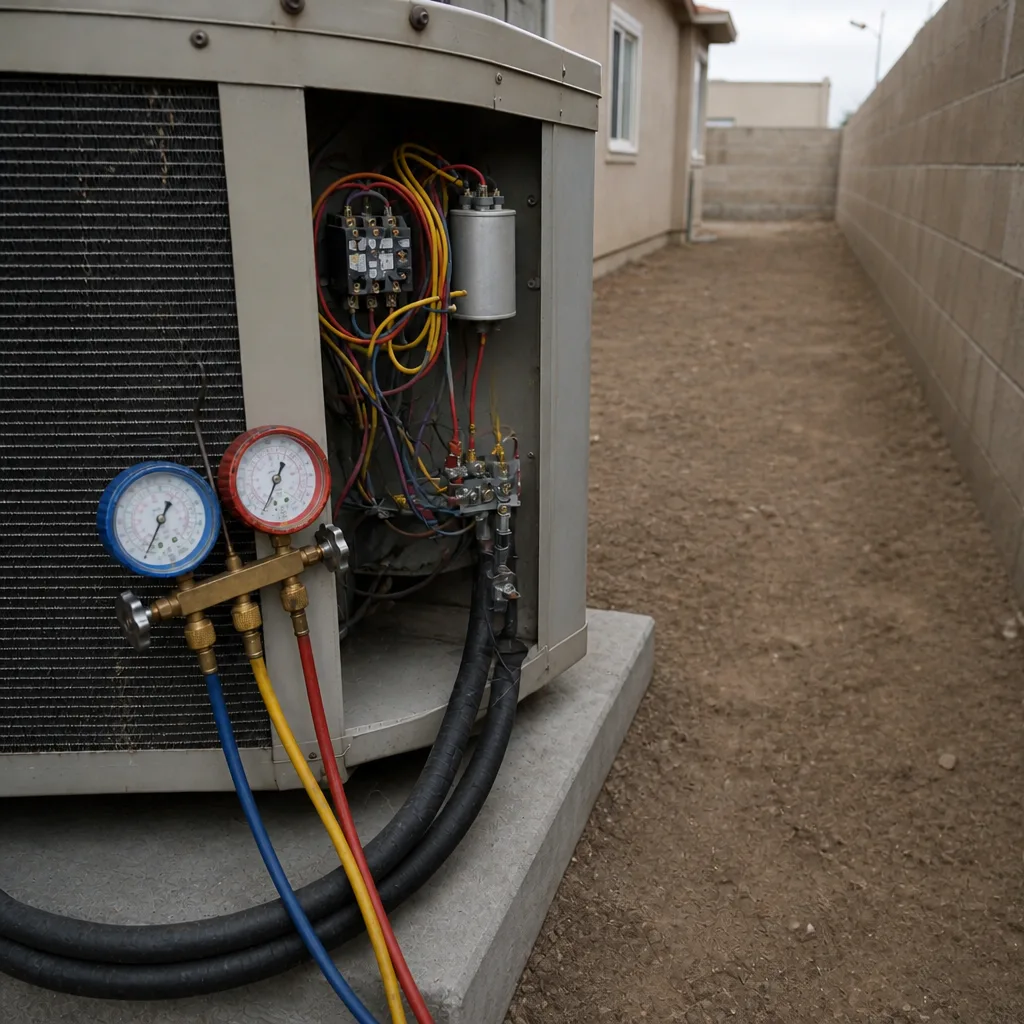
The run capacitor stores and releases the electrical jolt the compressor and the condenser fan motor need to start spinning. When it goes bad, the motors still get power, so they hum and click. They just can’t get moving. The unit tries to start, the compressor draws locked-rotor current (a high surge because it can’t turn), and the system shuts down on thermal protection. That’s the hum-then-quiet pattern.
Why does it happen more in Spring Valley than in most places? Because of how hard the equipment works. Valley-floor desert climate here means 100°F+ summers, very low humidity, and little shade, so the AC runs near-continuously from June through September. Capacitors age by running hours, not calendar years. In a milder climate that same part might last a decade. Here, on a 1980s-2000s tract-home split system that’s been pushed eight or nine months a year, they fail and fail again.
You can often diagnose it by sound before a technician arrives. A healthy start is a steady low hum rising into the compressor’s normal run tone. A failed capacitor gives you a hum, then a click, then silence, then another try. If that’s what you’re hearing, tell the person you call – it tells us what to bring.
The Other Common No-Start Causes, Ranked for Spring Valley Homes
Capacitor first, but it’s not the only thing that stops a unit cold. Ranked by how often we see each on Spring Valley tract homes:
- Tripped circuit breaker from a monsoon surge. Summer monsoon storms roll across the valley with wind and lightning, and a power surge trips the dedicated 240-volt breaker serving the outdoor unit. This is the first thing to check at the panel.
- Failed contactor. The contactor is the high-voltage relay that closes to send grid power to the compressor. Its contact points pit and burn over seasons of switching that load. When they’re carboned up, the unit gets the signal to run but no power reaches the compressor.
- Tripped high-pressure limit switch. After a dust event, a dirty condenser coil traps heat, system pressure climbs, and the high-pressure limit opens as a safety. The unit shuts off to protect itself. Spring Valley’s wind-driven grit loads condensers fast, so a coil that looked fine in April can be packed by July.
- Failed thermostat or a wiring fault. Less common, but a thermostat that’s lost its low-voltage feed, or a chewed control wire, will leave the whole system sitting silent with no hum at all.
That order matters. A lot of “dead AC” calls are really a tripped breaker or a pitted contactor, and knowing the likely suspects helps you describe the symptom accurately and helps us load the right parts. We service all nine major residential HVAC brands – Carrier, Trane, Lennox, Goodman, Rheem, York, Daikin, Bryant, and American Standard – and our technicians carry capacitors and contactors for those brands on the truck.
Why the Grid Makes This Worse
Spring Valley’s summer grid load creates brownouts: slight voltage drops when the whole valley is pulling power at 5 p.m. in August. A brownout doesn’t trip anything and doesn’t leave a mark, but it stresses capacitors and contactors a little more each time. Over multiple seasons, electrical components here age faster than the same equipment would in a cooler, steadier climate. It’s one reason a run capacitor on a Spring Valley unit can fail years earlier than the manufacturer’s expected life, and one reason we treat “how old is the system” as less important than “how many summers has it run.”
Spring Valley is unincorporated Clark County, not a city, so HVAC work here runs on county building permits and a patchwork of HOA CCRs instead of a municipal code department. When a repair or replacement needs permitting, that’s the process it follows.
The Safe Checks to Run Before You Call
These are the checks a homeowner can do safely. They resolve a surprising share of no-start calls on their own, and they help you give an accurate description if you do call.
- Confirm the thermostat is set to COOL and set below the current indoor temperature. Obvious, but a thermostat knocked to OFF or HEAT during a cool night starts a lot of these calls.
- Check the breaker panel for the breaker serving the outdoor unit. If it’s tripped, reset it once and watch. If it trips again right away, stop and call – a breaker that won’t hold points to a real electrical fault.
- Check the condensate drain safety switch. An attic air handler has a float switch that cuts power when the drain pan fills. Warm, dry Spring Valley air plus a clogged condensate line means that pan can fill and shut the system down – and the AC looks completely dead. Empty the pan if it’s full and clear the obvious clog, then see if it restarts.
A word on safety: a capacitor holds a charge even with the power off, and the contactor and compressor circuit carry full line voltage. Don’t open the electrical panel on the outdoor unit or poke around inside it. That’s work for someone trained to discharge the capacitor and test the components safely.
When to Call a Pro, and What It Costs in Spring Valley
If the safe checks don’t fix it, or if the breaker trips again, it’s time for a technician. Our technicians have up to 23 years of experience, and every call comes with No-hassle upfront pricing: the price is in writing before any work starts, on every job, without exception. If the repair doesn’t hold, we come back at no charge – and every repair carries a full-year written guarantee, the 365-Day Done Right Promise, not a 30-day window.
Here’s what to expect on price in Spring Valley’s market:
| What’s going on | Typical cost |
|---|---|
| Diagnostic visit | Included in the repair price below |
| Capacitor or contactor replacement | Lower end of $150-$650 |
| High-pressure switch / dirty condenser service | Mid-range of $150-$650 |
| Thermostat, wiring, or larger electrical repair | Upper end of $150-$650 |
| Seasonal tune-up (prevents no-start calls) | $80-$200 |
| If replacement is the better call | $3500-$7500 installed |
If a repair is going to run near the cost of a new unit, we’ll tell you plainly rather than talk you into the smaller job. That’s the Garrison Standard, and it’s why Dalton Heating & Air Spring Valley answers the phone with a real person, day or night, to talk through the symptom before we commit to anything. For the full range of repair and install work we do in Spring Valley, see our AC repair and installation page.
FAQs
A thermostat that has power but won’t start the unit usually points to a blown run capacitor, a failed contactor, or a tripped high-pressure limit switch on the outdoor unit. The thermostat is sending the signal; the components that act on it are what failed. Check the breaker and the condensate float switch first, then call for a diagnosis; estimate pricing starts at the low end of $150-$650. Call (888) 268-6106 for an exact quote.
That hum-click-silence pattern is the running motors trying to start without enough torque, which is almost always a failed run capacitor. The compressor and fan motor get power but can’t spin, then the unit shuts off on thermal protection. It’s one of the cheapest and fastest AC fixes, typically toward the lower end of $150-$650. Don’t keep resetting it – a compressor that keeps trying can overheat. Call (888) 268-6106 and we’ll bring the right part.
Repair is usually cheaper unless the system is failing repeatedly on major components or the compressor itself is gone. On a 1980s-2000s tract-home unit already past 20 years, a second or third big repair in a season is the signal to weigh replacement at $3500-$7500 installed against another round of repairs. We’ll give you both numbers in writing and let you decide. Call (888) 268-6106 for a free estimate.
Yes – we keep same-day availability for no-cool calls during the summer, and a live person answers 24/7 to take the call and walk through the safe checks with you right then. That means when the technician arrives, they already know the symptom and have the likely parts on hand. Call (888) 268-6106 to get on the schedule.
If you’d rather have it looked at, Dalton Heating & Air Spring Valley offers a no-pressure assessment in Spring Valley – call (888) 268-6106, and we’ll put the price in writing before anything starts. You can also visit our home page to see how we work.
Written by the team at Dalton Heating & Air Spring Valley, serving Spring Valley, NV.