
Last updated November 17, 2026
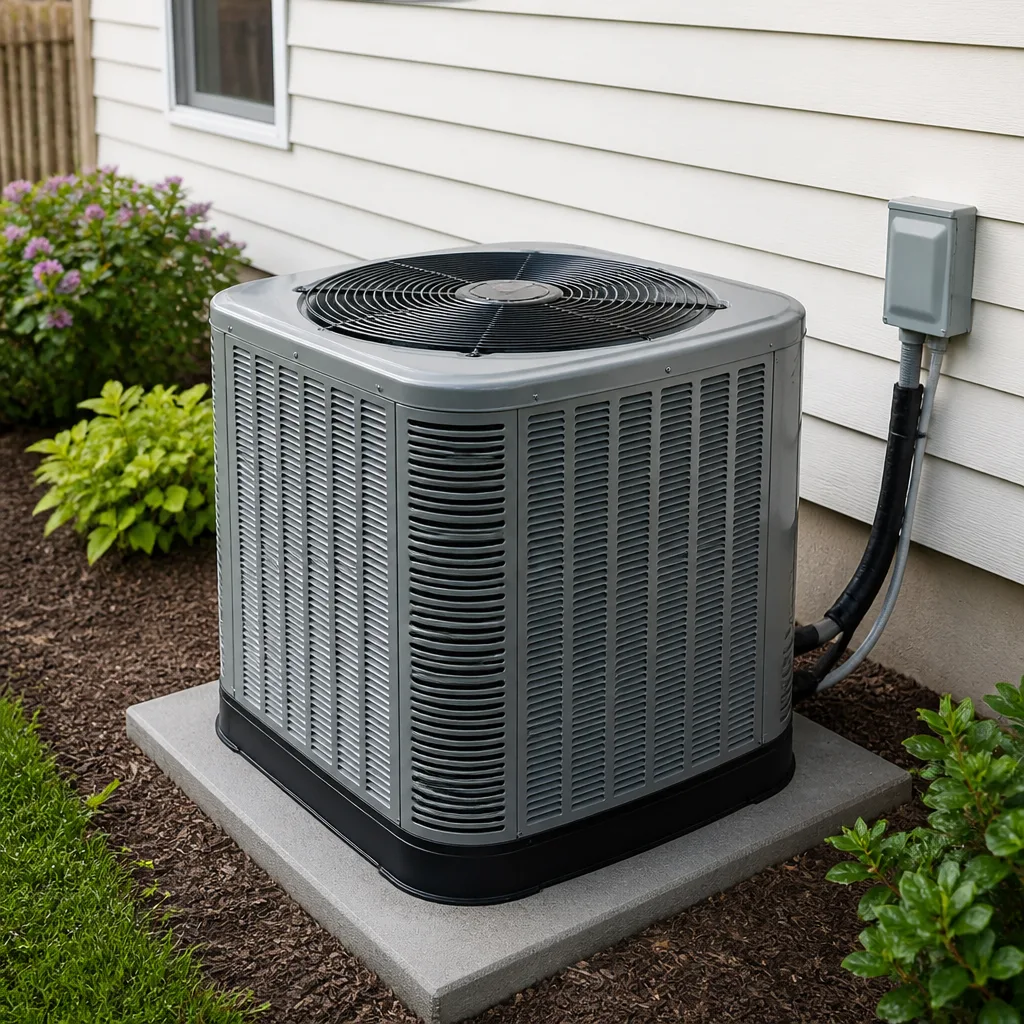 AC repair
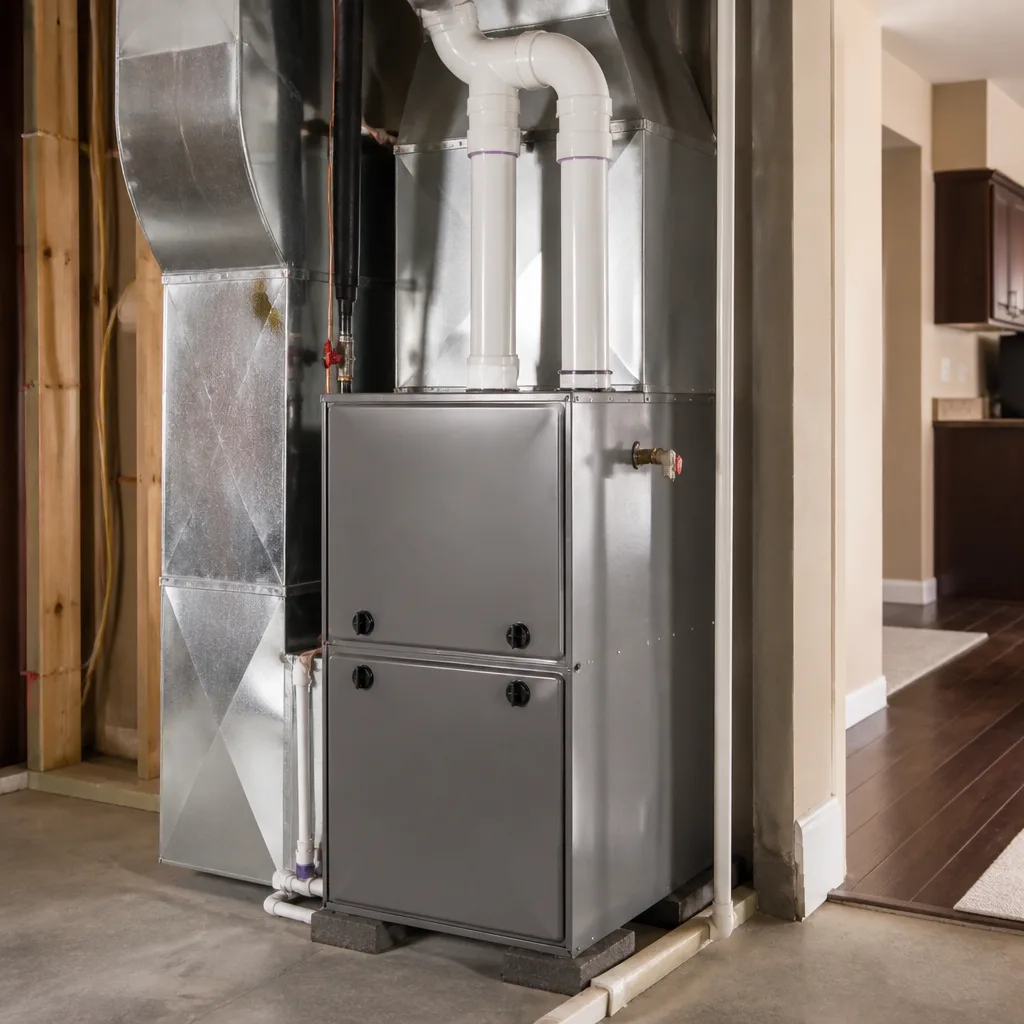 Furnace & heating
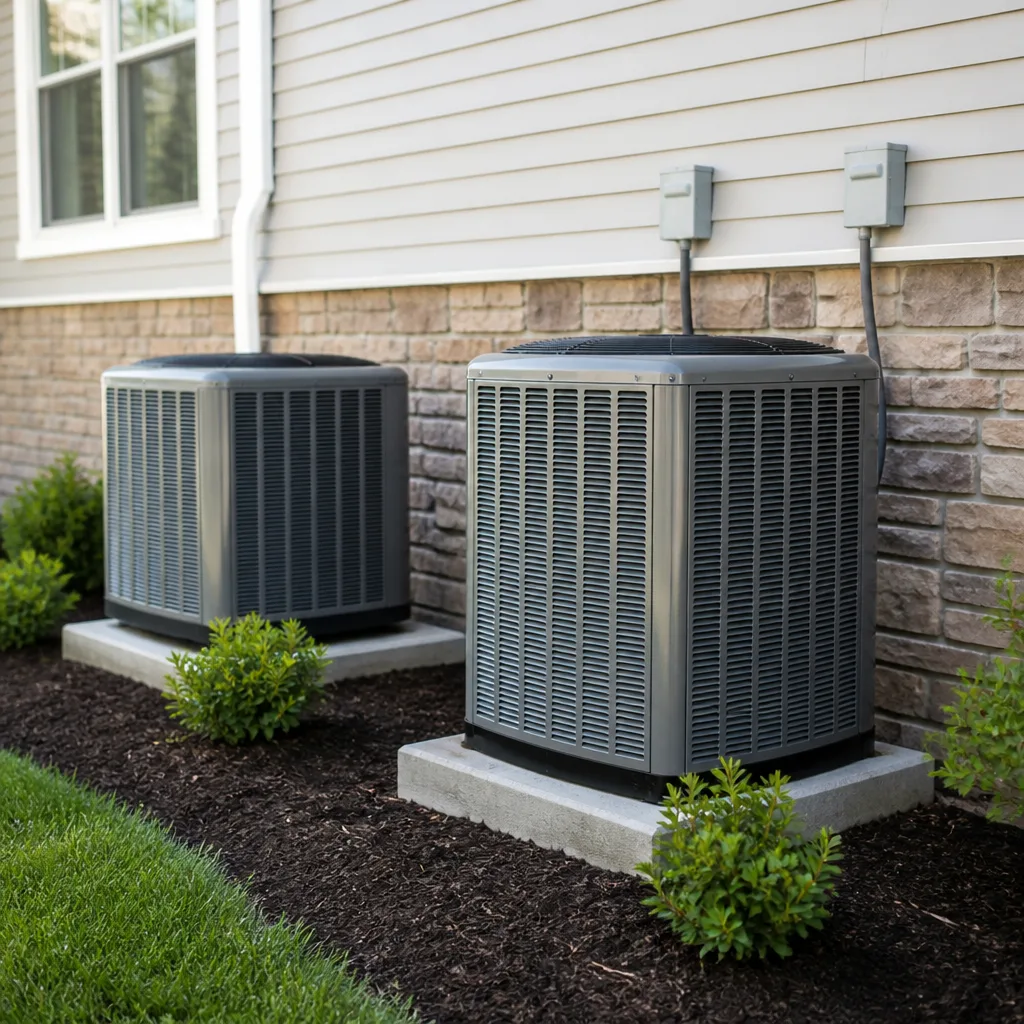 Heat pumps
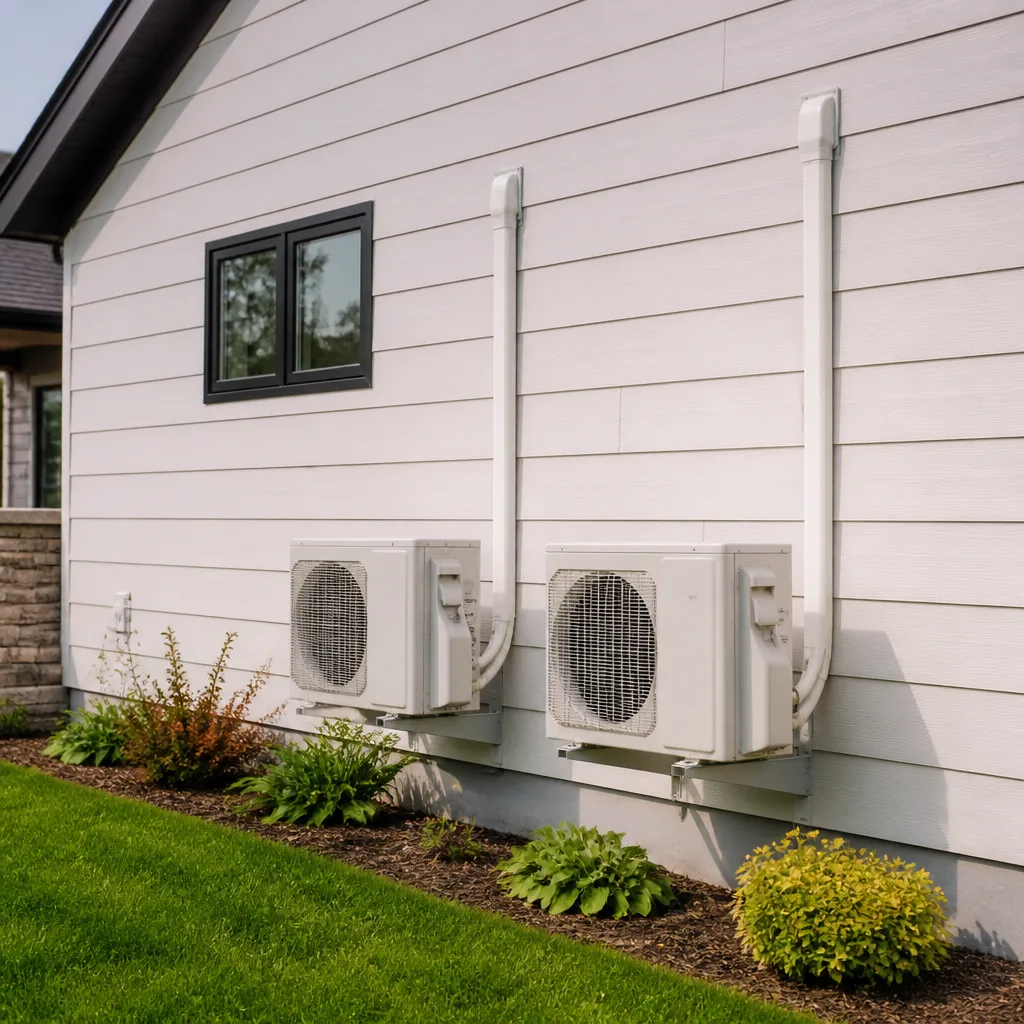 Ductless mini splits
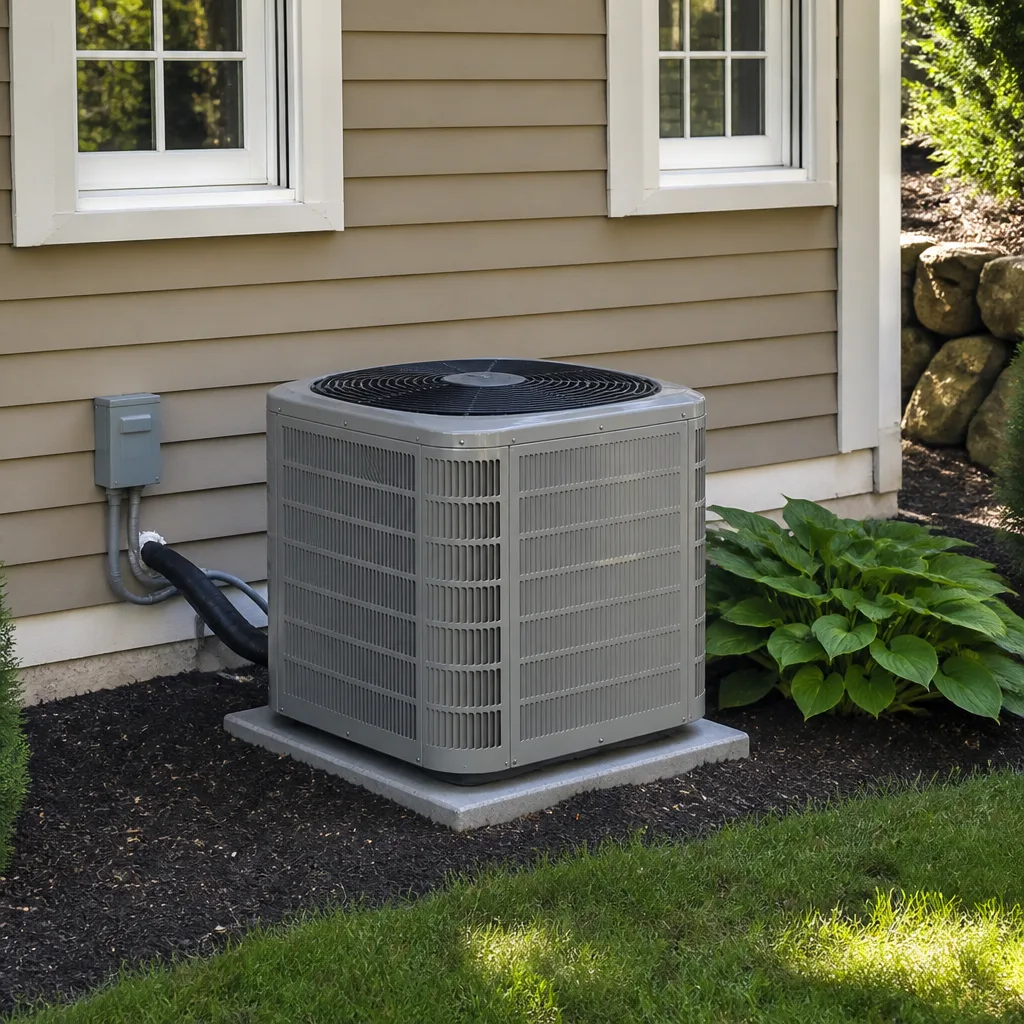 Carrier
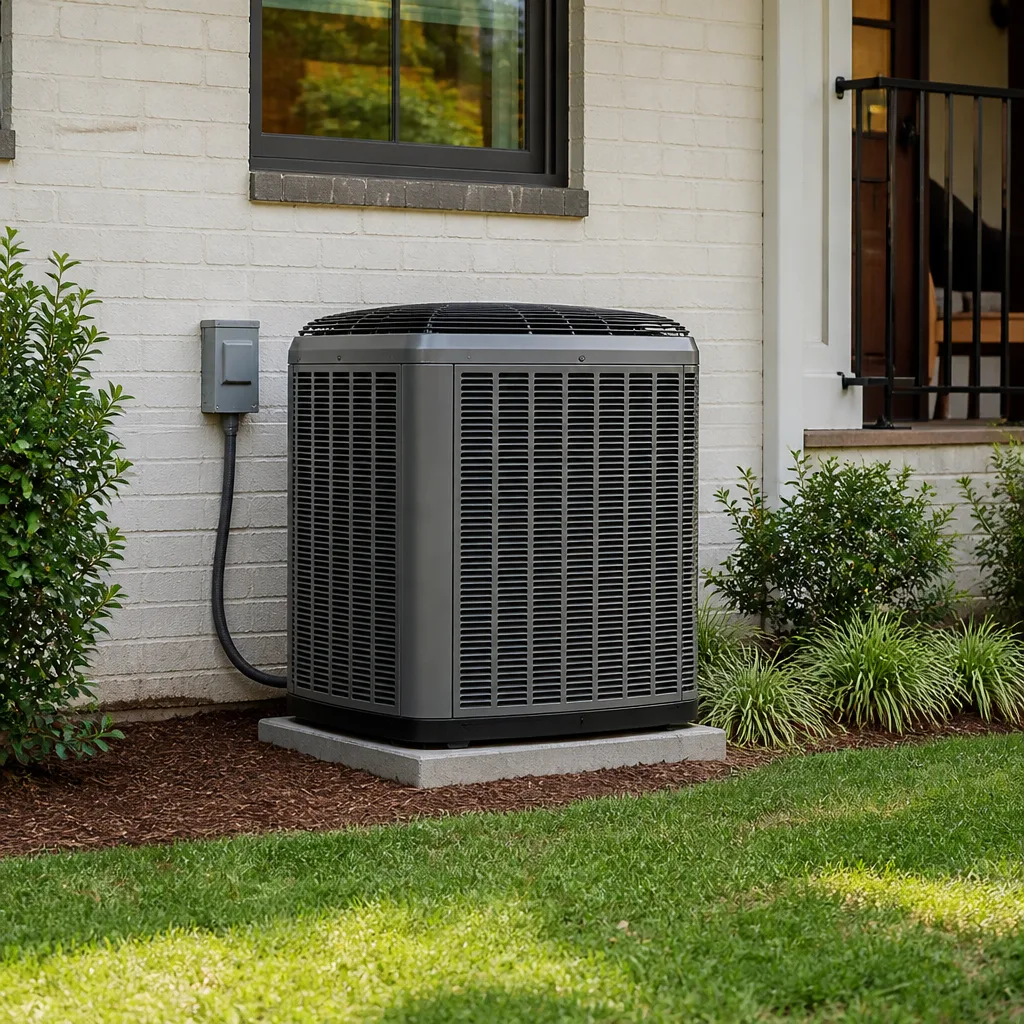 Trane
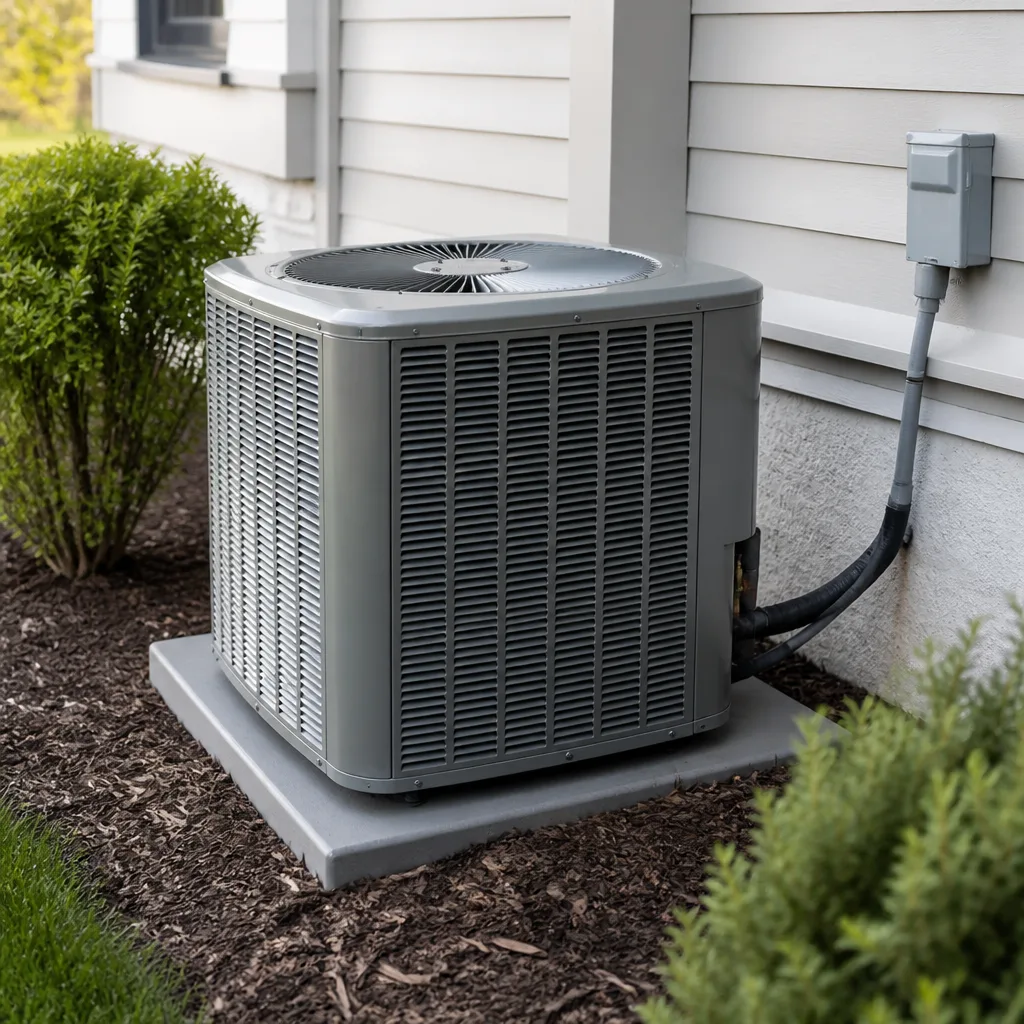 Goodman
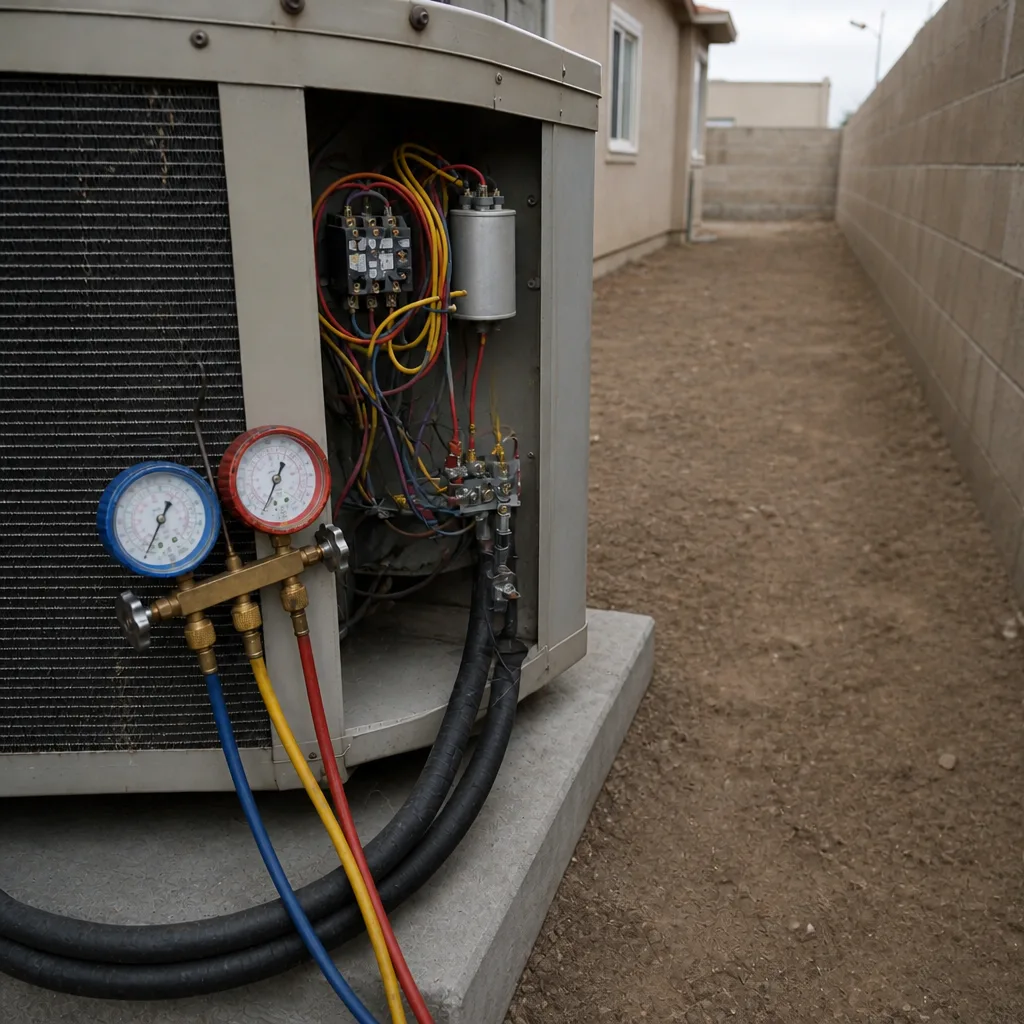
Seasonal tune-up and full diagnostic on your Carrier, Trane, or Goodman system - readings shown to you before any repair is proposed
Diagnosis first, numbers second - you approve the repair price before a single part goes in.
Get your free estimateAC Repair Maintenance Checklist for Spring Valley Homeowners
Capacitors are the number-one AC repair call in the Las Vegas valley every June. They cost about $15 in parts. The emergency service call to replace one after your system stops on a Saturday in July runs roughly $300 to $450, because now you’re paying for after-hours dispatch, diagnosis and a part that could have been tested in April. That single gap between a cheap part and an expensive emergency is what this checklist exists to close. Below you’ll find a month-by-month calendar built around Spring Valley’s real heat curve, the specific parts that fail first under high ambient load, and what to document before you ever pick up the phone. Everything here is written for a Spring Valley homeowner, not a generic climate.
Quick Answer
A proper spring AC checklist for Spring Valley covers five things: wash the condenser coil, verify the capacitor and contactor, confirm airflow at every register, change the filter to the right MERV rating for a dusty desert environment, and check the condensate drain before the monsoon months. Do those five in April and May, before sustained 100°F days arrive, and you avoid the majority of June and July breakdowns. The single most valuable habit is a written record of what your system reads when it’s running well, so a technician can diagnose a problem in 10 minutes instead of 45.
Styles & brands we work with
- AC repair
- Furnace & heating
- Heat pumps
- Ductless mini splits
- Carrier
- Trane
- Goodman
Table of Contents
- Spring Valley’s Actual AC Failure Calendar
- Month-by-Month Maintenance Schedule
- The Parts That Fail First in High Heat
- What “Clean” Really Means on a Coil
- Filter MERV Ratings in a Desert Dust Environment
- What to Document Before You Call a Technician
- Common Mistakes to Avoid
- When to Call a Professional
Spring Valley’s Actual AC Failure Calendar
Most maintenance checklists you’ll find online are repackaged manufacturer PDFs that treat every climate the same. They tell you to “service in spring” and “winterize in fall,” as if a system in coastal Oregon faces the same stress as a system sitting on a roof in Spring Valley running against a 115°F ambient afternoon. It doesn’t. Your equipment works harder in a single July week than a mild-climate unit does in two seasons.
Here’s what the Spring Valley failure calendar actually looks like, based on the repair patterns we see across the valley:
- Late April to mid-May: First sustained 95°F-plus days. Systems that sat idle all winter show their weak spots. Capacitors that lost capacitance over the cool months fail now, often within the first hot week of use.
- June: Peak capacitor and contactor month. This is the number-one repair call in the valley, full stop.
- July to August: Compressor and condenser fan motor failures surface under sustained high-ambient load. Refrigerant leaks that were slow all spring become obvious because the system can no longer keep up.
- Late July through September: Monsoon season. Condensate drain clogs and overflow, and dust storms load filters and coils faster than any other time of year.
- October: Shoulder season. The right window to clean coils, check electrical connections, and catch what summer wore down before the heating season starts.
That’s a fundamentally different calendar than a generic guide gives you. The point isn’t to memorize it. It’s to understand that your maintenance timing should track heat, not the calendar page.
Month-by-Month Maintenance Schedule
Here’s a working schedule. You can do most of these tasks yourself in 15 minutes. A few need a technician, and we flag those honestly below rather than pretending everything is a homeowner job.
- March: Change the filter and write the install date on the edge with a marker. Walk the outside condenser and clear any debris, leaves, or stored items within two feet of it. Look at the pad – if it’s tilted, note it.
- April: Run the AC for a full cycle on the first warm day and listen. Note any click-hum-click pattern at the outdoor unit (that’s a capacitor signature). Check that every supply register in every room blows cold, not just the nearest one.
- May: Schedule a professional tune-up before the June rush. Rinse the condenser coil fins gently from the inside out with a garden hose – never a pressure washer, which bends fins. Confirm the condensate drain exits where it should.
- June: Change the filter again (desert dust loads filters fast). Watch for short cycling – the system starting and stopping every few minutes. That’s a sign of an electrical or charge issue, not a thermostat quirk.
- July: Check the drain pan for standing water after a monsoon storm. Confirm the float switch (a safety shutoff that stops the system if the drain backs up) is working. Keep the area around the outdoor unit clear of dust-blower debris.
- August: Mid-summer filter change. If you have pets or a lot of foot traffic, this is a three-week interval, not a two-month one. Note any ice on the refrigerant lines – that means low charge or restricted airflow, and you should stop running it.
- September: Post-monsoon coil check and drain flush. This is when clogged drains from a season of dust reveal themselves.
- October: The big one. Get a technician out for a full electrical and coil inspection before the heating season. This is where a $15 part gets caught before it becomes a $400 emergency.
That schedule is built for Spring Valley specifically. If you’re in a two-story home on the west side facing full afternoon sun, your outdoor unit works harder than one on a shaded north wall, and your filter interval should be shorter.
The Parts That Fail First in High Heat
High ambient temperature is brutal on electrical components. Three parts fail earlier in Spring Valley than anywhere with a mild summer, and it’s worth understanding what each one does and how to spot trouble.
Capacitors
A capacitor is a small cylinder that stores and releases electrical energy to start and run the compressor and the condenser fan motor. In plain terms, it gives the motor the jolt it needs to get turning and keeps it running smoothly. Under constant high-heat load, capacitors lose their capacitance – their storage capacity drops – and eventually the motor can’t start. The classic symptom is a click followed by a hum from the outdoor unit, repeated every few minutes, with no fan spinning. Capacitors are cheap to replace and expensive to ignore. We’ve seen this failure pattern every June across Spring Valley for years, and it’s almost always preventable with a spring test.
Contactors
A contactor is the heavy-duty switch that closes to send power to the compressor and condenser fan when the thermostat calls for cooling. The contact points inside pit and burn over time – more in high-heat, high-cycle environments. A pitted contactor causes intermittent cooling, voltage drop, and eventually a no-start. Inspecting the contact points is a technician task because it involves live electrical components.
TXV Valves
The TXV (thermostatic expansion valve) meters refrigerant into the evaporator coil so it can absorb heat efficiently. A TXV that sticks causes poor cooling, frosting on the indoor coil, and a system that runs but never satisfies the thermostat. TXV diagnosis requires pressure and temperature readings at multiple points – not something you can eyeball.
What homeowner inspection actually looks like for these: listen at the outdoor unit for the click-hum pattern, watch whether the fan spins on every call, note short cycling, and note whether cooling is even across the house. You’re collecting symptoms, not touching the parts. Capacitors hold a lethal charge even after power is off, and the contactor and compressor terminals are live – that’s a job for a trained technician, every time.
What “Clean” Really Means on a Coil
“Clean” is the most over-used word in HVAC maintenance, and visual guessing gets people in trouble. An evaporator coil that looks clean from a foot away can be matted with a haze of dust that’s choking airflow. In a desert environment, that haze builds faster than most homeowners expect.
Here’s the standard a real technician works to, and what you should ask about:
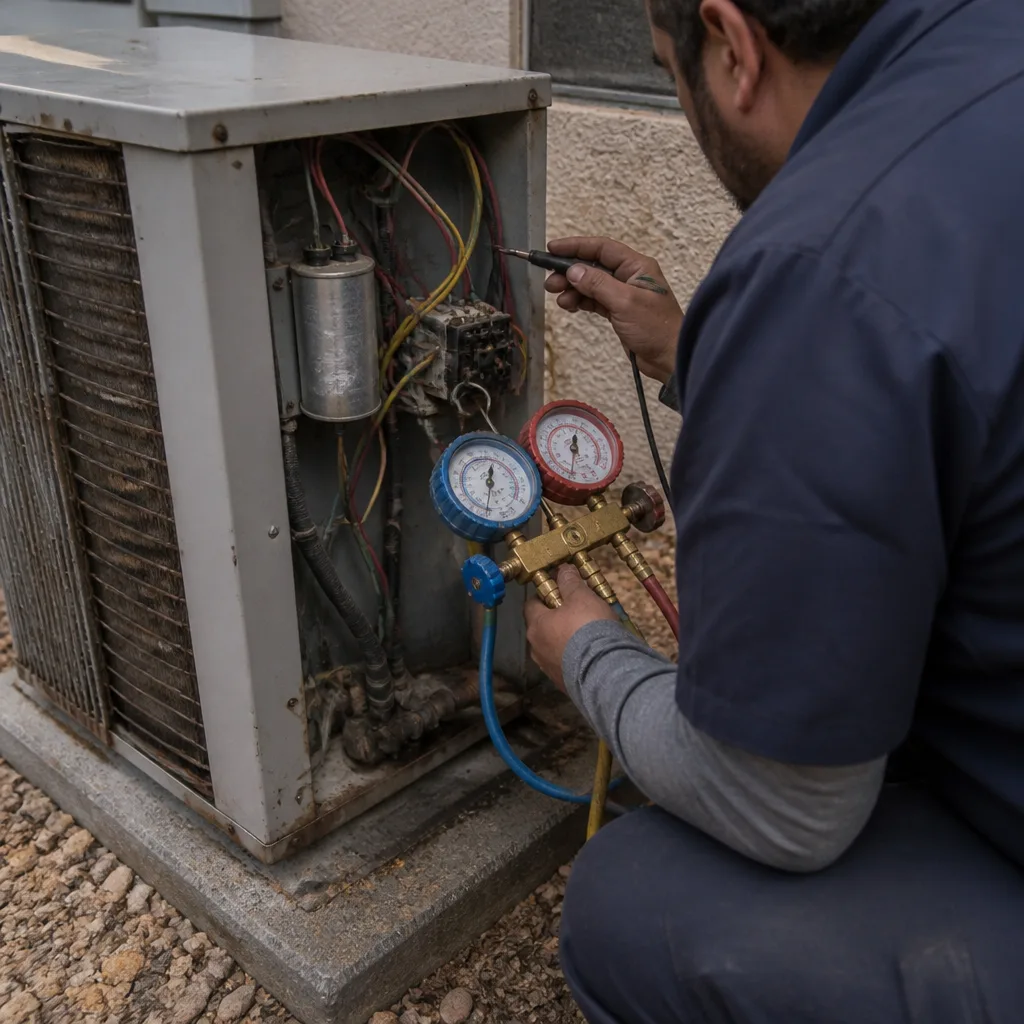
- Before/after photos: Any professional coil cleaning should come with photos showing the coil before and after. If they can’t show you, they didn’t clean it to standard.
- Measured airflow or static pressure: “Clean” also means the coil isn’t restricting airflow. A real check reads static pressure across the coil or measures airflow in CFM (cubic feet per minute) before and after cleaning. Visual inspection is a starting point, not proof.
- Fin condition: Clean means fins are straight and unobstructed, not just dust-free. Bent fins block airflow the same way dust does.
- Evaporator vs. condenser: Your indoor evaporator coil and outdoor condenser coil need different cleaning approaches. The condenser coil gets hosed from the inside out. The evaporator coil, inside the air handler, is a technician job because of the drain pan and refrigerant lines involved.
In our experience, Spring Valley coils pick up a visible dust film faster than coils in more humid climates because there’s no moisture to rinse them naturally. If your unit sits near a dirt lot or a wash, expect to clean it more often. When we do a tune-up, the written report lists what we measured and what we found – so “clean” is a fact on paper, not a technician’s word at the door.
Filter MERV Ratings in a Desert Dust Environment
Filter choice matters more in Spring Valley than most places, and the instinct to buy the highest rating on the shelf is usually wrong. MERV (Minimum Efficiency Reporting Value) measures how well a filter captures particles. Higher MERV traps more, but it also restricts airflow – and airflow restriction is one of the fastest ways to freeze a coil or make a compressor work too hard in high heat.
Here’s the practical tradeoff for a desert home:
- MERV 8: The sweet spot for most Spring Valley homes. It catches dust, pollen, and the coarse particles that dominate our air without choking airflow. If your system was designed with a standard filter slot, this is your default.
- MERV 11: A reasonable upgrade if someone in the house has allergies, but only if your ductwork and blower can handle the extra resistance. Ask before you switch.
- MERV 13 and up: Usually too restrictive for a standard residential system unless it was specifically designed for that static pressure. Higher isn’t better if it starves your coil.
Change interval matters as much as the rating. In Spring Valley, during dust-storm and monsoon months, a filter that would last three months in a milder climate can load up in four to six weeks. Check it monthly during June through September. Pets and heavy foot traffic shorten that further. If you’re not sure what your system was designed for, have a technician tell you the correct MERV range rather than guessing from a label.
What to Document Before You Call a Technician
The difference between a 10-minute diagnosis and a 45-minute one is what the homeowner brings to the call. Good documentation lets a technician skip the guessing and go straight to the likely cause – and it protects you, because a diagnostic tech works faster and you get a straight answer sooner. Here’s the exact list to have ready:
- The model and serial number of the outdoor unit and the indoor air handler. These are on metal plates on the equipment. A photo works. Serial numbers tell a technician the unit’s age and whether parts are under warranty.
- The last three filter change dates and the MERV rating you used.
- A symptom timeline: when the problem started, whether it’s constant or intermittent, and whether it gets worse in late afternoon when ambient temperature peaks.
- Whether it’s a cooling problem or an airflow problem: does the system run and blow warm air, or not run at all? Do some rooms cool better than others?
- Any recent changes: a new thermostat, a remodel, new landscaping near the condenser, a breaker that tripped.
- What the system read when it was working well: if you have a prior tune-up report, bring it. A technician who knows your baseline can spot the delta immediately.
Bring those and the diagnosis call is short and productive. When we arrive, the price is in writing before any work starts, so you’re never waiting to see what the bill will be. That’s part of Dalton Heating & Air Spring Valley home and The Garrison Standard on every job – arrive inside the stated window, price in writing, do the job by the book.
Common Mistakes to Avoid
- Waiting for a breakdown to schedule maintenance. A $15 capacitor caught in April is a $300 to $450 emergency in July. In Spring Valley, the calendar punishes delay harder than most climates.
- Buying the highest MERV filter for “cleaner air.” A MERV 13 filter on a system designed for MERV 8 starves airflow and can freeze the coil. Higher isn’t better – it’s just more restrictive.
- Pressure-washing the condenser coil. A pressure washer bends the delicate aluminum fins flat and destroys heat transfer. A garden hose, inside out, is all you need.
- Assuming a clean-looking coil is a clean coil. A dust haze you can’t see from a foot away mats the coil and cuts airflow. Ask for photos and measured readings, not a visual “looks fine.”
- Ignoring ice on the refrigerant lines. Ice means low refrigerant or restricted airflow. Running the system with ice on the lines can damage the compressor – shut it off and call.
- Skipping the drain check before monsoon season. A clogged condensate drain in late July floods the drain pan and can damage the ceiling below. Flush it in spring and check after storms.
- Touching the capacitor or contactor yourself. Capacitors hold a lethal charge after power is off, and compressor terminals are live. That’s a hard stop – call a technician.
See the difference
 Before
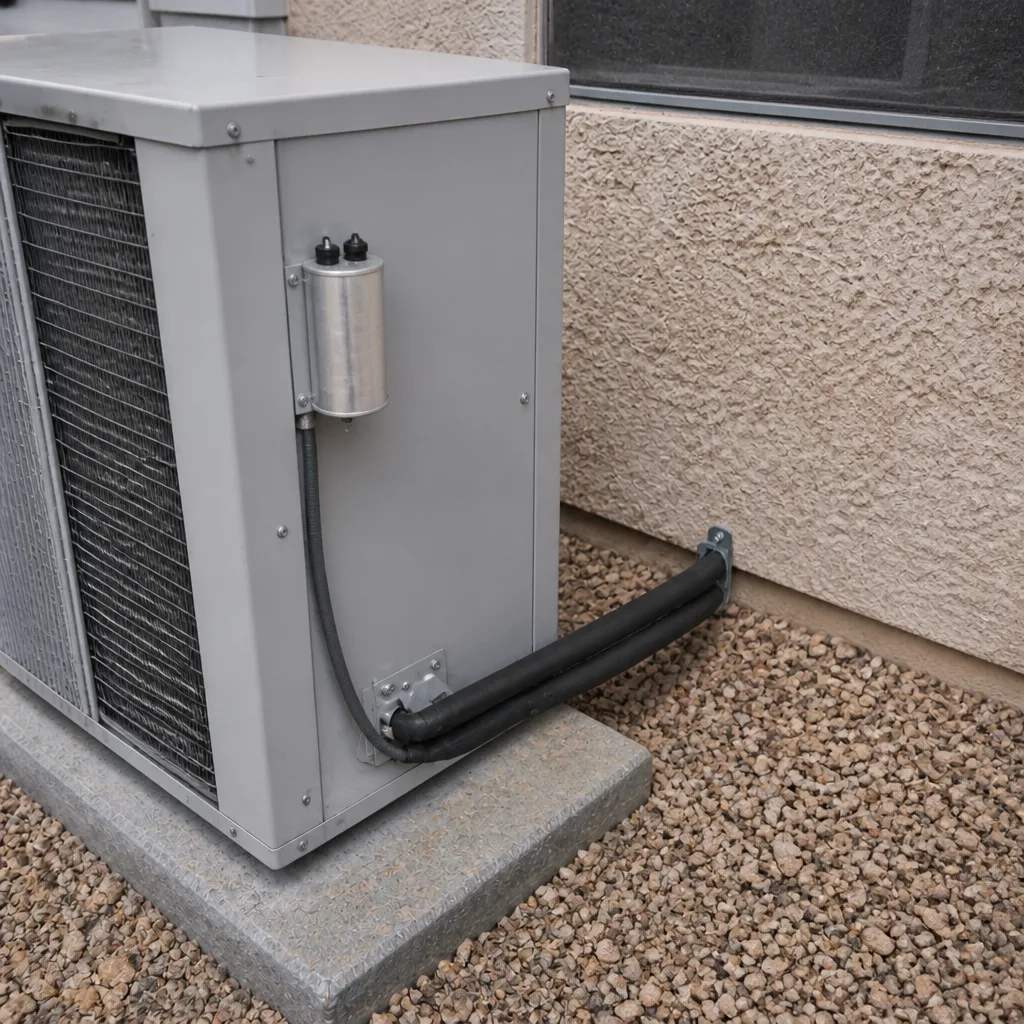 After
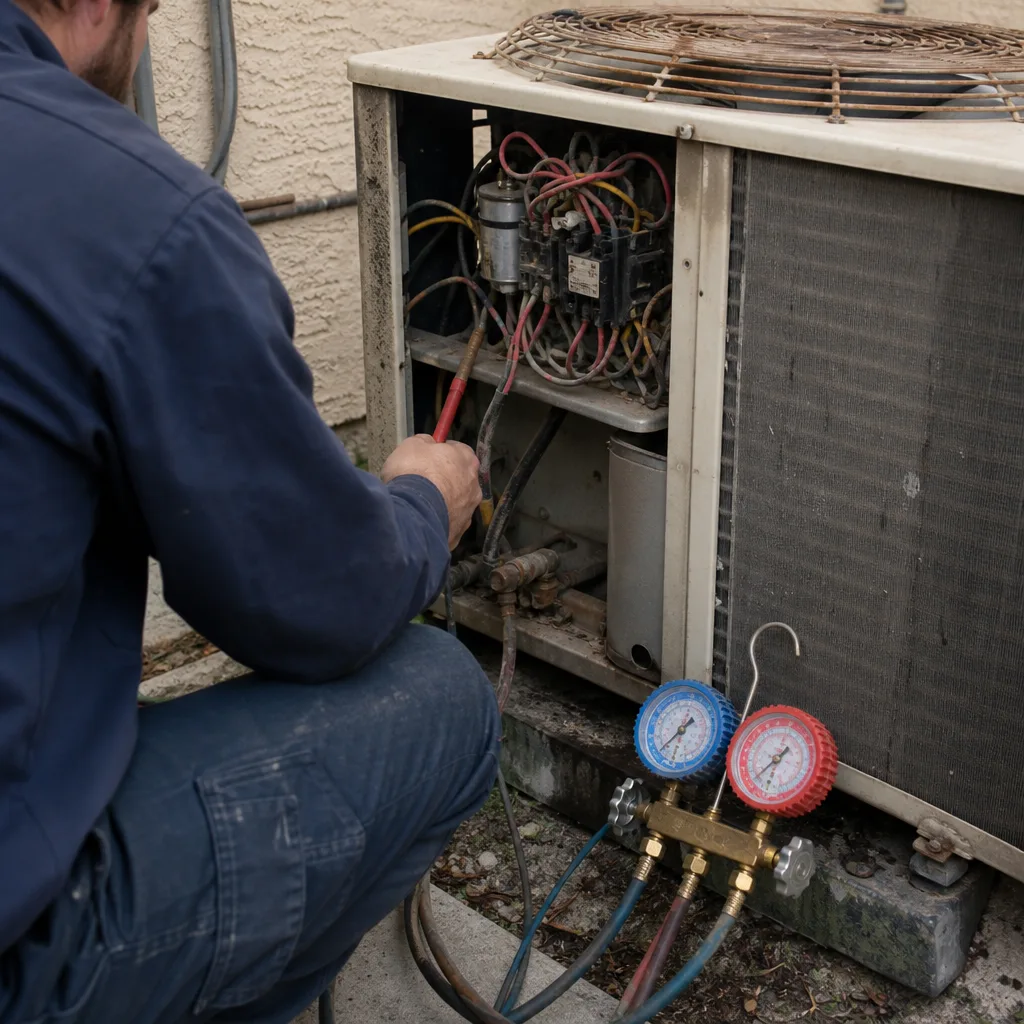 Before
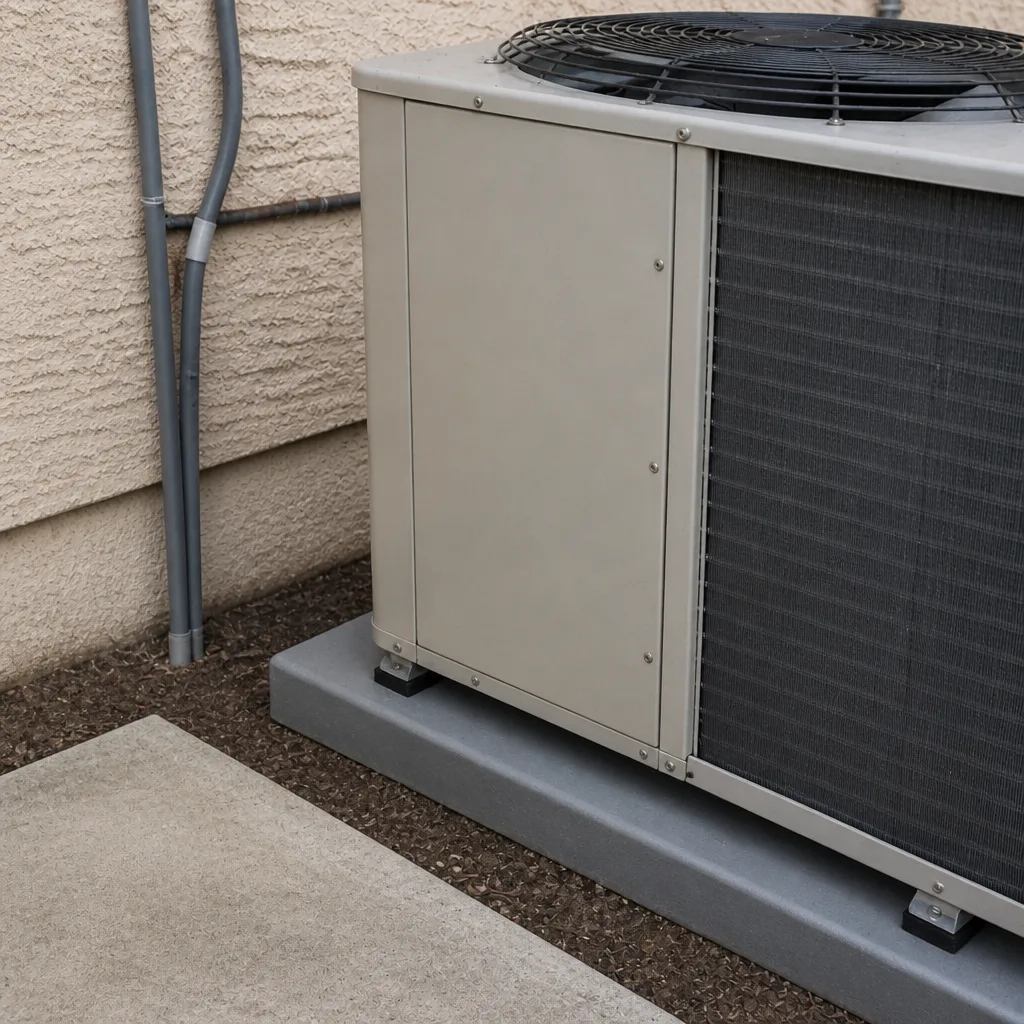 After
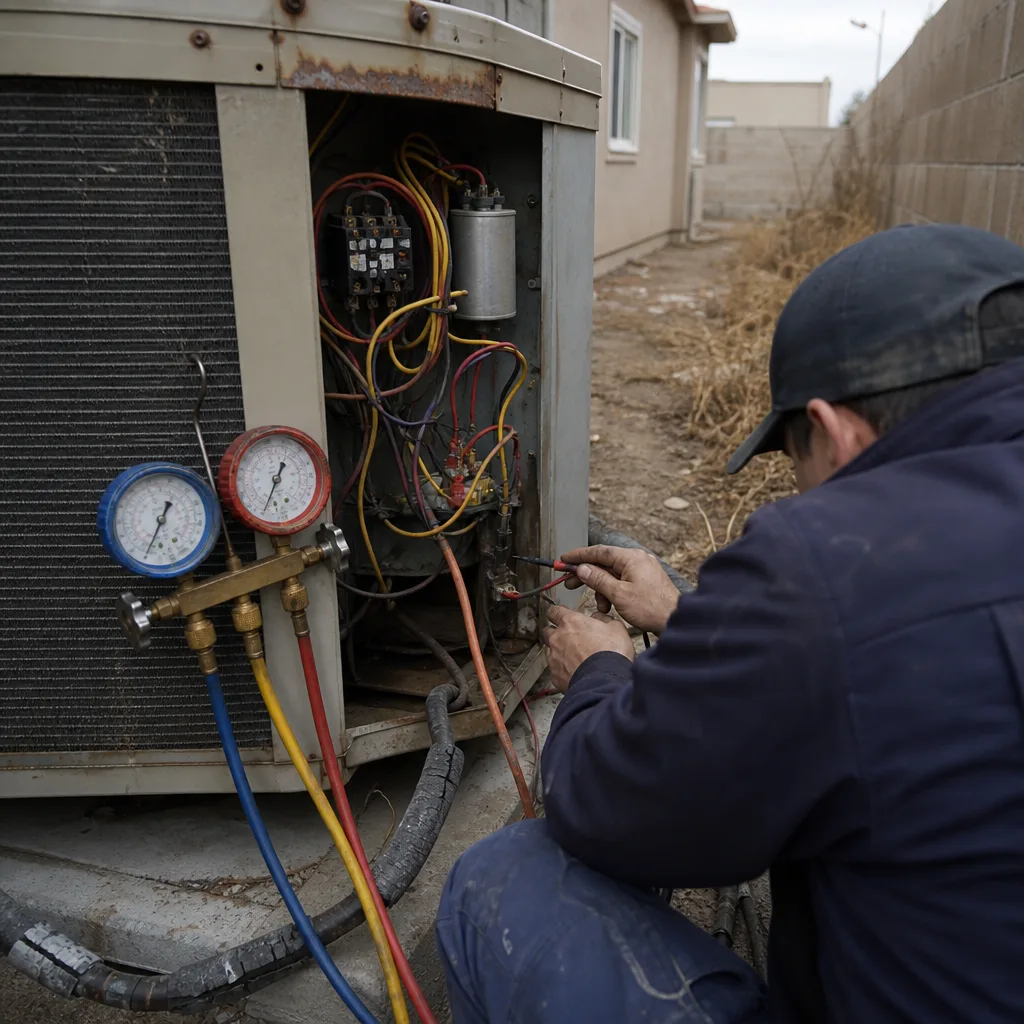 Before
 After
When to Call a Professional
Some of this checklist is homeowner work: filters, debris clearing, hose-rinsing the condenser, watching for symptoms. Everything electrical and everything involving refrigerant is a trained technician’s job, for safety and for warranty reasons. Call a professional if you see the click-hum-click pattern, ice on the refrigerant lines, a breaker that keeps tripping, standing water in the drain pan, or a system that runs but never cools the house. If your system was designed for a specific charge and someone has been “topping it off” every year, that’s a leak worth finding, not refilling. Dalton Heating & Air Spring Valley offers free estimates in Spring Valley – call (888) 268-6106, and we’ll send a background-checked, uniformed technician who arrives inside the window with the price in writing. Every repair carries a written guarantee for a full year, and if it fails in that time, we return at no charge. AC Repair in Spring Valley is same-day in most cases, and our factory-trained techs handle Carrier, Trane, Lennox, Goodman and five more major brands.
Frequently Asked Questions
A Spring Valley checklist should include condenser coil cleaning, capacitor and contactor testing, airflow verification at every register, a filter change to the right MERV rating, and a condensate drain check. The timing matters as much as the tasks – do the electrical checks in April and May before sustained heat arrives, and re-check the drain before monsoon season in late July. Skipping the spring window is the single biggest reason homeowners end up paying for an emergency call in June.
Schedule a professional tune-up in late April or May, before the first sustained 100°F days. The late spring window catches worn capacitors and contactors before they fail under load. In our experience, the first hot week of the season is when every weak component shows itself, so getting ahead of it in April saves both money and a mid-July service call. Call (888) 268-6106 to lock in a tune-up date.
Capacitors fail early in Spring Valley because constant high ambient temperature degrades their capacitance and the motors they support run harder for longer. The heat accelerates the normal wear that would take a full season in a mild climate and compresses it into weeks. When a capacitor can’t hold enough charge to start the compressor, you get the click-hum pattern and no cooling. A spring test catches it while it’s a $15 part instead of an emergency repair.
MERV 8 is the practical default for most Spring Valley homes because it catches desert dust and pollen without restricting airflow. Higher ratings like MERV 13 usually add too much resistance unless your system was designed for it. The right answer depends on your blower and ductwork, so have a technician confirm the correct range before you upgrade. And check the filter monthly during dust-storm season – it loads faster here than in milder climates.
Your coil is actually clean when a technician has photos showing before and after, plus measured airflow or static-pressure readings that prove the coil isn’t restricting air. A visual “looks fine” isn’t proof – a dust haze you can’t see from a foot away mats the coil and chokes airflow. Ask for the readings in writing. When we do a tune-up, the written report lists what we measured and what we found.
Yes – same-day AC repair is available in most Spring Valley cases, and calls are answered by a live person 24 hours a day. If your system fails on a Saturday afternoon in July, call (888) 268-6106 and a background-checked technician arrives inside the stated window with the price in writing before any work starts. Every repair is guaranteed in writing for a full year, and if it fails in that time, we return at no charge.
The Bottom Line
The AC maintenance checklist for a Spring Valley home lives or dies on timing. Catch capacitors and contactors in April and May, clean the condenser coil before the heat builds, keep the filter at MERV 8 and check it monthly through the summer, flush the drain before monsoon season, and keep a written record of what your system reads when it’s healthy. That record is what turns a 45-minute diagnostic visit into a 10-minute one. None of it is complicated. All of it is cheaper than a July emergency. If you’d rather hand the whole thing to a professional, call (888) 268-6106 for a free estimate – the price is in writing, the guarantee is in writing, and the tech who shows up is the one we told you about.
Written by the team at Dalton Heating & Air Spring Valley.